The Asymmetry of Aviation Growth
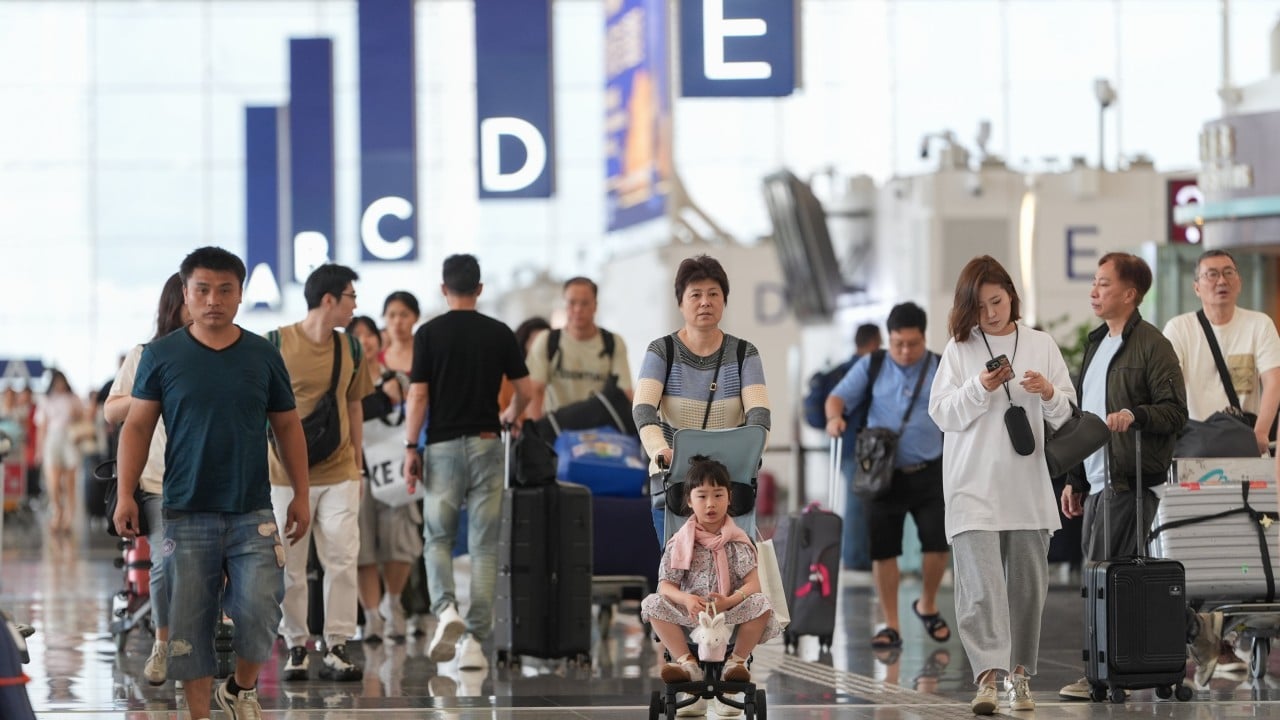
Hong Kong International Airport (HKIA) recently recorded a 13% year-on-year increase in passenger volume, contrasted against a 5.1% rise in flight movements. Surface-level analysis treats these figures as uniform indicators of a robust aviation recovery. In reality, this data reveals a profound structural misalignment between passenger demand and operational capacity.
When passenger growth outpaces flight frequency by a factor of 2.5, the underlying aviation network is experiencing severe friction. This discrepancy is not a sign of balanced expansion; it is a clinical symptom of capacity constraints, shifting airline fleet allocations, and lagging operational throughput. To evaluate the true health of Hong Kong’s aviation hub, we must deconstruct the mechanics behind these numbers across three operational dimensions: load factor optimization, fleet composition constraints, and localized labor bottlenecks.
The Load Factor Ceiling and Elasticity of Demand
The primary driver behind the divergence between passenger volumes and flight movements is the maximization of the Passenger Load Factor (PLF). During the initial phases of aviation recovery, airlines prioritize filling empty seats on existing routes before capital-intensive deployment of additional aircraft.
The Mathematics of Marginal Passenger Growth
Airlines optimize profitability by driving marginal revenue close to zero marginal cost. If a flight operates at 70% capacity, adding passengers up to 90% capacity increases passenger metrics by 28% without requiring a single additional flight movement. This is precisely what the current 13% versus 5.1% spread indicates: HKIA is absorbing passenger volume through high asset utilization rather than network expansion.
However, this growth model has a hard ceiling. Once PLFs across core routes approach the optimal operating threshold (typically 85% to 88% for network carriers), this elasticity disappears. At that inflection point, further passenger growth requires a linear 1:1 increase in flight movements.
Network Asymmetry and Twin-Hub Competition
The current capacity absorption is not happening uniformly across all routes.
- High-Yield Trunk Routes: Regional business corridors (e.g., Hong Kong to Tokyo, Singapore, and London) are operating near peak capacity, driving the bulk of the 13% passenger surge.
- Secondary Feeder Routes: Frequencies to secondary destinations remain suppressed.
This asymmetry exposes HKIA to structural vulnerabilities. While passenger numbers look healthy on paper, the breadth of the airport’s network remains compromised. Competing regional hubs, notably Singapore Changi and Seoul Incheon, captured vital transit traffic during HKIA's prolonged pandemic restrictions. Reclaiming those legacy transit flows requires network density, not just packed short-haul flights. If HKIA cannot scale its flight movements to match demand, international transfer traffic will permanently reroute through competing hubs.
Fleet Allocation Strategies and Up-Gauging Dynamics
When flight movements are restricted—whether by regulatory caps, bilateral air service agreements, or ground handling limits—airlines alter their fleet deployment strategies. The 5.1% growth in flight movements alongside a 13% passenger jump points directly to the tactical deployment of larger aircraft, a process known as up-gauging.
The Shift to Wide-Body Architecture
To maximize slot efficiency at a constrained hub like HKIA, legacy carriers route larger twin-aisle aircraft (such as the Boeing 777-300ER or Airbus A350) onto regional routes originally designed for narrow-body aircraft (like the Airbus A320 family).
While up-gauging successfully inflates passenger volumes per slot, it introduces three long-term strategic liabilities:
- Escalated Block Hour Costs: Operating a wide-body aircraft on a short-haul regional flight increases the cost per block hour. These aircraft are optimized for long-haul cruise phases; frequent cycles (takeoffs and landings) accelerate airframe fatigue and escalate maintenance, repair, and overhaul (MRO) expenses.
- Frequency Deprivation: Business travelers prioritize schedule density over aircraft size. A corporate traveler prefers four daily narrow-body frequencies over two daily wide-body frequencies. By relying on up-gauging to drive passenger metrics, HKIA risks losing high-yield, time-sensitive corporate accounts to hubs offering superior scheduling flexibility.
- Turnaround Time Inflation: Larger aircraft require significantly longer ground handling windows. A wide-body aircraft demands double the deplaning time, extensive cabin cleaning resources, and complex baggage handling operations, adding friction to the airport’s overall gate management systems.
The Operational Bottleneck: Labor Supply and Infrastructure
The core constraint limiting HKIA’s flight movement growth to a modest 5.1% is not a lack of market demand, but a deficit in ground operational capacity. An airport is an interconnected system of dependencies; a failure in one node halts the throughput of the entire network.
[Passenger Demand] ➔ [Ticket Purchase] ➔ [Airport Check-In]
                                                │
                                       (Labor Bottleneck)
                                                ▼
[Flight Movement] ◀── [Ground Handling] ◀── [Gate Allocation]
The Ground Handling and Labor Deficit
The decoupling of passenger metrics from flight movements is heavily driven by a critical shortage of certified ground handling personnel, ramp agents, and baggage handlers. The pandemic triggered a mass exodus of skilled aviation labor from Hong Kong. Rebuilding this workforce faces strict structural headwinds:
- Training Lag: Aviation security clearance, ramp safety certifications, and specialized heavy machinery operation require rigorous, time-intensive training pipelines. New hires cannot be deployed immediately to alleviate operational pressure.
- Geographic and Economic Mismatch: The physical location of HKIA on Chek Lap Kok creates long, expensive commutes for the low-to-medium wage labor pool residing in urban Hong Kong, suppressing recruitment retention rates.
- The Importation Labor Attrition: Government labor importation schemes face bureaucratic delays and friction regarding housing and integration, preventing rapid scaling of ground crews.
Without sufficient ground crews, airlines cannot secure the rapid 45-to-60-minute turnarounds required for short-haul low-cost carriers, nor can legacy airlines safely increase their daily departures. The 5.1% cap on flight movements is the direct manifestation of this labor ceiling.
Structural Disruption: The Three-Runway System Integration
The long-term expansion blueprint for HKIA relies heavily on the full operationalization of its Three-Runway System (3RS). While the physical infrastructure of the third runway is complete, translating this concrete asset into a proportional increase in flight movements is highly complex.
Airspace Geopolitics and Concurrency Limits
The Pearl River Delta features one of the most congested airspace architectures globally, shared among Hong Kong, Shenzhen, Guangzhou, Macau, and Zhuhai.
+-------------------------------------------------------------+
|               Pearl River Delta Shared Airspace              |
|                                                             |
|   [Guangzhou]        [Shenzhen]         [Zhuhai]    [Macau] |
|        │                  │                 │          │    |
|        +----------+-------+--------+--------+----------+    |
|                   │                │                        |
|                   ▼                ▼                        |
|             Intersecting Standard Arrival Routes            |
|                                                             |
|                           [HKIA]                            |
|                     (Three-Runway System)                   |
+-------------------------------------------------------------+
Introducing a continuous stream of flight movements via a third runway requires complete realignment of the Standard Instrument Departures (SIDs) and Standard Terminal Arrival Routes (STARs) across municipal borders.
Because mainland China operates under military-managed airspace with different altitude metrics (meters vs. feet used in international aviation), cross-border air traffic control coordination acts as a structural choke point. Until these airspace management agreements are fully synchronized, the theoretical capacity of the 3RS cannot be realized, keeping flight movement growth restricted regardless of terminal passenger volumes.
Strategic Imperatives for Hub Optimization
To prevent the current passenger-to-flight divergence from degrading into structural stagnation, airport authorities and terminal operators must pivot from raw volume acquisition to precise operational efficiency.
Implement Dynamic Resource Allocation via Predictive Analytics
Ground handling operators must deploy algorithmic scheduling models that map real-time flight telemetry directly against staff shift assignments. Instead of static gate scheduling, baggage and ramp crews must be dynamically routed based on incoming aircraft load densities and specific fleet variants, mitigating the wide-body turnaround penalties currently slowing down system throughput.
Accelerate Airside Automation to Offset Labor Deficits
Capital allocation must shift aggressively toward autonomous airside infrastructure.
- Autonomous Baggage Tow Tractors: Replacing manual tug drivers with fleet-managed autonomous vehicles reduces reliance on low-wage labor pools and stabilizes ground transport timelines between the terminal and remote stands.
- Automated Jetbridge Deployment: Transitioning to sensor-driven passenger boarding bridges shortens the critical path of the arrival sequence, directly slicing minutes off the turnaround window.
Renegotiate Cross-Border Airspace Harmonization
Civil aviation authorities must secure dedicated, altitude-segregated transit corridors through the Shenzhen and Guangzhou flight information regions (FIRs). This coordination is critical to unlocking the operational throughput of the 3RS, transforming the 5.1% flight movement constraint into a scalable runway asset capable of sustaining long-term hub dominance.