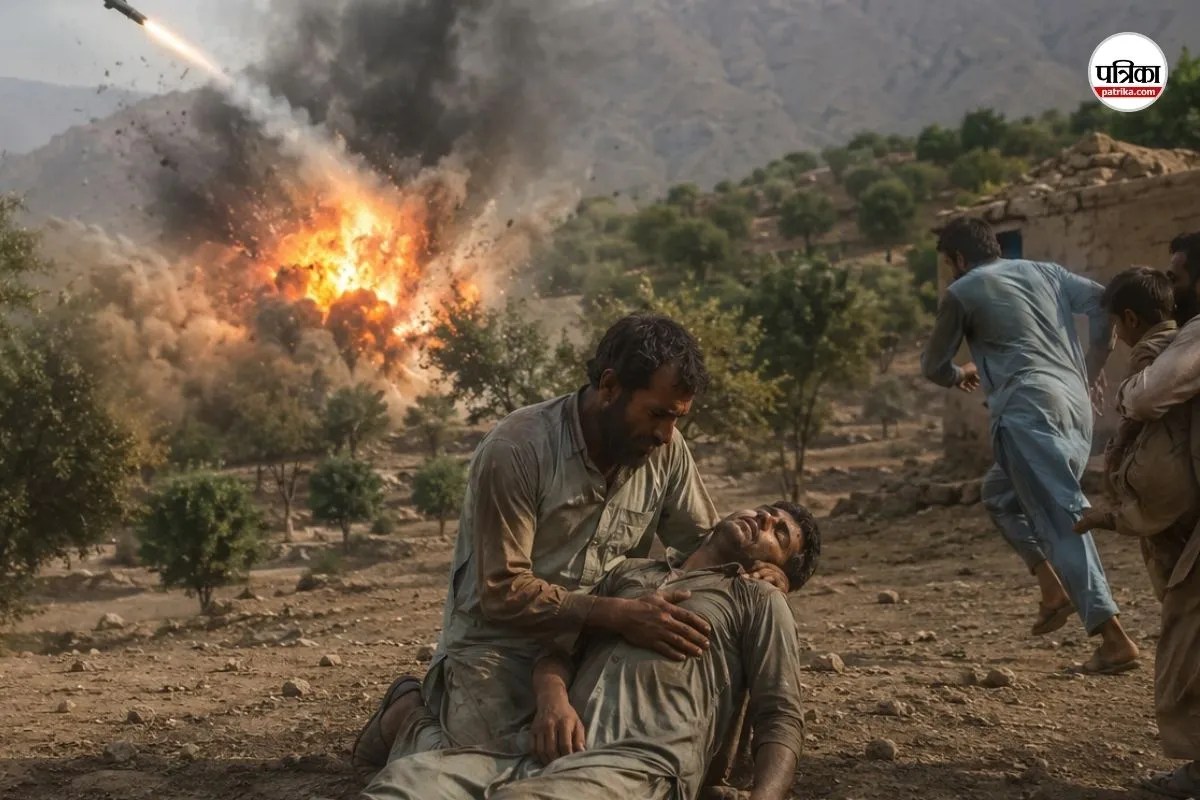
The operational theatre in southwestern Pakistan operates under a severe information deficit, where tactical counter-insurgency engagements are routinely reduced to binary casualty counts by regional media outlets. When reports surface regarding aerial or drone engagements in districts like Surab, standard wire-service journalism typically focuses on immediate body counts and competing institutional claims. This approach obscures the structural dynamics driving the conflict. To understand the trajectory of the Balochistan crisis, analysts must move past superficial incident reporting and examine the underlying mechanics of state security measures, insurgent tactics, and civilian vulnerability matrices.
The Structural Anatomy of the Conflict
Modern security dynamics in the province are governed by three interacting variables: state infrastructure protection, decentralized separatist mobility, and the friction of intelligence-based operations.
The primary driver of kinetic activity is the protection of resource extraction corridors and transport networks. As state-backed infrastructure projects expand, security architecture shifts from stationary garrison defense to active area-denial operations. This operational shift relies heavily on aerial surveillance, unmanned platforms, and rapid-response kinetic strikes to disrupt insurgent supply lines and staging areas.
Insurgent factions, principally organized under networks like the Balochistan Liberation Army, counter this state centralization through asymmetric dispersal. Operating in rugged terrain across districts such as Mastung, Kalat, and Surab, these groups utilize decentralized cells that minimize footprint until moment of contact. Traditional ground sweeps often fail to neutralize these units efficiently, creating institutional pressure on military planners to utilize high-altitude surveillance and precision munitions.
The Cost Function of Civilian Exposure
Evaluating the human cost of modern counter-insurgency requires moving beyond partisan press releases. Civilian casualties in these operational zones are rarely the result of indiscriminate targeting; rather, they are a function of high-density operational friction within populated or semi-nomadic rural valleys.
When kinetic strikes occur in remote sectors, verification mechanisms break down. Independent human rights monitors face severe access restrictions, turning casualty estimation into a political contest between state denials and activist allegations.
[State Intelligence-Led Targeting]
       │
       ▼
[Compressed Sensor-to-Shooter Loops]
       │
       ▼
[Collateral Risk in Dual-Use Terrain]
       │
       ▼
[Information Asymmetry & Verification Failure]
This cycle highlights a fundamental limitation in current reporting. Without independent ground-truthing, the public discourse is trapped between unverified institutional disclaimers and unverified activist claims. The missing variable in standard analyses is the quantifiable error rate of intelligence-led targeting in environments where insurgents deliberately blend civilian population structures.
Systemic Vulnerabilities in Local Governance
The security vacuum in southwestern Pakistan persists because military kinetic sweeps address tactical symptoms rather than administrative root causes. The province suffers from a chronic governance deficit characterized by low fiscal retention from local resource extraction, acute underdevelopment, and weak municipal policing capabilities.
When local police infrastructure is targeted by coordinated insurgent assaults, the state is forced to rely on federal paramilitary forces and regular army units. This militarization of internal security alters the political compact between the population and the central government. Each security operation, while temporarily neutralizing armed cells, deepens the alienation of civilian populations caught in the crossfire.
Strategic Forecast and Operational Outlook
Future stability in the region depends on the state's ability to decouple kinetic counter-terrorism from broader civil administration. Prolonged reliance on high-intensity air and drone-based assets risks accelerating the alienation cycle, inadvertently expanding the recruitment pool for separatist organizations.
Commanders must transition from reactive search-and-destroy protocols to permanent, intelligence-integrated population security grids accompanied by genuine economic devolution. Until the state addresses the structural economic grievances of the province alongside its military objectives, security metrics will continue to reflect cyclical escalations rather than definitive strategic resolution.
For a deeper visual breakdown of how modern security dynamics and regional conflicts are reported and analyzed across South Asia, you can watch this WION News security analysis. This video provides helpful context on how international media outlets track rising violence, civilian toll reports, and military actions in Balochistan.
http://googleusercontent.com/youtube_content/1