The heavy iron doors at the end of the corridor do not slam. They click. It is a precise, metallic sound that cuts through the humid air of the visitation room, a sound that signifies the exact moment a human being is scrubbed from the ledger of the visible world.
Sit in that room for an hour. The laminate tables are bolted to the floor. The air smells of industrial bleach and cheap floor wax. Across from you sits a young man named Marcus—a hypothetical composite of the dozens of faces I have observed over a decade of documenting the underbelly of our social institutions. Marcus is twenty-two. His knuckles are scraped. His state-issued denim shirt is two sizes too large. To the casual observer, he is a statistic, a line item in a state budget, a cautionary tale. You might also find this related story insightful: The Architecture of Electoral Friction: Structural Redistribution and Auditing the American Electorate.
But look closer at his hands. They are trembling, not from fear, but from the absolute exhaustion of being ignored.
We have a habit of measuring our societies by the height of our glass skyscrapers. We look at the fortunes of our tech moguls, the pristine lawns of our gated communities, and the glittering galas of our highest citizens. We tell ourselves that the peak defines the mountain. As extensively documented in detailed coverage by The New York Times, the effects are worth noting.
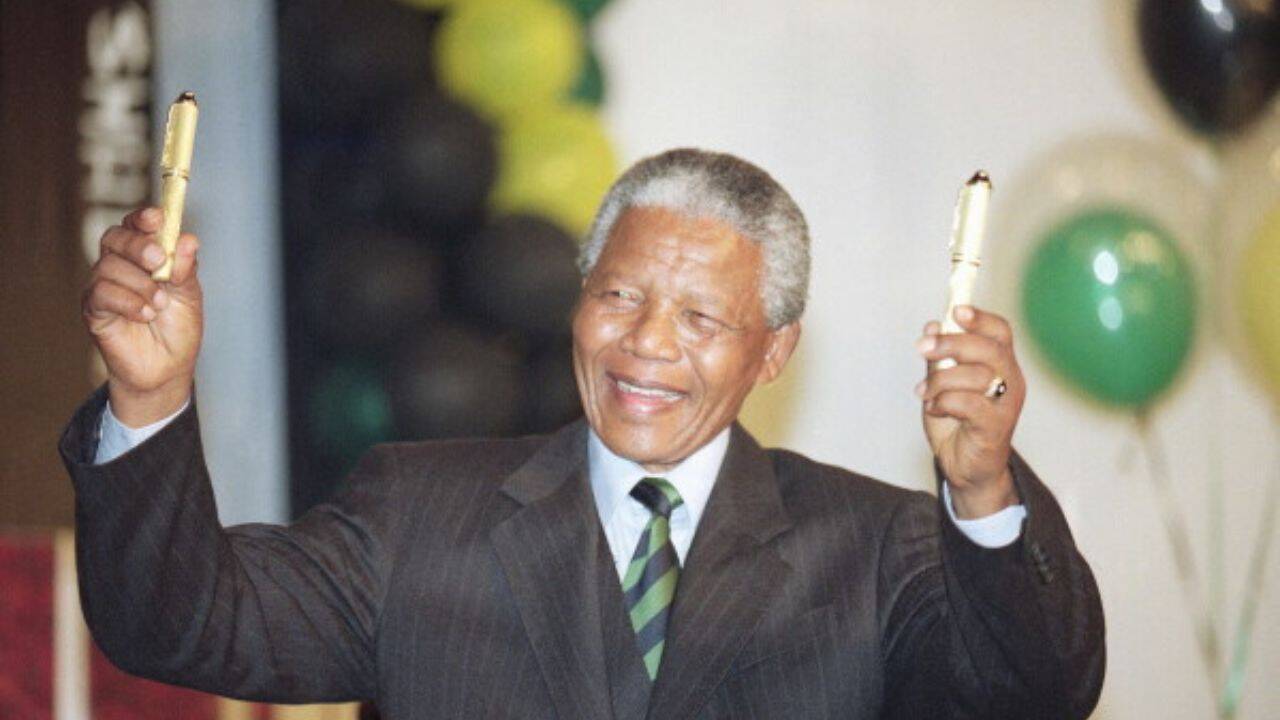
Nelson Mandela knew this was a lie.
When Mandela famously noted that a nation should not be judged by how it treats its highest citizens, but its lowest ones, he was not offering a poetic platitude. He was delivering a cold, diagnostic assessment of human civilization. He spent twenty-seven years observing the mechanics of state-sponsored cruelty from a damp cell on Robben Island. He understood that the true character of a culture is revealed only when the cameras are turned off and the spotlight is shone on the people we desperately wish to forget.
The real problem lies elsewhere, far beneath the surface of political debates and budget allocations. It rests in our collective peripheral vision.
Consider what happens when a society decides that some lives are inherently worth less than others. The decay does not stay contained behind prison walls. It leaks. It bleeds into our schools, our hospitals, and our legal systems until the rot becomes systemic.
The Architecture of the Shadow World
Step outside the prison gates and look at the modern urban landscape. The design is intentional. We build benches with dividers down the middle so the unhoused cannot lie down. We install blue lights in public restrooms so those struggling with addiction cannot find a vein. We create architectural barriers designed to push the uncomfortable realities of human suffering out of sight, convinced that if we cannot see the problem, the problem ceases to exist.
This is the invisible tax of a society focused entirely on its winners.
Think about a standard corporate office. The CEO receives praise, stock options, and ergonomic chairs. Meanwhile, the night-shift janitor, who scrubs the toilets and empties the trash, navigates a broken public transit system just to earn a wage that doesn't cover rent. If the CEO trips, a safety net of golden parachutes catches them. If the janitor breaks an ankle, the entire household collapses into financial ruin.
The contrast is stark. Shocking. Yet, we accept it as the natural order of things.
We have inverted the metric of human value. We reward those who need it least and penalize those who are already hanging on by a thread. This is not just an economic failure; it is a profound failure of imagination. We fail to realize that the strength of a chain is never determined by its polished, golden links. It is determined entirely by the one that is rusted, twisted, and about to snap.
The Human Cost of the Ledger
Let us return to Marcus. His story did not begin behind that clicking iron door. It began in an overcrowded classroom where the textbooks were ten years out of date and the ceiling leaked when it rained. It continued through a juvenile justice system that functions more like a conveyor belt than a pathway to rehabilitation.
When Marcus committed a non-violent offense at nineteen, the system did not ask how to fix the broken machinery of his life. It simply filed him away.
The financial cost of keeping Marcus in a cell for a year is astronomical, often outpacing the tuition of an Ivy League university. We are willing to spend tens of thousands of dollars annually to punish a man, but we balk at spending a fraction of that amount to ensure he has a functional safety net before he falls. The math does not make sense. The logic is entirely backward.
But the emotional cost is even higher.
When we treat the lowest citizens as disposable, we erode our own capacity for empathy. We become hardened. We learn to look away from the person begging on the street corner, to ignore the statistics about recidivism, to dismiss the systemic biases that populate our penitentiaries. We convince ourselves that poverty is a character flaw and wealth is a sign of virtue.
This psychological conditioning distorts our understanding of justice. True justice is not the absence of crime; it is the presence of equity. It is the understanding that every individual, regardless of their mistakes or their economic status, possesses an inherent dignity that no state mechanism should be allowed to strip away.
Turning the Lens Inward
It is easy to point fingers at policymakers, prison wardens, and systemic structures. It is much harder to look in the mirror and ask how our daily choices contribute to this hierarchy of human worth.
Every time we patronize a business that exploits its lowest-paid workers, we vote for the continuation of this system. Every time we vote against affordable housing in our neighborhoods because we worry about property values, we reinforce the walls that keep the marginalized hidden away. We are all complicit in the maintenance of the shadow world.
The shift required is not monumental. It does not demand a sudden, utopian overhaul of global economics. It demands a recalibration of our attention.
Imagine focusing our societal pride not on our gross domestic product or our military might, but on the condition of our public psychiatric wards, the quality of our foster care systems, and the rehabilitation rates of our prisons. Imagine a world where a politician’s success is measured by how effectively they closed the gap between the highest and the lowest citizens, rather than how much wealth they generated for the top tier.
This is the challenge Mandela left behind. It is a terrifying standard because, by this metric, very few modern nations are passing the test. We are failing our lowest citizens daily, and in doing so, we are failing ourselves.
The young man across the table looks up. The visitation hour is ending. A guard approaches, his boots clicking rhythmically against the linoleum. Marcus stands, turns, and walks back toward the heavy iron doors. He does not look back. He knows the routine too well.
The door clicks shut. The sound echoes in the quiet room, a sharp reminder that the true measure of our collective humanity is currently locked away in the dark, waiting for us to find the courage to look.