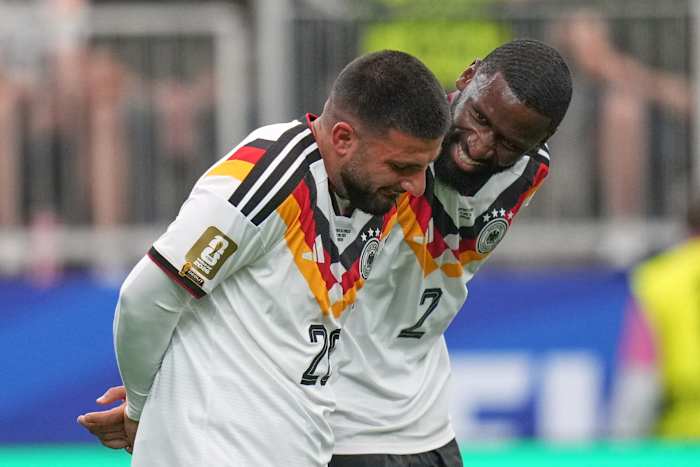
Mauricio Pochettino is celebrating a stay of execution as if he just won the Champions League.
His recent jab—reminding everyone that "Turkey is going home and we are staying, not the other way around"—is a masterclass in the kind of short-term, results-oriented delusion that is currently rotting elite football. He wants credit for surviving. He wants a medal for not drowning. Also making headlines in this space: The Midnight Cleaners of Doha.
But clinging to a driftwood plank after crashing the ship is not a tactical masterclass.
The lazy consensus in football media loves this narrative. Pundits line up to praise the "gritty pragmatism" of managers who squeak through international tournaments or domestic campaigns by the skin of their teeth. We are told that winning ugly is a virtue, that the scoreboard is the only metric that matters, and that surviving to play another round justifies months of tactical incoherence. Further information on this are explored by Yahoo Sports.
It is a lie. This survivalist mindset is a slow-poisoning agent for ambitious football projects. When a manager with a world-class squad resorts to playground taunts about who went home first, it does not signal strength. It signals a profound bankruptcy of ideas.
The Mirage of the Result
Football has a data problem, but it is not the one people think. The problem is that we still treat the final score as a lagging indicator of quality, rather than what it often is: a chaotic, high-variance event influenced by a referee’s blind spot, a slippery patch of grass, or a single moment of individual genius that overrode a terrible tactical system.
When you look at teams that consistently dominate over a five-year cycle—think of Pep Guardiola’s tactical evolution or the systemic consistency of the Red Bull pipeline—they do not measure success by whether they "stayed while Turkey went home." They measure it by underlying control.
- Field Tilt: Who dominates the final third?
- PPDA (Passes Per Defensive Action): Is the press suffocating or reactive?
- Expected Goal Differential (xGD): Are you creating high-value chances, or relying on a 30-yard screamer to bail you out?
When a manager points to the bracket instead of the pitch, they are asking you to look at the magician's right hand so you do not see what the left hand is doing. Survivalism breeds tactical conservatism. It tells players that avoiding mistakes is more important than creating advantages. Over a short tournament, you might get lucky. Over a season, it is a suicide pact.
Why We Need to Stop Validating "Ugly" Progress
I have spent years analyzing sporting structures, breaking down how technical directors build rosters and how managers implement systems. The most common structural failure in modern sports happens when an organization mistakes survival for progress.
Imagine a company that hits its quarterly revenue targets solely because it fired half its staff and sold off its real estate. The balance sheet looks clean for three months. Then, the infrastructure collapses because there is no one left to run the machines.
That is exactly what a "surviving" manager does when they park the bus against inferior opposition and celebrate a 1-0 win courtesy of an own goal. They are burning structural capital for immediate survival.
- It destroys player development: Young, high-upside talents are benched for aging, "reliable" veterans who know how to foul safely.
- It alienates the fan base: Football is an entertainment product, not a stress-test simulation.
- It masks systemic flaws: The board sees a win and delays the necessary squad rebuild, ensuring the eventual crash will be twice as catastrophic.
The premise of the question we always ask after these games is fundamentally broken. Journalists ask: "At this level, isn't the result all that matters?"
No. It isn't. Because an unearned result is a false positive. It convinces you that your process is working when your process is actually broken.
The Downside of the Purist Approach
To be entirely fair, the alternative carries its own scars. The purist approach—demanding positional perfection and high-risk buildup play regardless of the personnel—can look incredibly foolish when it fails. If you try to play like 2011 Barcelona with center-backs who possess the turning radius of an aircraft carrier, you will get humiliated.
But there is a massive gulf between reckless idealism and defensive cowardice.
The best managers use a framework of aggressive functionality. They do not lower their standards to match the opponent; they force the opponent to adapt to them. When Pochettino brags about simply outlasting an opponent like Turkey, he is admitting that his ceiling is no longer excellence. His ceiling is simply being slightly less chaotic than the team across from him.
The Actionable Pivot for Elite Football
If club boards and international federations want to stop the cycle of mediocrity, they need to change how they evaluate managerial performance immediately.
- Fire for Process, Not Just Results: If a manager wins three games in a row while conceding 25 shots per game and relying on goalkeeper heroics, put them on notice. The crash is coming.
- Ban the Survival Narrative from the Dressing Room: The moment a squad starts thinking about "surviving the match" instead of "dictating the match," the culture is compromised.
- Reward Controlled Risk: Evaluate tactical choices based on whether they created a repeatable, structural advantage, not just whether the ball deflected into the net off a defender's knee.
Stop settling for managers who use the failures of others to hide their own lack of vision. If the only defense of your football team is that somebody else is already at the airport, you have already lost the argument.
Pack your bags anyway. The flight is coming for you next.