The smell of a martial arts gym is unmistakable. It is a heavy, honest soup of stale sweat, bleached canvas, rubber floor mats, and the sharp, mentholated bite of liniment oil. Inside those four walls, the rules of the outside world evaporate. Nobody cares about your accent, your postal code, or the shade of your skin; the only currency that holds value is discipline, balance, and whether you tap out when the pressure becomes too much to bear.
Then you shower, pack your gear bag, and step onto the commuter train heading out of Paris. If you enjoyed this article, you might want to read: this related article.
Suddenly, the rules change back.
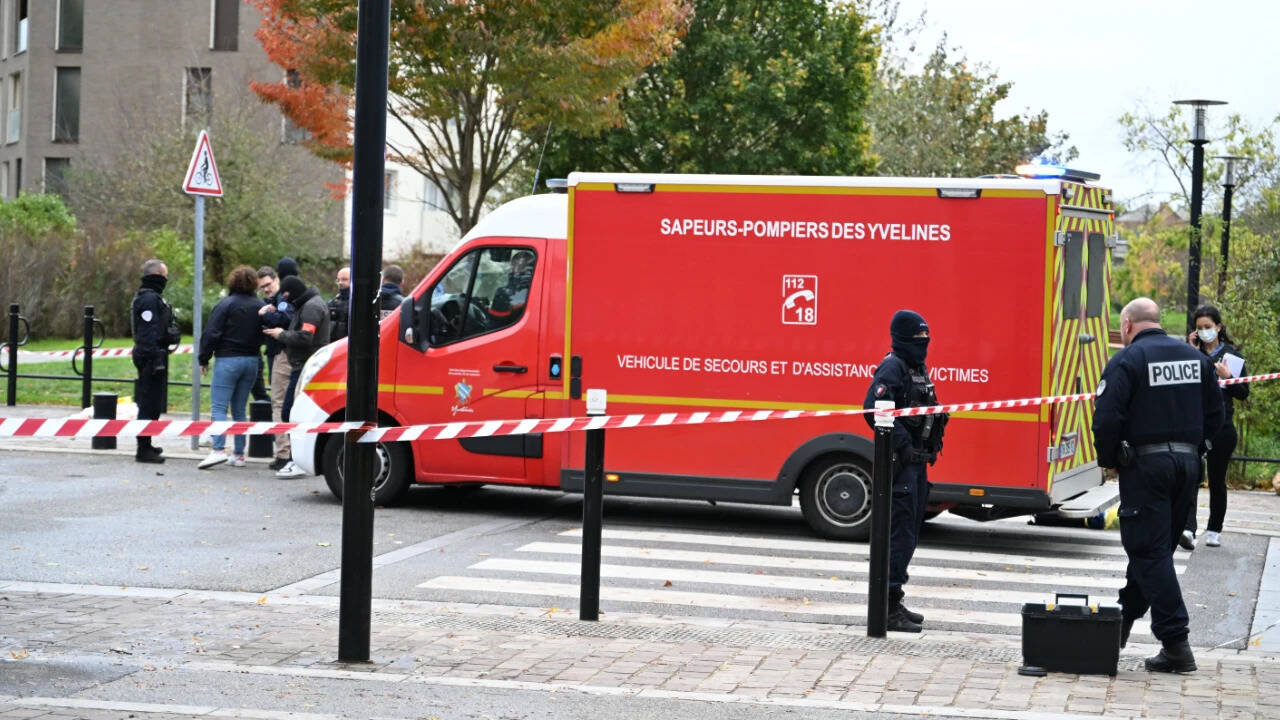
For one martial arts fighter near the French capital, that transition from the sanctuary of the mat to the asphalt of the Parisian suburbs became the setting for a brutal reminder of just how fragile safety really is. When his local athletic club stepped forward to publicly identify him as the victim of a suspected racist attack, the dry police blotter transformed into something far heavier. It stopped being a mere statistic in a municipal crime report. It became a mirror held up to the quiet, everyday friction simmering just outside the Ring Périphérique. For another perspective on this story, see the recent coverage from USA Today.
The Illusion of the Armor
People who have never stepped onto a sparring mat harbor a curious misconception about fighters. They assume that physical competence acts as an invisible forcefield. They watch a middleweight throw a clean roundhouse kick or execute a textbook judo throw and conclude that such a person is untouchable on the street.
That is a dangerous myth.
Combat sports operate on consent, weight classes, and the absolute certainty that someone will not blindside you from behind while you are checking your phone. A trained athlete spends thousands of hours teaching their nervous system not to panic, not to swing wildly, and not to escalate violence outside the gym. In France, a fighter's hands are quite literally treated by the courts as weapons; using them in a street altercation carries severe legal consequences, even when the provocation is venomous.
So picture the sheer, suffocating helplessness of that moment. Let us imagine a hypothetical evening that mirrors the reality faced by countless athletes commuting through the banlieues—a composite drawn from the testimonies of fighters who know these train platforms by heart. You are tired. Your shoulders ache from ninety minutes of grappling. Your knuckles are taped, your gym bag is slung over one shoulder, and all you want is dinner and sleep. Then come the slurs. Low at first, testing the air, followed by the sudden shove that knocks your center of gravity off-kilter before your brain even registers a threat.
You have spent your entire adult life learning how to fight, yet in that exact second, every instinct you trained for is either useless against superior numbers or legally radioactive.
Bruises fade in ten days. Broken noses heal in six weeks. What lingers is the realization that the very discipline that makes you a champion inside the ropes leaves you uniquely exposed when hatred ambushes you in the dark.
What the Club Actually Did
When a sports club breaks its silence to identify one of its own as the target of a suspected hate crime, it is rarely a routine public relations move. Local French martial arts clubs—whether they teach judo, boxing, Brazilian jiu-jitsu, or MMA—are deeply tight-knit ecosystems. They are often the last functioning civic glue in neighborhoods where municipal funding has dried up and social tensions run hot.
For a club’s leadership to publicly confirm that their athlete was targeted because of his race, several quiet barriers have to fall first.
Athletes are notoriously proud. Admitting that you were jumped, humiliated, or beaten on a public street cuts straight into the core of a fighter's identity. There is an irrational, lingering shame attached to being a victim when your entire public persona is built around toughness. Add to that the complicated relationship between minority communities in the greater Paris region and local law enforcement, where filing a formal complaint for a racially motivated assault often feels like shouting into a bureaucratic void.
By stepping forward, the club did something radical. They refused to let the incident be sanitized into a "random mugging" or a "youth altercation"—the standard euphemisms that allow polite society to look away.
Look at the numbers across France over the past few years, and a grim pattern emerges. According to annual reports from the French Interior Ministry and the National Consultative Commission on Human Rights (CNCDH), officially recorded racist, xenophobic, and anti-religious offenses have surged sharply, jumping by more than thirty percent in recent reporting cycles. Yet sociologists and legal advocates repeatedly warn that police blotters capture only a fraction of the reality. Victimization surveys consistently show that fewer than one in five victims of racist harassment or assault ever file a formal complaint.
Most swallow it. They adjust their route home. They take off their headphones at dusk. They keep their heads down.
When the club named the reality of the attack, they interrupted that silence. They forced the public to look at a human being—a teammate, a mentor, a neighbor—rather than an abstract demographic trend.
The Invisible Geography of Paris
To understand why an attack near Paris carries such specific emotional weight, you have to understand the invisible lines drawn across the Île-de-France region.
To a tourist sipping espresso near the Louvre, Paris is a postcard of limestone facades and effortless elegance. Take the RER commuter rail twenty minutes north, east, or south, and the architecture shifts into concrete towers, industrial parks, and crowded transit hubs. Millions of people cross that invisible border twice a day. They build the city's buildings, drive its buses, staff its hospitals, and—yes—win its Olympic medals.
French sport has long been held up as the ultimate engine of integration. Every time a French judoka or boxer stands on an international podium draped in the tricolor flag, commentators praise the unifying magic of the Republic's athletic clubs. Judo alone boasts over half a million licensed practitioners in France, making it a national obsession. Combat sports gyms in the suburbs of Paris are legendary factories of talent, pulling kids off concrete courtyards and giving them structure, hygiene, humility, and a sense of belonging.
There is a bitter hypocrisy in cheering for those athletes under stadium spotlights while ignoring the hostility they navigate on the walk home from practice.
Consider the psychological whiplash of living in that gap. Inside the dojo, you are judged strictly by your effort. You bow to your partner; your partner bows to you. Both of you sweat onto the same canvas. Five hundred meters away, at a bus stop or a dimly lit underpass, your very presence is treated by strangers as a provocation. That split reality corrodes trust faster than almost anything else. It teaches young athletes that excellence will not protect them, and that assimilation is a moving goalpost someone else controls.
Why Hate Targets the Visible
Racist violence rarely aims at the isolated; it almost always aims at visibility. It seeks to remind someone that no matter how rooted they are in a community, no matter how many trophies sit on their club’s shelf, their belonging is conditional.
I remember the first time I watched a close friend—a heavyweight boxer with hands like anvils and the temperament of a golden retriever—deal with the aftermath of a racially charged confrontation outside a train station. He hadn't thrown a single punch. He had walked away, swallowed the spit aimed at his jacket, and kept moving because he knew that if the police arrived and saw a six-foot-two Black man standing over a bruised assailant, nobody would ask who started it.
What broke my heart wasn't his anger. It was his exhaustion.
For weeks afterward, his posture changed. The easy, open-shouldered stride he carried into the gym every evening had shrunk by an inch. He scanned corners before turning them. He stopped staying late to help the beginners wrap their hands because he didn't want to catch the late train alone. The attackers hadn't landed a clean blow on his jaw, yet they had still managed to steal a piece of his freedom.
That is the real injury of a hate crime. A standard assault takes your wallet or leaves a scar. A racist attack attempts to evict you from public space. It sends a message not just to the person bleeding on the pavement, but to everyone who looks like him: This street is not yours.
The Legal and Social Reckoning
Under French law, racism is not treated as an opinion; it is an aggravating circumstance that significantly increases criminal penalties when attached to physical violence. Prosecutors have the tools to pursue enhanced charges, provided investigators take the motive seriously from the very first hour.
Too often, however, the burden of proof falls agonizingly on the bruised shoulders of the victim. Unless an attacker screams a slur directly in front of a neutral witness or a high-definition security camera with working audio, the racial motive risks being stripped out during preliminary inquiries to speed up the court docket. What began as a targeted hate crime gets downgraded to simple battery, and the deeper sickness goes unrecorded.
This is precisely why the public stance taken by the fighter's club matters so much. Institutional backing changes the calculus. When coaches, teammates, and local officials stand shoulder to shoulder behind an athlete, prosecutors pay closer attention. Witnesses feel safer coming forward. The victim does not have to stand alone in a sterile precinct hallway trying to convince a tired clerk that what happened to him was more than a random brawl.
Still, legal prosecution is an autopsy, not a cure. By the time a gavel drops in a French courtroom eighteen months later, the community has already absorbed the shockwaves.
The real defense happens much closer to the ground. It happens when gyms refuse to treat their duty of care as ending at the front door. It happens when fellow athletes—especially those who do not carry the target of prejudice on their skin—refuse to treat a teammate's trauma as someone else's political problem.
Back to the Canvas
In martial arts, there is a fundamental principle taught during the very first week of training: when you are knocked down, you do not stay flat on your back. Staying flat gets you pinned. You frame with your forearms, you bridge your hips, you create space, and you work your way back to your feet—not out of blind rage, but out of survival and self-respect.
The fighter near Paris did not ask to become a symbol. Like every other athlete who laces up gloves or ties a belt around a worn cotton gi, he just wanted to train, improve, and go home in peace. Hate forced a spotlight onto his bruised face that he never sought.
Yet by refusing to hide in the shadows—and by having a club brave enough to speak his truth out loud—he has already denied his attackers the victory they wanted most. They wanted him small, silent, and afraid to take the train tomorrow night.
Instead, tomorrow evening, the gym doors will unlock again. The heavy bags will swing on their chains. Someone will sweep the mats, someone else will tape their wrists, and the smell of sweat and liniment will rise back into the air—stubborn, unbroken, and waiting for him to step back inside.