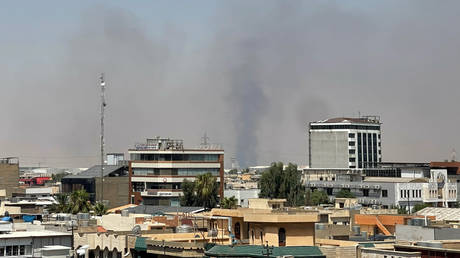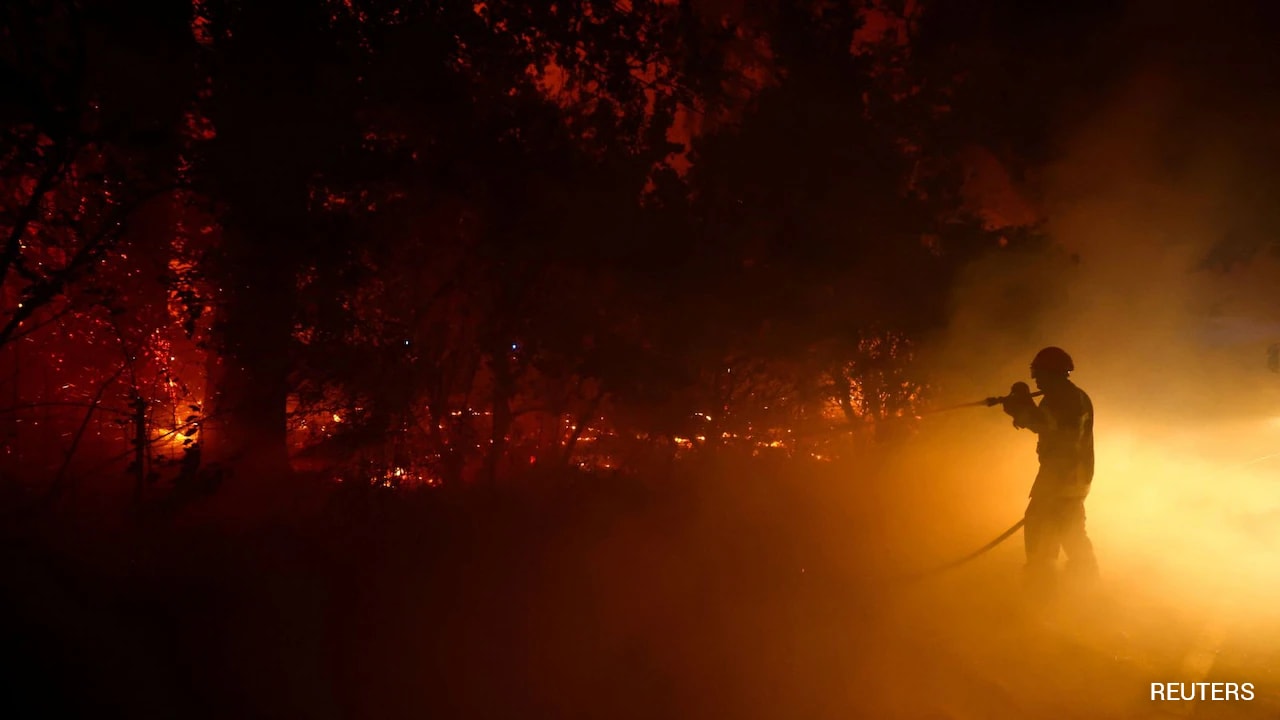
The 40,000-Person Illusion
Headlines love mass evacuations. Upwards of 40,000 residents and tourists fleeing southwest France during the Landiras and Teste-de-Buch blazes sounds like decisive leadership. It reads like a heroic, life-saving intervention executed under catastrophic conditions.
It is actually a symptom of systemic failure. Meanwhile, you can find similar events here: Sovereignty Infrastructure Asymmetry The Strategic Logic Behind Indias Territorial Objections.
When authorities order sweeping, blanket evacuations, the press treats it as a triumph of disaster response. In reality, modern wildfire policy has backed itself into a corner. We treat fire purely as an enemy to be run from or extinguished, ignoring a century of forestry science proving that total suppression creates the exact mega-fires we now flee. By focusing entirely on dramatic, last-minute logistics—buses, shelters, police escorts—we obscure the policy failures that built the tinderbox in the first place.
I have watched public administrators burn through tens of millions of euros on emergency logistics while skimping on basic fuel-load management. The spectacle of panic mask the reality: we are evacuating because we refused to manage the land. To see the full picture, we recommend the detailed report by Reuters.
The Illusion of Safety in Mass Displacement
The immediate counterargument is obvious: human life comes first. No one argues against saving lives. The flaw lies in assuming that sudden, chaotic displacement of tens of thousands of people carries zero risk.
The Hidden Costs of Sudden Flight
- Logistical Friction: Moving 40,000 people down narrow, smoke-choked coastal routes in the Gironde region creates massive traffic bottlenecks. If a fire shifts direction unexpectedly, jammed highways turn into deadly traps.
- Vulnerable Populations: Forcing the elderly, hospitalized, or mobility-impaired out of specialized facilities on short notice causes severe physical trauma and disorientation that rarely gets counted in official wildfire casualty numbers.
- Resource Diversion: Every police unit, local official, and emergency responder deployed to manage traffic control and temporary shelters is a resource taken away from direct defense operations or targeted, localized evacuations.
We call empty towns a success story. Yet when panic becomes the primary protocol, luck plays a far bigger role in survival than the headlines admit.
Prescribed Burns and Land Neglect: The Uncomfortable Math
The maritime pine forests of the Landes region are not pristine wilderness. They are a commercial, human-managed forest ecosystem. Over decades, strict suppression policies allowed dense underbrush—gorse, heather, deadwood—to accumulate unchecked.
+-----------------------------------------------------------------------+
|                       THE SUPPRESSION PARADOX                         |
|                                                                       |
|  Total Suppression Policy  -->  Underbrush & Fuel Accumulation        |
|                                            |                          |
|  Catastrophic Mega-Fires  <--  Uncontrollable Fire Intensity          |
+-----------------------------------------------------------------------+
When a blaze catches under high heat and drought conditions, it no longer stays on the forest floor. It climbs this ladder fuel directly into the canopy. At that point, water bombers and ground crews become almost useless.
The forestry sector knows the solution, but it is politically uncomfortable: controlled winter burning and aggressive fuel-load clearing.
"Fire has been part of Mediterranean and European pine ecosystems for millennia. Preventing all fire guarantees that when a fire eventually happens, it will be uncontainable."
Yet, local governments routinely block controlled burns due to public complaints about smoke, minor tourism inconvenience, or bureaucratic fear of liability. Instead of accepting small, controlled risks in February, they accept catastrophic, unmanageable risk in July.
Why "Stay and Defend" Is Treated Like Taboo
In places like Australia, wildfire doctrine long recognized the concept of "Prepare, Stay and Defend, or Leave Early." It acknowledges a reality that European planners treat with horror: well-prepared, physically capable property owners can often defend a defensible home against ember attack, freeing up professional firefighters for critical infrastructure.
Instead, European policy defaults to total evacuation commands for entire regions.
This creates a cycle of learned helplessness:
- Citizens rely entirely on the state to protect their property.
- Defensible space around homes—clearing vegetation within 30 meters, removing wooden fences, cleaning gutters—is ignored because residents expect to be ordered to leave anyway.
- Fire crews are forced to spend time protecting unprepared structures that should have been hardened months prior.
Admittedly, telling people to stay and defend carries liability. If someone stays in an unprepared house and perishes, the municipality faces public outrage. Ordering a blanket evacuation shifts all personal responsibility away from the city council and onto the citizen—even if it leaves homes to burn that could easily have been saved.
Dismantling the Public Myths
Myth: "Climate Change Is the Only Factor"
Rising temperatures and prolonged heatwaves amplify drought conditions. That is undeniable physics. But climate change acts as a force multiplier on top of land management choices. Blaming heat alone abdicates responsibility for forestry decisions, urban encroachment into timberlands, and neglected firebreaks.
Myth: "Evacuating Early Is Always the Safest Option"
If you leave 24 to 48 hours early based on clear predictive modeling, yes. When 40,000 people attempt to leave simultaneously on three hours' notice along limited coastal arteries, the evacuation process itself presents high operational risk.
Rethinking Fire Governance
To break this pattern, regional authorities need to abandon the optics-first approach to disaster management.
- Mandate Structure Hardening: Stop treating brush clearing around homes as an option. Enforce strict building codes and defensible space perimeter checks with real financial penalties for non-compliance.
- Normalize Winter Offsets: Allocate budget away from seasonal emergency suppression assets and directly into year-round land management teams tasked with winter burns and mechanical brush removal.
- Tiered Evacuation Zones: Replace massive regional evacuation orders with hyper-local, phased warnings that prioritize high-risk populations early while allowing prepared property owners to secure assets without creating highway gridlock.
Evacuating 40,000 people isn't a badge of honor. It is an admission that every preventative measure before the ignition failed.
Stop celebrating the flight. Start demanding the management that makes fleeing unnecessary.