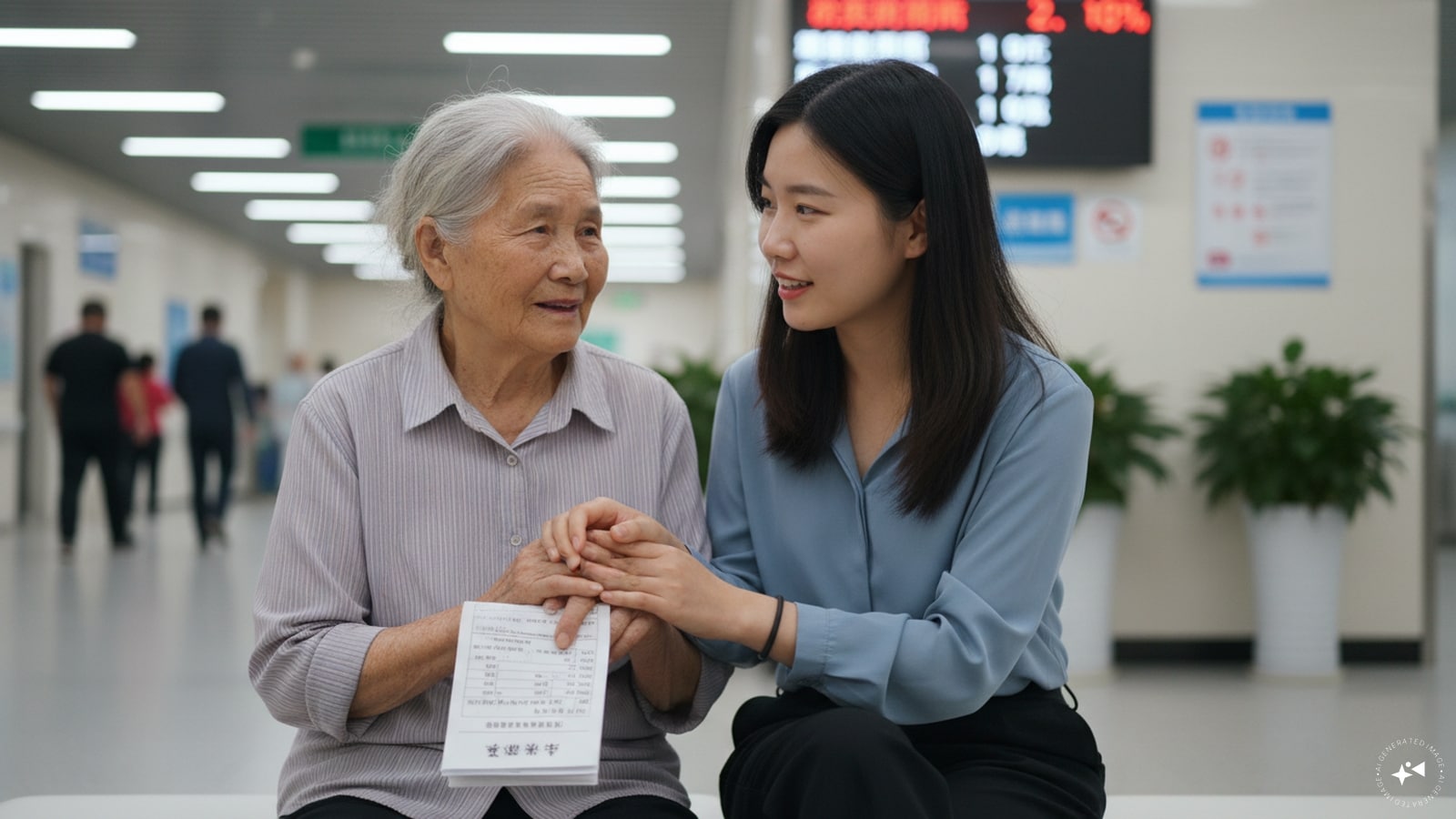
China's demographic math is brutal. By the middle of this century, more than four hundred million citizens will be over the age of sixty. That total exceeds the entire population of the United States. While Beijing has scrambled to build eldercare facilities and subsidize nursing infrastructure, the sheer scale of the silver tsunami has outpaced state capacity. Families have shrunk under decades of population control policies, leaving single children to bear the financial and physical weight of supporting aging parents and grandparents simultaneously.
Into this structural vacuum steps the temporary child. For another look, consider: this related article.
This emerging phenomenon addresses a specific, aching deficit in the current social fabric. Seniors who live alone or lack daily support are hiring younger adults to function as proxy family members. These arrangements go far beyond traditional home care or domestic housekeeping. Young workers accompany elderly clients to routine hospital visits, sit with them through complex medical consultations, assist with digital banking hurdles, or simply provide conversation over a meal. The relationship is transactional yet deeply intimate, operating through digital platforms that connect isolated seniors with entrepreneurial youth looking for flexible gig work.
Financial necessity fuels the supply side of this equation. Urban youth face a fiercely competitive job market with high underemployment rates. Gig economy platforms offer an alternative stream of income for individuals willing to trade their time and emotional bandwidth. They register as companion workers, setting hourly or daily rates to help older adults navigate a society that has rushed headlong into digital automation while leaving its oldest residents behind. Further analysis on this trend has been published by TIME.
The structural failure here lies in the breakdown of traditional support systems. Rapid urbanization tore apart extended family networks. Millions of young people migrated from rural provinces to sprawling megacities like Shanghai, Shenzhen, and Beijing for employment, leaving their hometown elders behind in empty houses. When an elderly parent needs to navigate a sprawling tertiary hospital, manage confusing medication schedules, or advocate for themselves during a critical diagnosis, the biological child is often hundreds of miles away, chained to a desk in a corporate high-rise.
Technology exacerbates the friction. Modern Chinese society runs almost entirely on smartphone applications. Public transportation, utility payments, medical appointments, and grocery delivery require fluency in digital interfaces. For a demographic that grew up interacting with paper and face-to-face service clerks, this transition is hostile territory. Temporary children bridge the digital divide. They hold the smartphone, click the appointment slot, and translate algorithmic prompts back into human interaction.
Critics raise valid concerns about the commercialization of familial affection. When emotional support and basic human care become a billable service, the dynamic shifts into uncomfortable territory. Skeptics argue that relying on gig workers for eldercare papers over a deeper systemic deficiency. It allows policymakers to treat a profound social crisis as a market opportunity. If platforms can monetize loneliness, what incentive does the government have to fund comprehensive public care infrastructure?
Yet, for the individuals involved, these philosophical debates matter very little. A widowed grandmother sitting in a crowded hospital lobby cares only about having someone listen to the doctor's instructions and write them down. A retired factory worker waiting for a routine checkup cares only that someone is there to push the wheelchair. The market responds because the alternative is complete isolation.
Scaling this model introduces fresh complications. Quality control remains a major hurdle. Unlike licensed nurses or certified home health aides, temporary children undergo little to no formal vetting regarding medical competence or elder psychology. Transactions happen through peer-to-peer apps, where ratings and reviews serve as the primary safeguard. This lack of institutional oversight exposes vulnerable seniors to potential financial exploitation or subpar care. Platforms have attempted to institute verification procedures, but enforcement varies widely, leaving room for bad actors to exploit desperate families.
Long-term sustainability presents another hurdle. Being a temporary child is exhausting labor. The emotional toll of constantly entering the lives of aging strangers, managing their health crises, and dealing with grief takes a heavy psychological tax on young workers. Most treat it as a stopgap measure rather than a viable career path. Turnover rates are high, preventing the formation of stable, long-term bonds that elderly clients ultimately crave.
The state is slowly acknowledging the gap. Local municipal governments in several eastern provinces have begun experimenting with subsidized community care networks, attempting to institutionalize aspects of the temporary child model by pairing local youth groups with neighborhood seniors. These official programs offer stipends and basic training, trying to blend the warmth of informal peer support with the safety of administrative oversight.
Even with state intervention, the private market continues to expand. Demand shows no sign of softening as the demographic curve steepens over the coming decade. Millions more citizens will cross the retirement threshold while birth rates remain stubbornly low. The mathematical reality guarantees that the pool of traditional family caregivers will continue to shrink.
Ultimately, this trend serves as an unvarnished mirror of modern social dislocation. It demonstrates human adaptability in the face of macro-economic pressures, showing how individuals construct their own safety nets when institutional structures fracture. The temporary child is not a permanent fix for an aging superpower, but rather a temporary patch holding together a system strained to its absolute limits.