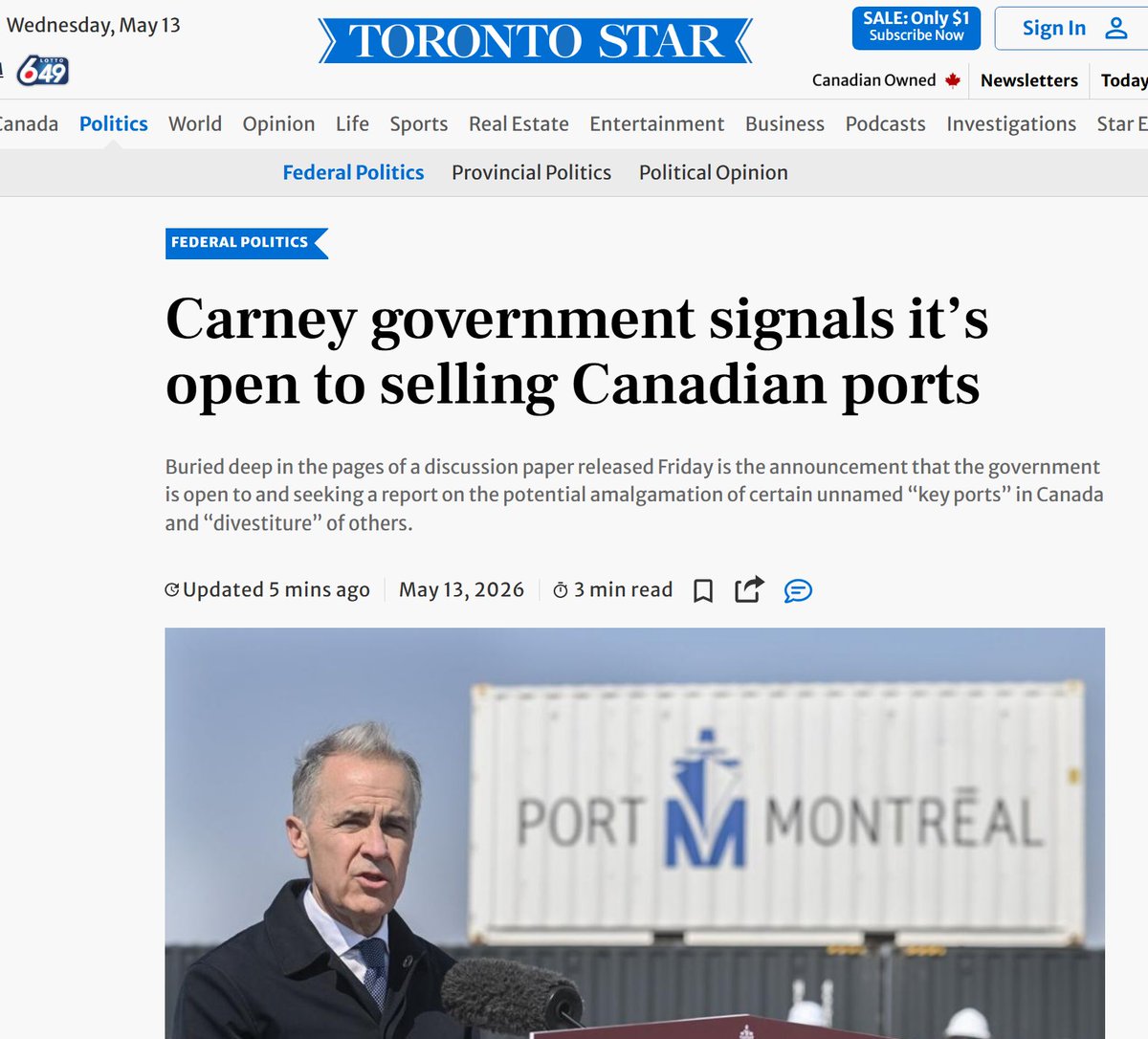
Mark Carney wants international capital to view Canada as a sanctuary in a fracturing global economy. He stands on international stages, smoothing over trade friction and whispering sweet promises of stability, green energy abundance, and rule-of-law reliability while Washington and Beijing tear up the playbook. The financial media eats it up. Foreign institutional funds nod politely and scribble notes about safe-haven resource plays.
It is a comforting delusion.
The lazy consensus says that as protectionist walls rise in the United States, Canada can pivot gracefully, positioning itself as the calm, adult-in-the-room middle power that picks up the disaffected capital fleeing American volatility. The narrative is neat, patriotic, and fundamentally detached from operational reality.
I have watched institutional allocators evaluate Canadian assets for two decades. They do not care about polite diplomacy when the productivity numbers flash red. They care about velocity, return on capital, and whether a project can clear regulatory hurdles before the decade ends. Right now, Canada fails every single one of those tests. Selling the country as a global trade-war lifeboat ignores the heavy anchors dragging the hull down.
The Productivity Illusion Nobody Wants to Name
Let us stop pretending that macro-branding substitutes for micro-economic output. Canada suffers from a chronic, compounding productivity crisis that no amount of Davos-friendly speechifying can fix.
When capital looks at Canada, it sees an economy addicted to real estate speculation and resource extraction with minimal value-add processing. Business investment per worker in Canada has stagnated relative to the United States for a generation. Companies do not invest capital expenditure here because tax structures, interprovincial trade barriers, and an impenetrable environmental assessment apparatus punish scale.
Carney pitches stability. But stability without growth is just stagnation with a better view.
If foreign investors actually deploy capital based on his pitch, they walk straight into a regulatory quagmire. Imagine a scenario where a European pension fund attempts to finance a critical minerals processing facility in Northern Ontario. On paper, it checks every geopolitical box. In execution, the fund will spend four years navigating indigenous consultations, municipal zoning disputes, and overlapping federal-provincial environmental reviews only to find that electricity grid connection queues stretch into the late 2030s.
Capital is cowardice wrapped in a spread sheet. It flees friction. Canada manufactures friction at scale.
The US Trade War Is Not a Window It Is a Mirror
The prevailing wisdom treats the American trade friction under successive protectionist administrations as an external shock that benefits Canada by default. If the United States turns inward, the logic goes, global supply chains will diversify northward out of pure necessity.
This assumes the United States is merely building a wall. It is not. It is building an industrial policy fueled by massive subsidies like the Inflation Reduction Act. American protectionism comes packaged with trillions of dollars in fiscal gravity designed to pull manufacturing, technology, and energy processing directly onto American soil.
Canada cannot compete by offering nice manners and a lower carbon footprint on a PowerPoint slide. You cannot out-subsidize a superpower with a federal balance sheet constrained by provincial squabbling and healthcare obligations.
When American industrial policy sucks the oxygen out of the room, capital does not drift casually north across the 49th parallel. It goes where the market depth is. It goes where the venture capital ecosystems are mature. It goes where an entrepreneur can scale from a garage to a NASDAQ listing without running into provincial liquor-board-style regulations on commerce.
By pretending Canada is an independent alternative to American market dominance, leadership misdiagnoses the disease. Canada is inextricably downstream of American economic momentum. When the US sneezes, Canadian manufacturing catches pneumonia; when the US subsidizes, Canadian innovators pack their bags and move to Austin or Boston.
What Capital Actually Demands From Canada
If we want to stop playing the role of the polite supplicant begging for foreign direct investment, the prescription requires policies that make polite dinner party guests uncomfortable.
First, dismantle internal trade barriers. The fact that moving beer, lumber, or professional credentials across provincial borders requires navigating protectionist red tape that would make a medieval mercantilist blush is an embarrassment. A unified national market should be the baseline, not an aspirational pipe dream.
Second, radically compress project timelines. Capital does not wait five years for an environmental permit while competitors in other jurisdictions build the factory, run the trials, and capture the market. Environmental stewardship is non-negotiable, but the current bureaucratic labyrinth exists to kill momentum rather than protect ecosystems.
Third, align corporate tax and regulatory incentives with risk-taking. Canada loves rewarding incumbents, banking monopolies, and oligopolies that provide steady dividend yields while starving dynamic, high-risk innovators of growth capital.
Carney knows these structural failures intimately. He has diagnosed them from every angle of public and private finance. Yet, pitching Canada to global investors requires selling the product as it stands today, not the product it could be if we torched our political sacred cows.
Until Canada confronts its deep-seated aversion to disruption, every pitch made in foreign financial capitals remains a brilliant marketing campaign for a stagnant warehouse. The trade war is not an invitation for Canada to shine. It is an X-ray revealing the fractures we spent thirty years ignoring.
Stop buying the brochure. Fix the engine.