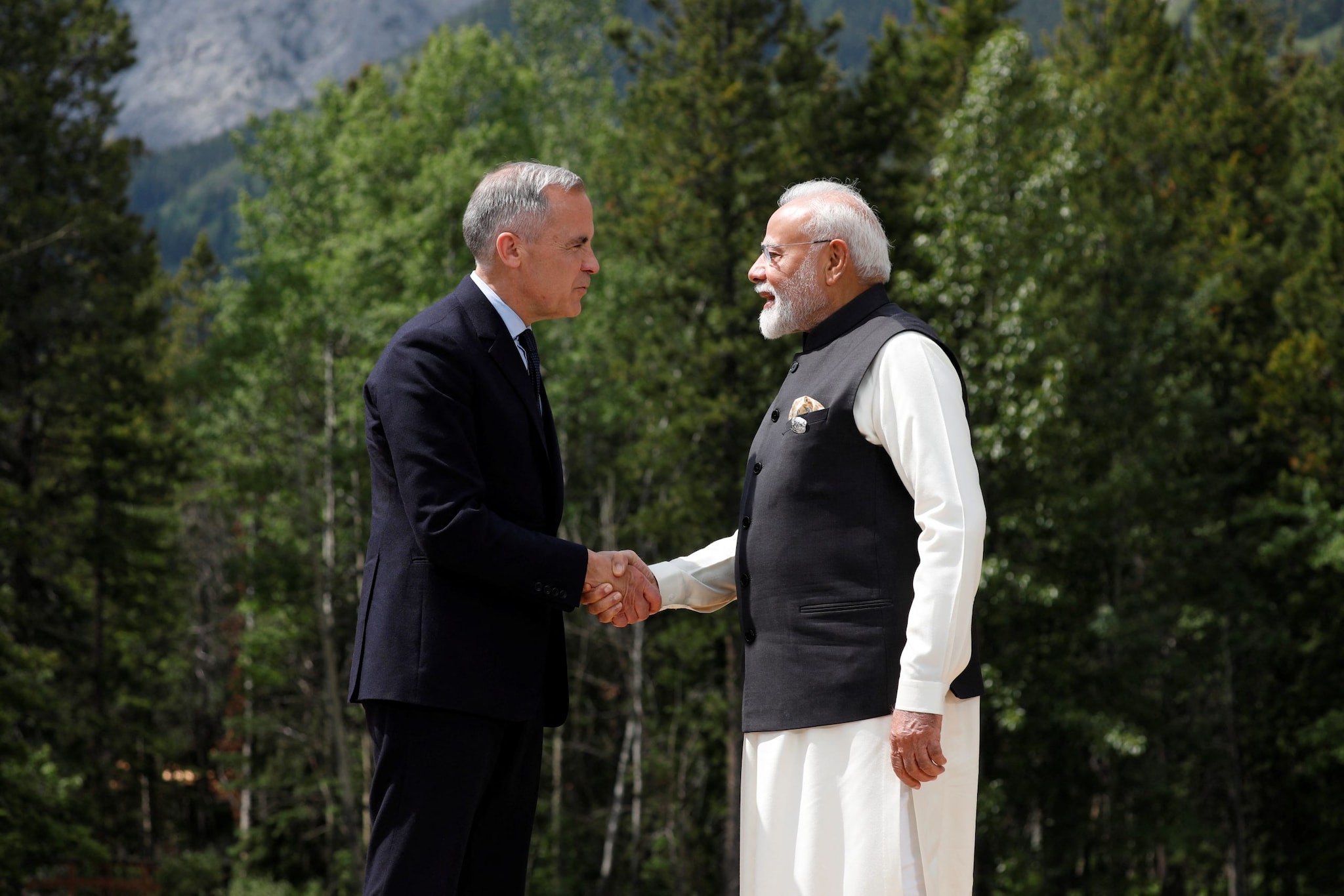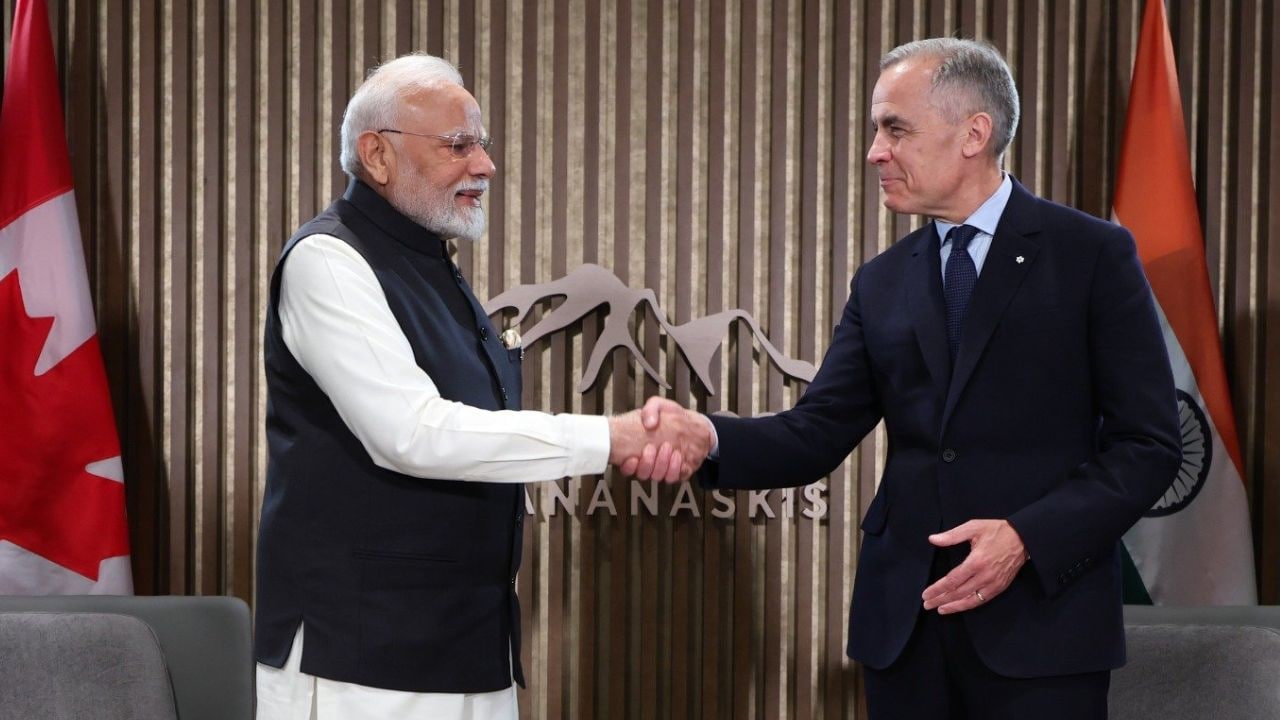
Mark Carney’s arrival in New Delhi on March 2 is being framed by the mainstream financial press as a high-level summit for "trade and energy." It isn't. It is a sales pitch for a Western-centric financial architecture that India has every reason to reject. Carney, the former Governor of the Bank of England and currently the UN Special Envoy for Climate Action and Finance, represents a specific brand of "green" institutionalism that prioritizes the stability of Western balance sheets over the industrial reality of emerging markets.
The consensus says Carney is here to help India "unlock" green capital. The reality is that Carney’s framework, largely built through the Glasgow Financial Alliance for Net Zero (GFANZ), is designed to export the risk of the energy transition to the Global South while keeping the profits and the intellectual property in the Global North.
The Myth of the Green Finance "Gift"
The press will tell you that Carney’s visit is about aligning India with global standards for critical minerals and renewable energy. This is a trap. When Western financiers talk about "aligning standards," they mean implementing ESG (Environmental, Social, and Governance) metrics that effectively penalize developing nations for using the same energy density—coal and gas—that built the West.
India’s energy demand is not a theoretical problem for a spreadsheet in London. It is a physical requirement for 1.4 billion people. Carney’s GFANZ manages over $150 trillion in assets, yet the actual flow of capital to Indian infrastructure remains a trickle. Why? Because the "standards" Carney promotes define India’s necessary industrial growth as "high risk."
I have seen private equity firms use these exact Carney-style frameworks to walk away from essential Indian grid projects because the "carbon intensity" didn't look good on a quarterly report in Manhattan. They aren't helping India transition; they are telling India to slow down so their own portfolios look "clean."
The Critical Minerals Shell Game
Expect plenty of talk about "supply chain resilience" and "critical minerals" during the talks with PM Modi. The narrative is that India needs Western partners to secure lithium, cobalt, and rare earths to break the Chinese monopoly.
This ignores the fundamental math of the commodity markets. The West doesn't want India to become a sovereign powerhouse in critical minerals; they want India to be the mid-stream processor that absorbs the environmental costs while the value-add happens in the US and EU. Carney’s role is to ensure the financing for these projects comes with strings attached—specifically, adherence to Western "transparency" rules that are often used as a tool for economic surveillance and market entry for Western firms.
If India wants to dominate the critical minerals sector, it needs to stop asking for permission from UN Envoys and start building its own bilateral resource-backed credit lines.
The Fallacy of the Carbon Market
One of Carney’s pet projects is the Voluntary Carbon Market (VCM). He wants India to be a massive exporter of carbon offsets. On paper, this sounds like free money for Indian farmers and foresters. In practice, it’s a form of "carbon colonialism."
Think about the mechanics:
- An Indian project sequesters carbon at a low cost.
- A Western multinational buys the credit for a pittance.
- The multinational continues to emit, claiming "Net Zero" status.
- When India eventually needs those offsets to meet its own national targets under the Paris Agreement, the "low-hanging fruit" is already gone, sold off to a tech giant in Silicon Valley.
By selling its carbon credits now, India is selling its future right to emit. It’s a bad trade. Carney is a master of the "win-win" rhetoric, but in the world of hard assets and atmospheric limits, someone always loses. India should be hoarding its carbon sinks, not auctioning them off to satisfy the ESG mandates of British pension funds.
The Tech Gap Carney Won't Mention
The biggest silence in these bilateral talks will be around Technology Transfer. Carney speaks the language of finance, not physics. He will advocate for India to buy Western green tech—hydrogen electrolyzers, CCS modules, and high-efficiency turbines—financed by Western debt.
This creates a debt trap disguised as a green revolution. India shouldn't be looking for "investment" in the form of loans to buy foreign equipment. It should be demanding the IP. Real partnership isn't Carney helping India "access" markets; it's the dismantling of the patent regimes that make green energy a luxury good.
The "De-Risking" Delusion
You will hear the word "de-risking" a hundred times on March 2. In Carney-speak, this means the Indian taxpayer should provide guarantees (the "risk") so that private Western capital can take the "return."
Imagine a scenario where a $1 billion solar farm is built. Under the Carney model, the Indian government provides a sovereign guarantee, the World Bank provides a partial risk guarantee, and a London-based bank provides the loan at 8%. If the project fails, the Indian taxpayer is on the hook. If it succeeds, the 8% interest flows straight out of the country. This isn't investment; it's a sophisticated extraction of interest.
India has a robust domestic banking system and a growing retail investor base. It doesn't need to de-risk projects for foreign billionaires; it needs to deepen its own capital markets to fund its own transition on its own terms.
What Modi Should Actually Say
The PM shouldn't be looking for Carney’s approval. He should be setting the terms of a new deal.
- End the ESG Premium: India should refuse to pay higher borrowing costs based on arbitrary Western climate scores.
- Sovereign Carbon Reserv: Declare that carbon sequestration on Indian soil is a national strategic asset, not a tradable commodity for foreign firms.
- Local Content Requirements: Any "green finance" led by Western institutions must come with a 70% local manufacturing mandate for all hardware.
Carney is a brilliant technocrat, perhaps the best in the world. But his primary allegiance is to the global financial system's status quo. He is in New Delhi to ensure that as the world shifts from oil to electrons, the same people stay in charge of the toll booths.
Stop treating this visit as a diplomatic win. It is a commercial negotiation where India holds the most valuable asset in the world: future energy demand. If you're sitting at the table and you don't know who the mark is, it's you.
Don't buy the "Green" label. Look at the balance sheet. If the technology isn't Indian and the profit isn't staying in India, it isn't progress. It’s just the old empire with a new paint job.
Build the coal plants you need. Secure the minerals you found in Jammu and Kashmir. Develop your own thorium reactors. And tell the UN Envoys that India's development isn't up for negotiation on their timeline.