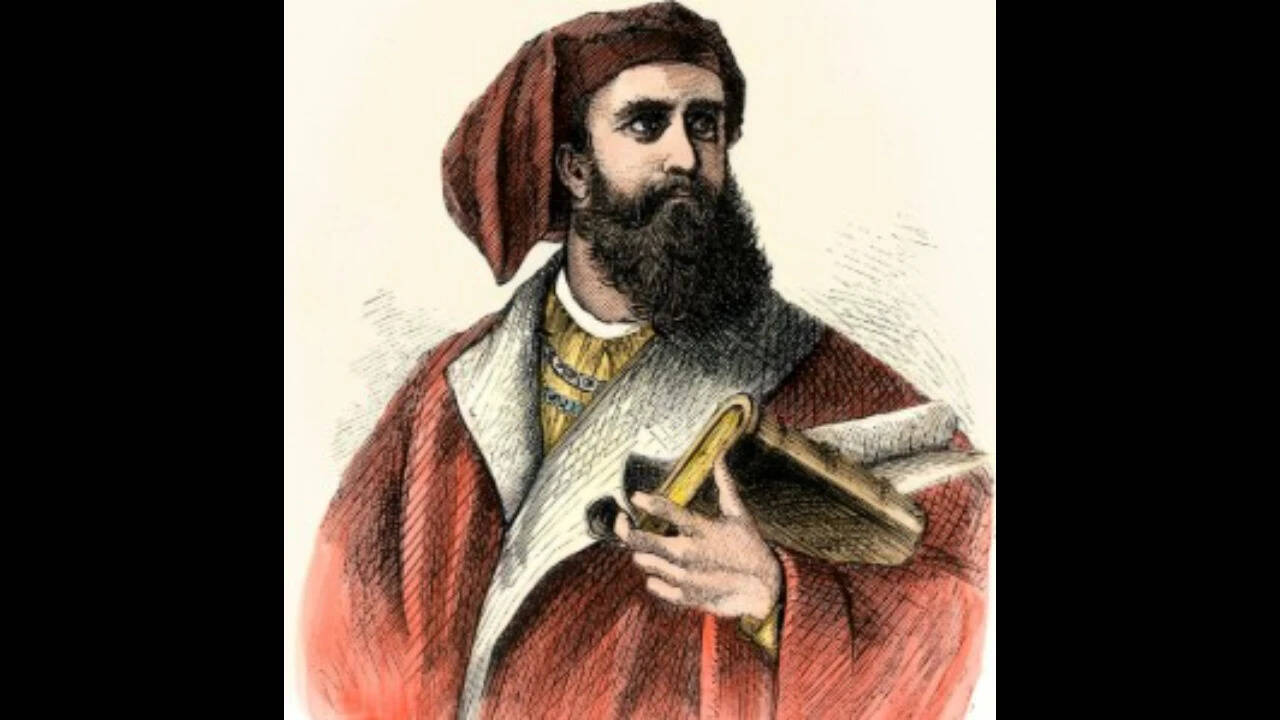
For centuries, armchair romantics have quoted Marco Polo like a sacred text. They point to his famous deathbed defense—the tired refrain that he refused to write half of what he saw because nobody would believe him—as proof that human imagination pales next to the sheer scale of reality. It is a comforting narrative. It feeds our collective addiction to the mysterious, the hidden, and the unfathomable.
It is also complete nonsense.
Marco Polo did not suppress his stories because reality was too grand for mortal comprehension. He omitted things, or misconstrued them entirely, because he was an average merchant with a mediocre grasp of foreign languages, operating with zero empirical framework. When you look at his actual manuscripts, the gaps and absurdities do not point toward a mind overwhelmed by the infinite geometry of the universe. They point toward a guy who missed the Great Wall of China, confused rhinoceroses with unicorns, and inflated trade statistics to satisfy his ghostwriter.
Stop romanticizing bad reporting. Reality is vast, sure, but human perception fails not because the universe is too big, but because we are terminally lazy thinkers.
The Lazy Myth of the Unbelievable Universe
The lazy consensus in travel literature, history, and pop-science philosophy goes like this: the world is infinitely complex, our minds are fragile little boxes, and historical travelers like Polo were brave pioneers pushing against the boundaries of what society could fathom.
This is a cope.
When people say reality exceeds imagination, they usually mean they want an excuse to stop questioning their own assumptions. It is easier to shrug and mutter about the unknowable mysteries of the Silk Road than to admit that historical accounts are often sloppy, biased, and heavily redacted by medieval publishing trends. Rustichello of Pisa, the romance writer who co-wrote Polo's book while they shared a Genoese prison cell, did not care about ethnographic precision. He cared about a good hook.
Yet modern audiences swallow the legend whole. They take a PR document written seven hundred years ago and treat it as a metaphysical truth about the limits of human cognition.
Let us fix that right now. Human imagination does not lose to reality. Human laziness loses to reality every single day.
The Mechanics of Medieval Misdirection
If you spend time in archives or dissect historical travel writing, you notice a distinct pattern. The fantastic elements never arrive by accident. They cluster precisely where the author lacks linguistic competence or direct access to primary sources.
Polo spent decades in Yuan dynasty domains, yet his descriptions of administrative systems are surprisingly vague compared to his breathless anecdotes about dog-headed men and magical stones. Why? Because administration requires accounting, translation, and actual observation. Monsters require only a willing ear and a bored scribe.
I have spent years auditing operations in emerging markets, dealing with cross-cultural friction, and watching modern tourists repeat the exact same psychological error. When you do not understand the mechanics of a foreign market or a distinct culture, you default to two extremes: you either dismiss it as chaotic or elevate it to the miraculous.
Polo chose the miraculous because miracles sell books.
Consider the famous rhinoceros encounter. Polo describes a creature with the head of a boar, feet like an elephant, and a single thick black horn in the middle of its forehead, wallowing in mud and trampling people. He triumphantly notes: "They are not at all such as our stories represent them, which is that they let themselves be captured by virgins."
Generations of scholars have twisted themselves into knots trying to explain this passage. Did he see a Sumatran rhinoceros? Yes, almost certainly. Did he manage to describe it so poorly that he accidentally invented a chubby, mud-loving unicorn? Also yes.
The standard interpretation views this through a lens of wonder: Look how bizarre the world is! Even a rhino looks like a myth!
The correct interpretation is much harsher: Marco Polo saw a large animal, panicked or misunderstood his translator, and relied on familiar European fairy tales to fill the cognitive vacuum.
Reality did not exceed his imagination. His lack of observational rigor forced him to rely on his imagination to bail out his bad memory.
The Cost of Conceptual Slop
Why does this matter today? Because we are living through a massive resurgence of the same intellectual laziness.
Travel influencers, digital nomads, and lifestyle gurus constantly peddle the exact same mystified nonsense. They drop into a culture for forty-eight hours, fail to learn the language, ignore the economic realities, and then post breathless captions about how the local traditions defy Western logic. They use the Marco Polo defense whenever their claims fall apart under basic scrutiny.
"You just don't understand the energy of the place."
"The local mindset is too ancient for spreadsheets."
Stop it. This is intellectual cowardice wrapped in bohemian clothes.
When you refuse to apply rigorous analysis to what you observe, you aren't embracing the infinite majesty of existence. You are just failing at basic due diligence. I have seen founders blow millions of dollars expanding into foreign markets because they bought into the myth of the inscrutable local consumer. They treated business dynamics like mystical folklore instead of variables to be tested, measured, and understood.
When your strategy fails, do not blame the mysterious complexity of the cosmos. Blame your failure to look closely enough.
Dismantling the Cognitive Bias
To understand why people cling to the idea that reality outstrips imagination, we have to look at cognitive load theory. The human brain is a biological reduction engine. It consumes massive amounts of energy, so it constantly looks for shortcuts.
When confronted with high-entropy environments—new cities, complex trade routes, unfamiliar social hierarchies—the brain experiences friction. It wants to resolve that friction quickly.
You have two choices when faced with friction:
- The Rigorous Path: Slow down, map the variables, test hypotheses, admit what you do not know, and build a systematic mental model.
- The Marco Polo Path: Throw your hands up, declare the phenomenon too grand for mortal words, and invent a dragon.
Most people choose the dragon. It requires fewer calories.
Imagine a scenario where Marco Polo actually kept a meticulous, dry, ledger-style accounting of the Mongol postal system, the exact price of salt in Yangzhou, and the precise demographic breakdowns of Khanbalik. It would have read like an audit report. It probably would not have sold well in a Genoese prison. But it would have been infinitely more valuable to human knowledge.
Instead, we got a medieval travel blog padded with second-hand fish tales about cannibals and Christian kings who didn't exist.
The Uncomfortable Truth About the Unknown
The universe is not too big for your imagination. Your imagination is simply too lazy to do the heavy lifting required to understand the universe.
We use the "unknowable" as a trash can for our intellectual lazy habits. Whenever we encounter something that challenges our worldview or requires too much effort to parse, we slap a label of mysterious grandeur on it and move on.
Drop the romance. The world is complex, yes, but it operates on physical, economic, and social mechanics that can be mapped if you possess the discipline to do so.
Next time someone tells you that reality is too wild to capture in words, ask them to show their work. Ask them for the data, the source, the translation methodology, and the operational constraints. Watch how quickly the cosmic mystery dissolves into garden-variety human error.
Stop waiting for a medieval merchant to validate your sense of wonder. Look at the data. Do the work.
The truth is out there, and it is usually entirely mundane once you stop trying to turn it into a myth.