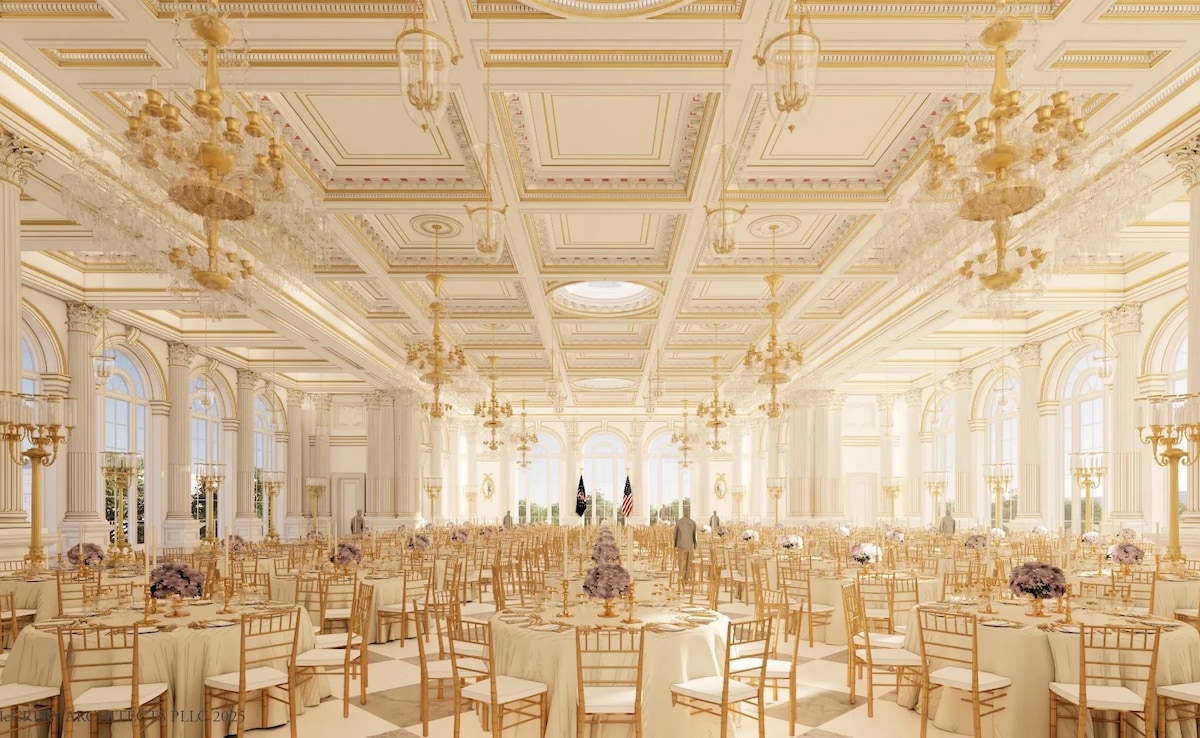
The outrage machine is currently idling at a red light in Palm Beach, revving its engine over a ballroom.
The headline-grabbing "allowance" for Donald Trump’s Mar-a-Lago renovations to proceed is being framed as a narrow escape or a legal loophole. This is a fundamental misreading of how high-stakes real estate and historic preservation actually function. The lazy consensus suggests that historic boards are neutral guardians of heritage, and that a property owner’s attempts to modernize are a direct assault on history.
This is nonsense.
Historic preservation has become the preferred weapon for NIMBYism and political lawfare. When we talk about the Mar-a-Lago ballroom, we aren't talking about "saving" a building. We are talking about the weaponization of aesthetics to throttle private property rights.
The Preservation Paradox
Most people believe that once a building is designated "historic," it should remain a static museum piece. This is the death knell for architecture. A building that cannot evolve is a building that is dying.
I have seen developers across the country walk away from landmark projects because the cost of compliance—matching a specific 1920s grout color or sourcing a discontinued limestone—outpacing the actual value of the structure. When preservation becomes a suicide pact, the building eventually rots from the inside out because nobody can afford to maintain the "perfect" version of its past.
The Mar-a-Lago controversy ignores the reality that the property has been a site of constant evolution since Marjorie Merriweather Post first broke ground. To freeze it in one specific era isn't historical accuracy; it’s a curated fiction.
The "Ballroom" Bogeyman
The specific contention around the ballroom renovation is often centered on the 2002 agreement with the National Trust for Historic Preservation. Critics point to the deed restrictions as if they were holy writ, designed to prevent any change.
They aren't.
Deed restrictions in high-end real estate are negotiation tools. They are designed to manage density and neighborhood character, not to act as a permanent ban on a fresh coat of paint or a structural upgrade. The "for now" caveat in the headlines is a classic media framing designed to imply impending doom. In reality, it reflects the standard, grinding pace of municipal oversight.
If this were any other Mediterranean Revival estate in Palm Beach, a renovation request would be a boring Tuesday at the planning office. Because the name on the deed is Trump, a standard interior modification is treated like a constitutional crisis.
The Economic Reality of Luxury Assets
Let’s talk about the math that the preservationists hate.
An asset like Mar-a-Lago costs millions annually just to keep the lights on and the salt air from eating the walls.
- Property Taxes: Significant.
- Insurance: In the Florida market? Atmospheric.
- Specialized Labor: You don't hire a guy from a big-box store to fix a 1920s gold-leaf ceiling.
To sustain these costs, the property must remain a viable business. As a private club, it survives on its ability to host world-class events. If the ballroom is outdated, the revenue drops. If the revenue drops, the maintenance suffers. If the maintenance suffers, the "historic treasure" everyone is so worried about actually falls apart.
The most effective way to destroy a historic building is to make it unprofitable. By trying to block renovations, the activists aren't saving the building; they are accelerating its decay.
Aesthetics as Lawfare
Palm Beach has some of the most restrictive architectural review boards in the world. They don't just care about the height of your roof; they care about the "feeling" your house project gives the neighbors.
This subjective "vibe check" is where the status quo hides. It allows a small group of unelected officials to dictate the use of private capital based on personal taste or, more frequently, political alignment.
When the town council "allows" a renovation to proceed, they aren't doing the owner a favor. They are simply acknowledging that the owner’s legal right to modify their property hasn't been completely extinguished by bureaucratic overreach.
The Nuance Nobody Wants to Admit
Is there a downside to my contrarian view? Sure. If you let every owner do whatever they want, you might lose some architectural gems to tasteless "McMansionization."
But the solution isn't to turn every grand estate into a frozen tomb. The solution is Adaptive Reuse. This is a term preservationists love to use in theory but hate in practice. It means letting a building change its function and its form to stay relevant.
The Mar-a-Lago ballroom is a case study in adaptive reuse. It was an addition to a private residence that became a centerpiece for a commercial club. To argue that it can never be touched again is to argue against the very process that created it in the first place.
Dismantling the "People Also Ask" Myths
"Is Trump breaking the law by renovating Mar-a-Lago?"
No. He is navigating a complex web of local ordinances and historic easements. Filing a permit and having it contested is the standard operating procedure for every billionaire developer in America.
"Why does the National Trust have a say?"
Because they hold a preservation easement. This is a tax-strategy-turned-legal-shackle. It gives them a seat at the table, but it does not give them an absolute veto over every nail driven into a wall.
"Doesn't this renovation hurt the historical value?"
Historical value is subjective. Market value is objective. If the renovation makes the space more functional for its intended use (hosting events), the market value increases. A building that works is always more valuable than a building that is a monument to "no."
The Real Crisis Isn't the Renovation
The real crisis is that we have allowed aesthetic preference to masquerade as law. We have created a system where a property owner has to beg for permission to update a room they pay millions to own.
The "temporary" win for the Trump renovation is actually a loss for everyone else because it reinforces the idea that your property rights are subject to the whims of a local board’s "for now" approval.
We should be cheering for the renovation. Not because of the man, but because of the principle. A building that is used, changed, and lived in is a living piece of history. A building that is blocked from change is just a very expensive corpse.
Stop pretending this is about architecture. This is about control. And the moment we let the preservationists win, we lose the very vibrancy that made these landmarks worth saving in the first place.
The ballroom is fine. The system is what's broken.
Fix the property rights, and the buildings will take care of themselves.