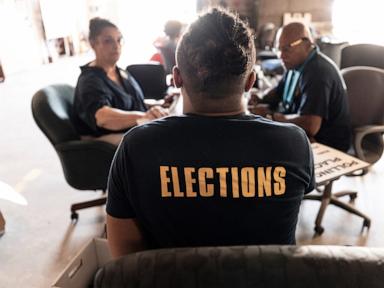
Elena Rossi has voted at the community center three blocks from her house for twenty-four years. She knows the squeak of the gymnasium floor. She knows the volunteer who hands out the stickers—a man named Arthur whose glasses always fog up in the November chill. Walking there is a ritual, as predictable as the changing leaves or the first frost on her kitchen window.
But this year, Elena’s vote will not be cast at the community center.
A few months ago, a computerized mapping tool, guided by the cold logic of census data and legislative recalculations, sliced through her county. The line did not follow a river or a major highway. It slid invisibly down the center of her asphalt street.
Elena’s house sits on the left side of the double yellow lines. Her neighbors across the street sit on the right. With a single click of a mouse in a state capitol miles away, Elena was placed into a entirely new congressional district. Her neighbors remained in the old one.
She did not move. Her house did not move. Yet, politically speaking, the ground shifted beneath her feet.
Millions of citizens are waking up to this exact reality. Across the nation, redistricting processes have quietly redrawn the boundaries of daily life for an estimated tens of millions of people. Redrawing maps is a legal requirement meant to ensure equal representation as populations shift. But numbers on a spreadsheet look drastically different than boundaries on the ground. When the ink dries on these new maps, it is the human fabric of neighborhoods that gets stretched, torn, and reconfigured.
The Geometry of Belonging
Consider how we define a community. It is rarely a perfect square. It is built on shared grocery stores, school districts, flooded basements, and local traffic frustrations.
When mapmakers set to work every decade, they use advanced geographic information systems to balance population counts. The law demands that districts hold roughly the same number of human souls. To achieve this mathematical equilibrium, the software must cut somewhere.
Imagine a thick, vibrant rope woven from hundreds of individual threads. That rope is a community. Now imagine a pair of shears cutting directly through the middle of it to create two equal piles of thread. The piles might weigh the exact same amount on a scale. But the rope is gone.
This mathematical slicing creates a strange sort of political displacement. People who have spent decades advocating for local parks or funding for a specific highway suddenly find themselves grouped with communities fifty miles away—areas with entirely different economies, concerns, and identities.
Take a hypothetical suburban family living on the outer ring of a major metro area. For years, their representative had to care about commuter rail lines and suburban school overcrowding because the entire district faced those exact issues. After a map redraw, that same family might find their home tacked onto a massive, predominantly rural district. Their new representative’s primary focus might be agricultural subsidies and water rights.
The suburban family hasn't changed. Their needs haven't changed. But their voice has been diluted by geography. They have become an afterthought at the edge of a map.
The Confusion at the Ballot Box
The most immediate casualty of this invisible migration is clarity.
When boundaries shift, the infrastructure of voting scrambles to catch up. For the voter, this does not look like a grand constitutional debate. It looks like a confusing notice in the mail that arrives between a credit card offer and a pizza coupon. It looks like arriving at your usual polling place only to be handed a provisional ballot or told to drive three miles over to a church you’ve never visited.
Frustration breeds friction. Friction breeds absence.
When a person feels that the system is a labyrinth designed to keep them guessing, they simply stop playing the game. Data consistently reveals that voter turnout dips in areas experiencing significant district upheaval. It is not necessarily because people lose interest in the democratic process. It is because the process becomes an administrative chore.
Learning the names of new candidates, researching their platforms, and figuring out where to physically cast a ballot takes time. In a world where people are already balancing childcare, shifting work shifts, and rising grocery bills, that extra cognitive load can be a breaking point.
The system treats voters like chess pieces that can be moved across a board without consequence. But people are not wooden tokens. They have memories, habits, and a finite amount of patience.
The Hidden Stakes of the Stroke of a Pen
The debates surrounding these changes usually play out in sterile courtrooms and partisan press releases. Politicians argue about legal compliance, voting rights acts, and mathematical compactness. They use sterile words to describe raw power.
Behind the jargon lies a deeper truth: the lines dictate the money.
Districts do not just determine who goes to Congress or the state legislature. They indirectly influence where federal grants are allocated, how state infrastructure funds are distributed, and which communities receive resources during disasters. A neighborhood that is sliced in half loses its collective bargaining power. Instead of a unified block of voters demanding a new hospital or better flood walls, you have two fragmented groups begging different representatives for scraps.
This fragmentation hits historically marginalized neighborhoods the hardest. Communities that spent decades building political coalitions to finally secure a seat at the table can see that influence vanish overnight when a new line cuts their neighborhood into three separate pieces. It is a quiet, bloodless form of erasure.
The uncertainty hits the representatives too. Lawmakers suddenly find themselves representing thousands of constituents they have never met, whose unique local challenges they do not yet understand. Trust must be rebuilt from scratch. In politics, trust is a currency that takes years to accumulate but can be liquidated by a single software update.
Finding the Horizon
It is easy to look at the shifting maps and feel a sense of profound powerlessness. The algorithms feel too complex, the politicians too entrenched, and the lines too permanent.
But a map is only an outline. It is not the life lived inside it.
Elena Rossi eventually found her new polling place. It is a small elementary school cafeteria, further away than the old gymnasium, smelling faintly of floor wax and institutional square pizza. The walk there takes twenty minutes longer. She had to look up the names of two candidates she had never heard of before.
On election day, she stood in the queue. She watched a young father trying to quiet a toddler while checking his registration status on his phone. She saw an elderly woman being guided to the correct table by a poll worker. The confusion was palpable, but so was the stubborn persistence of the people waiting in line.
The mapmakers can redraw the borders. They can renumber the districts. They can turn neighbors into voters of different realms with the stroke of a digital pen. But they cannot erase the shared reality of the people who live along those borders. The true strength of a community does not come from where a bureaucrat draws the line. It comes from the willingness of the people inside those lines to look across the street, see their neighbors, and decide to walk forward anyway.