Paper rustles in the dark. A desk lamp hums, casting a yellow circle over a kitchen table in Ohio, or Texas, or Oregon. Outside, the streetlights flicker on. Inside, a kid stares at a glowing screen, tracing the curve of an orbit with a thumb, wondering what it feels like to leave the dirt behind.
Space used to belong to governments. Then it belonged to billionaires.
Now, the architecture of ownership is shifting, and the map is being redrawn by people who usually only get to look up.
Consider what happens when a sentence drops into the public square: a promise to weave a piece of the sky into the hands of every child in America. It sounds like folklore. It sounds like the kind of thing you mutter into a cup of coffee before the morning news cycle drowns it out. But the mechanics behind that sentence are cold, steel, and moving.
To understand why this matters, you have to look backward. For decades, the ownership of high-altitude infrastructure—satellites, rockets, the invisible networks humming two hundred miles above our heads—has been concentrated in the hands of distant corporations and sovereign states. If you bought stock, you needed capital. If you owned a piece of the frontier, you needed a portfolio, a broker, a reason to care about quarterly earnings reports.
Children do not have portfolios. They have curiosity. They have old sneakers with holes in the toes and notebooks filled with crude drawings of rockets trailing smoke.
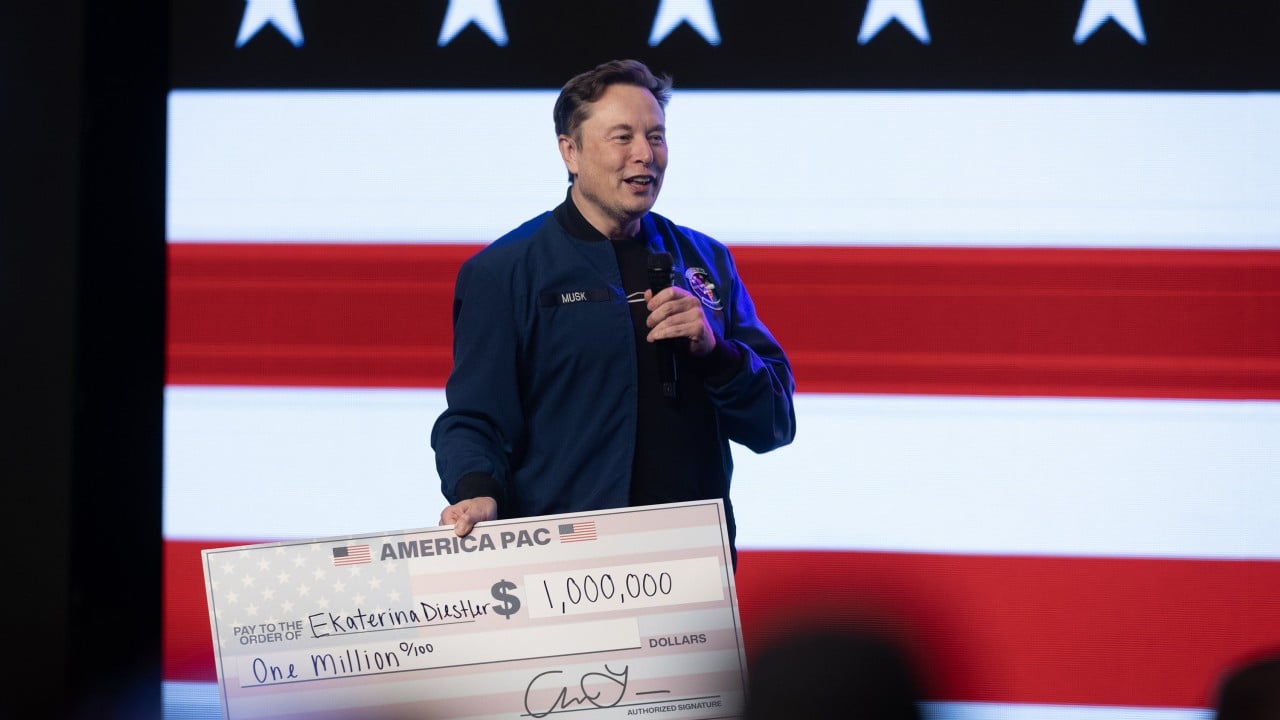
Elon Musk’s casual declaration about distributing a slice of SpaceX equity to every kid in the country isn't just a corporate maneuver. It is a radical proposal about who gets to hold the deeds to the future.
Picture Maya. She is fourteen, living in a town where the local factory closed five years ago and the main street is slowly losing its paint. Her bedroom wall is covered in star charts printed from a library computer. She doesn't know what a valuation is. She doesn't know the difference between a Series A and a public offering. But she knows that things belong to people. And if she owns a fraction of the metal currently burning through the stratosphere, the sky stops being a ceiling. It becomes property. It becomes hers.
That shift—from spectator to stakeholder—changes how a generation looks at the horizon.
Of course, the machinery of the modern economy does not easily bend to poetic gestures. There are legal walls, regulatory mazes, and logistical nightmares standing between a throwaway comment on a digital platform and a certificate in a teenager's hand. How do you distribute equity to minors without drowning in trust laws? How do you prevent shares from being liquidated for a pair of sneakers or a video game before the kid even learns algebra?
The skeptics are already lined up, shaking their heads. They call it a stunt. They call it a distraction from launch windows and valuation pressures. They point out that a fraction of a private aerospace company, locked away in a custodial account, won't pay for groceries today.
They are right, of course. And they are completely missing the point.
Money is currency, but ownership is psychology.
Think about the way towns used to feel when the local mill owned the houses, the bowling alley, the water tower. You knew you belonged to the landscape because the landscape belonged to your parents. In the twenty-first century, our landscapes are no longer physical. They are digital, orbital, and corporate. The companies that build the networks own the air we breathe intellectually.
If you give a kid a share of a rocket company, you aren't just handing them a financial asset. You are handing them a stake in human expansion. You are breaking the wall that separates the people who build tomorrow from the people who merely live in it.
The logistical hurdles are monumental. Trust structures would need to be invented. Regulatory bodies would need to rewrite rules designed for an era of paper certificates and Wall Street trading floors. But history is littered with ideas that seemed absurd until someone simply decided to test the weight of them.
When rockets first started landing vertically—descending through a pillar of fire to touch down gently on a floating barge—the experts said it was impossible. When reusable orbital boosters were first sketched on whiteboards, the industry laughed. The pattern is always the same: first they call it a stunt, then they call it reckless, then they call it inevitable.
What happens when a generation grows up checking the price of orbital infrastructure alongside the score of a basketball game? What happens when a teenager in a Rust Belt town realizes that the machine lifting humanity off the planet is partially theirs?
They start paying attention to physics. They start asking how thrusters work. They start looking at math not as a punishment dealt out by a tired teacher on a Tuesday morning, but as the literal language of escape.
The kitchen table in Ohio grows quiet. The screen dims. Maya closes her laptop, but the afterimage of a launch lingers behind her eyelids—a blinding flash of white light tearing through the atmosphere, leaving a bruised sky in its wake.
The future is rarely built by committees in gray suits. Sometimes, it arrives because someone looked at the stars and decided that every kid below them deserves a key to the door.