The scent of cardamom always lingers longest near the docks. If you stand on the water's edge in Mumbai just as the morning mist begins to peel back from the harbor cranes, you can smell the weight of history. Cargo ships sit low in the water, their iron bellies stuffed with grain, steel, and machinery, waiting for the tide to turn. They are modern behemoths carrying an ancient cargo: connection.
For centuries, the route between Delhi and Tehran did not run through spreadsheets or policy briefings. It ran through the dust kicked up by caravan hooves, across high mountain passes where breath turns to crystal, and down into the sun-baked plains of Persia. Kings traded poets, merchants traded turquoise for textiles, and a shared vocabulary of trade took root before modern maps even had names for these borders.
Today, that old geography is being rewritten. Not with the thunder of drums, but with the quiet scratching of pens in high-backed chairs.
Consider a man like Ramesh. He is fictional, yes, but he stands for thousands who live this reality. Ramesh sits in a cramped office in Ahmedabad, surrounded by towering stacks of customs documents and ledger books that smell faintly of damp paper. His family has traded dry fruits and spices for three generations. When sanctions tighten or shipping lanes choke, Ramesh feels it in his bones. His phone buzzes with frantic messages from port authorities in Bandar Abbas. A container is stuck. A payment channel is frozen. The friction of geopolitics is not an abstract headline to him; it is the difference between profit and a ruined inventory of Iranian pistachios turning rancid in the summer heat.
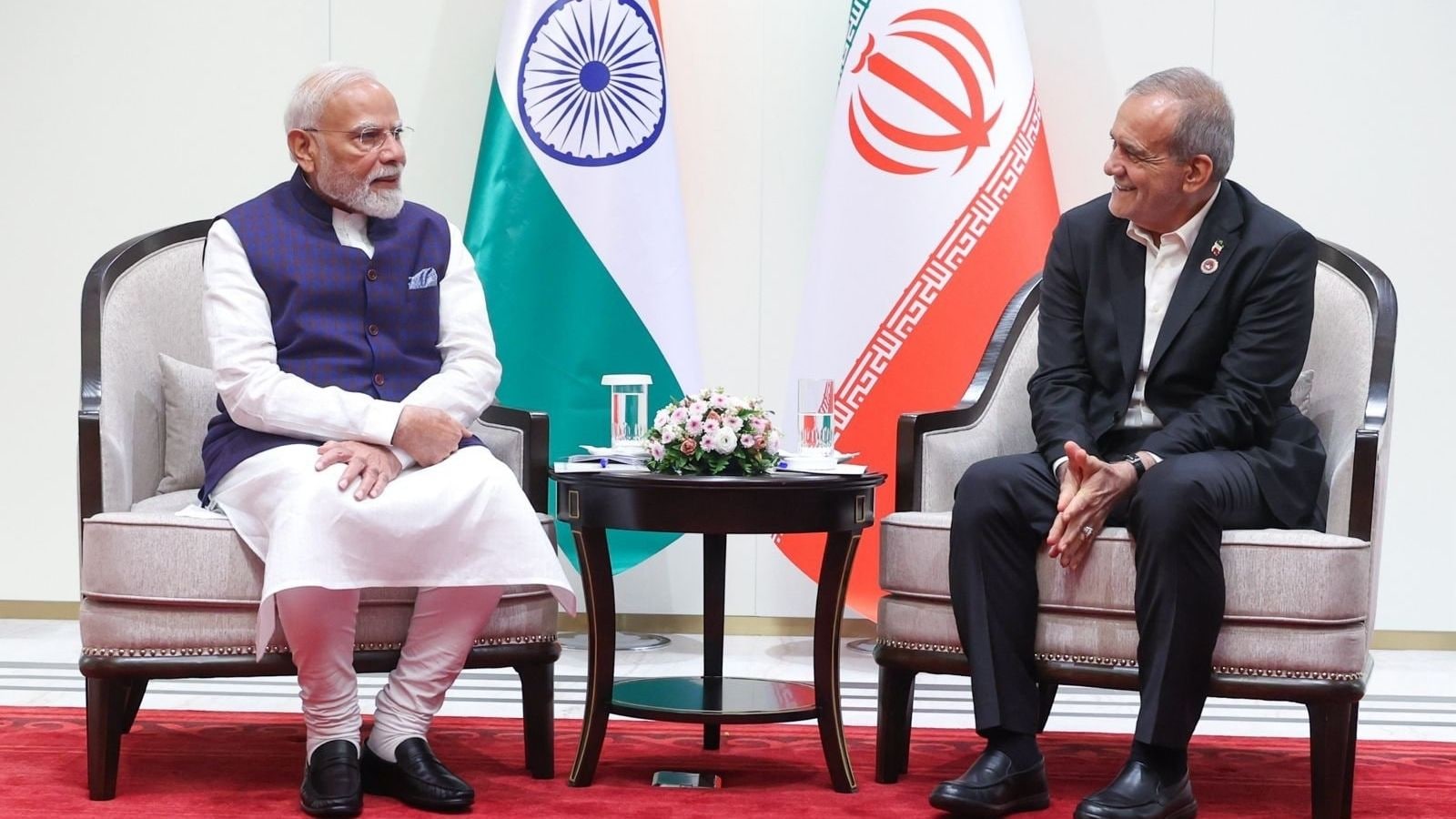
When Prime Minister Narendra Modi sat down across from Iran’s President Masoud Pezeshkian, men like Ramesh held their breath.
The official communiques spoke in the dry, bloodless dialect of diplomacy. They mentioned expanding trade, diversifying portfolios, and maximizing the potential of strategic corridors. Bureaucrats love these words because they are safe. They fit neatly into press releases. But beneath those sanitized terms lies a desperate human scramble for survival and growth.
India wants to trade. Iran wants to breathe. And the world outside is watching with narrowed eyes.
To understand why this meeting matters, you have to look at a map not of countries, but of bottlenecks. For years, the artery connecting South Asia to Central Asia and Europe has been clogged. Ships must travel the long way around, rounding the Arabian Peninsula, cutting through the Red Sea—a route currently fraught with danger and exorbitant insurance premiums—before heading north. It is slow. It is expensive. It bleeds money from the pockets of small business owners.
Enter the International North-South Transport Corridor. Imagine a straight, clean line drawn on a globe, slashing straight up through the Arabian Sea, landing at the Iranian port of Chabahar, and snaking onward through the Caspian Sea toward Russia and Europe. That is the dream. A shipping shortcut that slashes transit times almost in half.
Yet, dreams are fragile things when they collide with sanctions and global superpowers.
Iran sits in a precarious geometry. Rich in hydrocarbons, gifted with a strategic coastline, it is also hemmed in by a labyrinth of international restrictions that make conventional banking look like an escape room. When Modi and Pezeshkian talk about diversifying trade, they are whispering about how to bypass these walls without tripping the tripwires of global finance. They are talking about rupees and rials, about barter systems, about finding digital workarounds for analog blockades.
Why does India persist? Why not simply look away and trade exclusively with safer, quieter markets?
Because energy security is not a luxury. It is the oxygen of a billion-plus democracy. India’s industries are hungry. Its cities hum with an insatiable demand for power. Iran offers proximity, stability in supply when things go right, and a gateway to the landlocked markets of Central Asia that would otherwise remain permanently locked behind foreign walls.
And from Tehran's perspective, India is a lifeline. In a world where many doors are slammed shut, New Delhi represents an independent pole of gravity—a nation large enough, and fiercely autonomous enough, to chart its own course regardless of what Washington or Brussels might mutter over morning coffee.
There is a delicate dance happening here. Diplomacy is rarely about sweeping gestures. It is about millimeters. It is about how long a handshake lasts, how a translator chooses a specific verb, and whether two leaders can look each other in the eye and believe that mutual self-interest will outlive the next geopolitical crisis.
Back in Ahmedabad, Ramesh closes his ledger for the evening. Outside, the streetlights flicker on, casting long, bruised shadows across the pavement. His latest shipment from Chabahar is finally moving. It cleared customs an hour ago. It is a tiny victory, invisible to the world, yet it means his business lives to see another month.
The grand strategies hatched in summit rooms eventually trickle down to this. Not as grand historical epochs, but as a box of dried fruit arriving on time, a family business paying its debts, and two ancient civilizations quietly stitching their futures back together, thread by stubborn thread.
The ports will keep churning. The ink on the treaties will dry. And somewhere out on the dark, restless expanse of the sea, a ship will alter its course by a single degree, cutting through the water toward a different tomorrow.