The teacups in Islamabad do not rattle when borders shift, but they should.
I remember sitting in a cramped, sunlit room in Lahore a few winters ago, listening to an old journalist trace lines across a worn paper map with the tip of a lukewarm spoon. He wasn't talking about Kashmir or the Durand Line. He was talking about geometry. He was talking about how the ancient arcs of influence—the old trade routes of silk and silver, the theological gravity of Cairo and Qom, the industrial ambition of Ankara—were beginning to bend toward each other not out of sudden warmth, but out of a cold, shared necessity.
A decade ago, talking about a unified diplomatic axis stretching from the rugged mountains of Pakistan through the oil-rich expanse of Saudi Arabia and eventually pulling in Turkey and Iran would have sounded like the fever dream of a desk diplomat. Yet, history has a way of accelerating when people stop paying attention to official communiqués.
Consider what happens next: a quiet murmur in a Ankara committee room, a deliberate nod in Riyadh, a cautious diplomatic pulse from Tehran, and suddenly, the architecture of the Muslim world begins to rearrange its load-bearing walls.
A Turkish speaker recently articulated what many have whispered behind closed doors for months. This emerging strategic understanding between Saudi Arabia and Pakistan—born of defense pacts, financial lifelines, and shared regional anxieties—is not destined to remain a bilateral affair. It has a gravitational pull. It wants to expand. It wants to embrace the broader Muslim world, drawing in Turkey’s industrial might and Iran’s formidable geopolitical weight.
To understand why this matters, you have to look past the crisp suits and the handshakes captured by state television. You have to look at the human cost of fragmentation.
For generations, ordinary people across these lands have lived as prisoners of a fractured geography. A merchant in Karachi cannot easily ship goods to a buyer in Istanbul because a dozen bureaucratic, economic, and political walls stand in the way. A family in Riyadh watches the nightly news and feels the tremors of instability rippling out from a fractured Middle East, wondering when the shockwaves will reach their doorstep. The borders drawn by retreating empires a century ago left behind a chessboard where every square is defended by suspicion.
What is happening now is an attempt to redraw those lines without firing a single shot. It is an exercise in pragmatic survival.
Take Saudi Arabia’s current transformation. Crown Prince Mohammed bin Salman’s Vision 2030 is not merely about building futuristic glass cubes in the desert or hosting global sporting events. It is about economic survival in a post-oil century. But you cannot modernize an economy while your neighborhood is on fire. You need security umbrellas that do not rely solely on Western powers whose interests drift with every electoral cycle.
Enter Pakistan.
For decades, Pakistan has possessed one of the most battle-tested militaries in the Muslim world—a nuclear-armed deterrent built through immense national sacrifice. When Riyadh looks east, it sees not just a historical ally, but a strategic anchor. When Islamabad looks west, it sees economic oxygen.
Now, stretch the canvas wider.
Add Turkey to the equation. Under President Recep Tayyip Erdogan, Ankara has spent the last two decades transforming itself into a technological and defense manufacturing powerhouse. Turkish drones patrol skies from North Africa to the Caucasus. Turkish shipyards build naval vessels for allies. Turkey brings the industrial muscle that neither Riyadh nor Islamabad possesses in full measure.
And then there is the elephant in the room: Iran.
To imagine an inclusive Muslim world order that bypasses Tehran is to build a house on a fault line. The historic Sunni-Shia divide has long been the primary weapon used by external powers to keep the region fractured. Every time Riyadh and Tehran lock horns, blood spills in proxy wars from Yemen to Lebanon, and ordinary citizens pay the price in inflation, displacement, and grief.
Yet, diplomacy is an art of exhaustion. Both sides have looked into the abyss and realized that endless hostility is a luxury they can no longer afford. When Chinese-brokered talks brought Saudi Arabia and Iran back to the diplomatic table, it wasn't because they suddenly became friends. It was because they realized that the cost of enmity was bankruptcy.
If the axis currently binding Riyadh and Islamabad deepens, and if Ankara’s diplomatic ambitions align with it, Tehran will eventually face a choice: join the architecture of regional stability or remain an isolated outlier while the rest of the neighborhood trades, builds, and integrates.
We are watching the formation of a Eurasian Islamic concert.
It sounds grand, academic, even clinical. But let us translate that into human terms.
Imagine
The Map of Salt and Steel
news
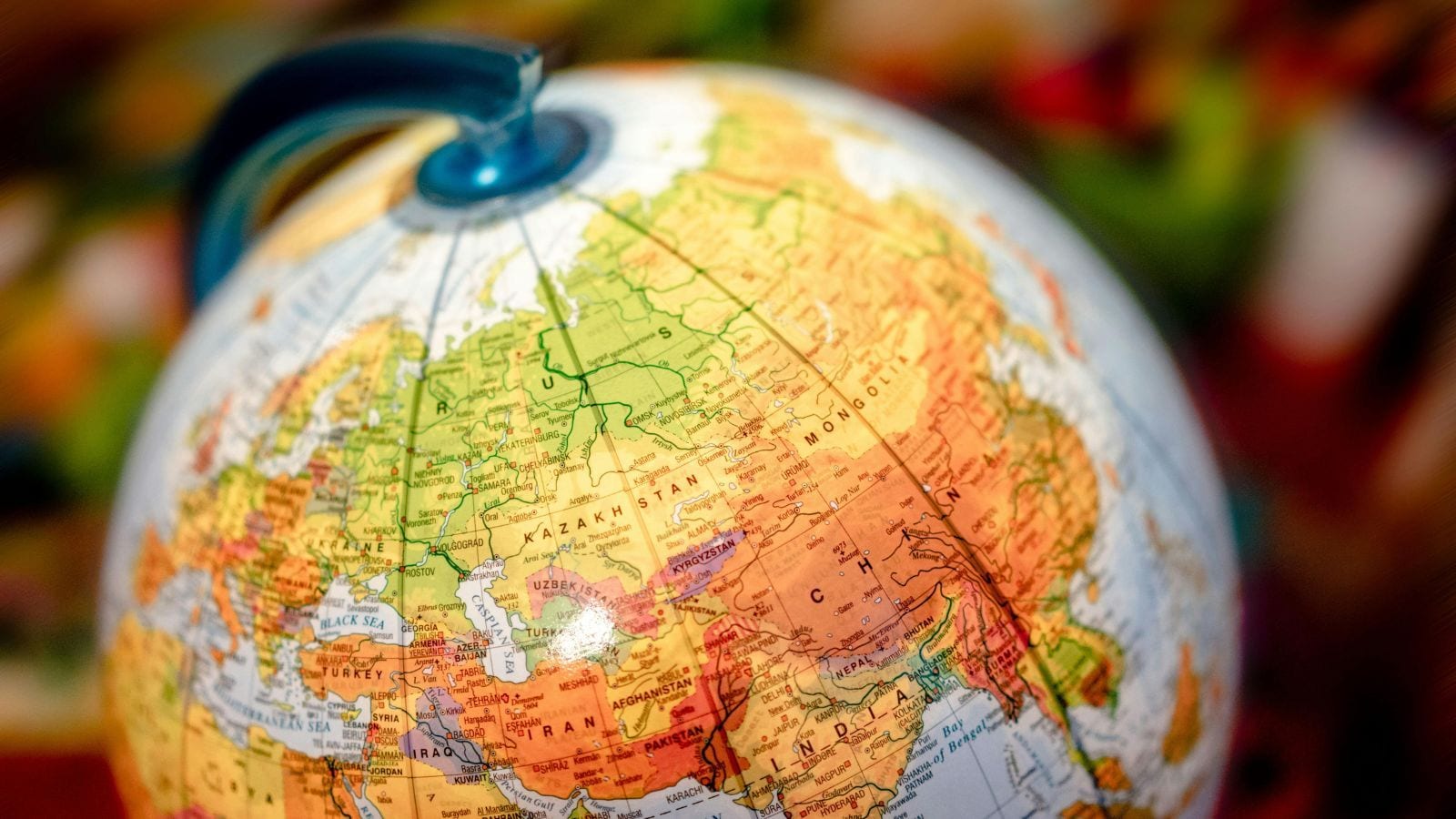
Maps are never just lines on parchment. They are agreements of power, drawn by hands that rarely shake.
Picture a dusty corridor in Islamabad. Or perhaps a high-ceilinged chamber in Riyadh, where the air conditioning hums a low, relentless tune against the desert heat. In these rooms, officials lean over tables strewn with technical reports and defense memoranda. They trace their fingers along coastlines, mountain passes, and desert trade routes. They are not merely buying equipment or signing mutual defense pledges. They are sketching the blueprints of a new gravity.
When whispers began circulating about a sweeping security arrangement tying Pakistan and Saudi Arabia closer together, the headlines treated it like routine diplomacy. Bureaucratic handshakes. Standard communiques. But quiet corridors rarely stay quiet for long, especially when words from a senior Turkish speaker suggest something far larger. Something expansive. Something that might soon pull the wider Muslim world and even Iran into a single, complicated orbit.
To understand why this matters, you have to look past the ink on the paper and look at the map itself.
The Geography of Vulnerability
Safety is an illusion shared by neighbors who trust each other. Across the regions connecting South Asia to the Middle East, trust is a rare currency.
Think about what it feels like to sit in a capital city where your borders feel porous, your energy supplies hang by a slender thread of maritime trade, and your alliances feel like dry leaves in a high wind. For decades, Pakistan has balanced its nuclear deterrent on a tightrope of internal economic strain and external neighborhood tensions. Saudi Arabia, meanwhile, has watched the skies over its oil fields with growing unease, realizing that distant superpowers are increasingly reluctant to act as the ultimate guarantor of regional calm.
When two nations facing distinct yet overlapping anxieties reach for each other, they are not acting out of strength alone. They are acting out of necessity.
Consider the mechanics of the reported pact. At its core lies a shared defensive posture. If one faces existential peril, the other responds. But military pacts rarely live in isolation. They draw gravity. They pull in logistical networks, intelligence sharing, joint manufacturing of defense hardware, and financial lifelines.
And once you build a heavy bridge between Islamabad and Riyadh, you invite others to walk across it.
The Quiet Shadow of Expansion
Diplomacy is like water. It finds the lowest points of shared interest and pours into them until the levels match.
When a prominent Turkish official hints that this emerging security architecture could widen—reaching out to touch the wider Muslim world, and even folding in regional heavyweights like Iran—it sounds ambitious to the point of fantasy. After all, the modern history of the Middle East is littered with failed federations, broken treaties, and bitter sectarian rivalries that run deep as old riverbeds.
Yet history also moves in sudden jerks.
Imagine Tehran and Riyadh sitting at the same table, not as adversaries glaring across a diplomatic abyss, but as stakeholders in a broader regional security framework. It sounds improbable. It defies decades of proxy warfare, diplomatic freezes, and ideological posturing. But nations do not cling to eternal hatreds when survival demands an alternative. They cling to interests.
If a security umbrella proves robust enough to deter conflict, and broad enough to include historical rivals, the calculation changes for everyone from Ankara to Jakarta. Smaller states caught between competing blocs suddenly find a neutral, regionally anchored alternative to foreign intervention. Trade corridors protected by joint security guarantees start to hum with commerce.
Of course, reality is messier than a speech given by a visiting dignitary.
The Friction of Ambition
Expansion brings friction. Every nation added to a security pact adds another veto, another historical grievance, another set of unpredictable domestic politics.
Pakistan brings nuclear capability and a battle-hardened military, but it also brings acute economic fragility. Saudi Arabia brings immense capital and geopolitical clout, but it carries the heavy burden of regional leadership expectations. Turkey brings a surging defense industry and an independent foreign policy, but also complex friction points with Western allies. And Iran brings vast strategic depth and regional leverage, alongside a legacy of deep distrust with Gulf capitals.
Trying to weld these moving parts into a single cooperative framework is like trying to build a cathedral out of shifting sand and tempered steel.
Yet the alternative is worse. The alternative is a continuation of the splintered chaos that has drained the region of blood and treasure for a generation. It is the exhaustion of perpetual proxy wars fought in the alleys of other people's countries.
Sometimes, exhaustion is the mother of invention.
The Horizon
We stand at a strange threshold. The old Pax Americana is fraying at the edges, leaving behind a multipolar scramble where regional powers must figure out how to keep the lights on and the borders secure without relying on distant capitals.
The conversations happening behind closed doors in Islamabad, Riyadh, and Ankara are the sounds of nations taking their future into their own hands. Whether this nascent architecture grows into a comprehensive pan-regional security system or collapses under the weight of its own contradictions remains to be seen.
The ink is still wet. The maps are still being drawn.
But the direction is set. In a world of rising uncertainties, nations are discovering that the best shelter from the storm is the one they build together, brick by heavy brick, across an ancient and restless land.