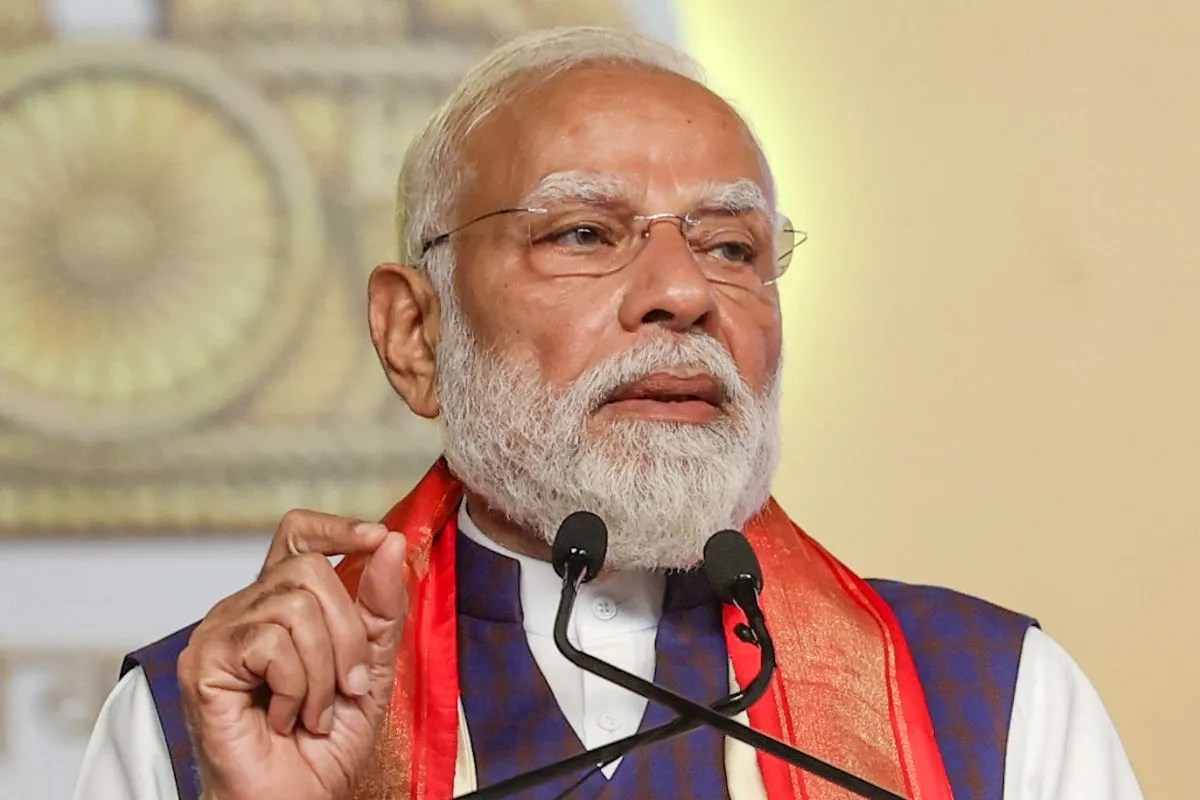
A nondescript tarmac in Abu Dhabi glimmers under a heat that feels less like weather and more like a physical weight. The air is thick with the scent of aviation fuel and expectation. As the door of Air India One swings open, the world sees a familiar ritual: the red carpet, the rigid posture of the guard of honor, and two leaders embracing. To a casual observer scrolling through a news feed, this is just another diplomatic photo op in a relentless cycle of international summits.
But zoom in. Look past the high-definition cameras and the polished marble of the presidential palaces.
Diplomacy is rarely about the handshake itself. It is about the invisible wires being pulled beneath the floorboards of the global economy. When Prime Minister Narendra Modi packed his bags for a five-nation swing through the UAE and Europe, he wasn't just collecting stamps in a passport. He was sketching a new blueprint for how a billion people will keep their lights on, defend their borders, and navigate the digital age.
The Desert's Digital Oasis
For decades, the relationship between India and the United Arab Emirates was defined by a single, viscous commodity: oil. It was a simple exchange. India needed to fuel its rickety buses and booming factories; the Gulf had the crude to make it happen.
That era is dying.
Walk through the tech hubs of Dubai or the renewable energy projects in Masdar City, and you realize the conversation has shifted from "How much oil can you sell us?" to "How can we build the future together?" The UAE is no longer just a gas station. It has become a massive venture capital fund for Indian ambition.
Consider a hypothetical engineer named Aarav. He works at a startup in Bengaluru, developing AI-driven logistics. Ten years ago, Aarav might have looked toward Silicon Valley for his Series B funding. Today, he looks toward Abu Dhabi. During this five-nation tour, the focus on technology wasn't just corporate jargon. It was about creating a corridor where Indian talent meets Emirati capital. This isn't just business. It is survival in a world where the next industrial revolution won't be powered by steam, but by data.
The European Pivot
The journey didn't stop in the desert. As the flight path veered toward Europe, the atmosphere changed. The stakes grew heavier.
Europe is currently a continent of shadows and jitters. The conflict in Ukraine has acted as a brutal wake-up call, proving that peace is a fragile luxury and energy security is a weapon. When India engages with European powers now, the tone is different. It is no longer a former colony asking for a seat at the table. It is a massive, nuclear-armed democracy offering stability in an unstable world.
In the hallways of Berlin or Paris, the "defense" portion of the itinerary wasn't just about buying more fighter jets. It was about co-creation. India is tired of being the world's largest arms importer. The push now is for "Made in India," but with European brains. We are talking about deep-tech transfers—the kind of secrets nations usually guard with their lives.
Why share them now? Because Europe needs India as much as India needs Europe. In a world where the supply chains of yesterday are breaking, India represents the only market large enough and stable enough to act as a counterweight to the dominance of East Asian manufacturing.
The Energy Paradox
Imagine a village in rural Bihar where, for the first time, a family can keep a refrigerator running through the night. To that family, "energy security" isn't a policy paper. It is the ability to keep medicine cold and milk fresh.
This is the emotional core of the Prime Minister’s energy negotiations. While the West pushes for an immediate, total pivot to green energy, India faces a more complex math problem. It must lift millions out of poverty while simultaneously trying to be a responsible global citizen.
In the UAE, the discussions focused on LNG and long-term oil deals to keep the prices at the pump from exploding. In Europe, the focus shifted to green hydrogen and solar technology. It is a delicate, high-stakes balancing act. India is playing both sides of the calendar—securing the fossil fuels needed for today while aggressively courting the renewables needed for tomorrow. One mistake in this calculation, and the economic engine of a subcontinent stalls.
The Human Currency
Beyond the billion-dollar defense deals and the tech MoUs, there is a human element that often gets buried in the back pages of the business section.
In the UAE alone, millions of Indians form the backbone of the economy. They are the construction workers building the skyscrapers, the doctors running the clinics, and the accountants managing the ledgers. When a Prime Minister visits, he isn't just talking to kings and presidents. He is talking to them.
Every signed agreement on "community welfare" or "labor mobility" has a direct impact on the man sending a remittance back home to Kerala or the woman hoping to bring her children to Dubai for a better education. This is the "soft power" that doesn't show up on a balance sheet. It is the quiet, steady pulse of a diaspora that acts as a living bridge between nations.
The Invisible Stakes
We often talk about these trips as if they are isolated events. They aren't. They are chapters in a much longer, more dangerous book.
The world is currently re-sorting itself into new alliances. The old post-Cold War order is crumbling, and something new—something more fragmented and multipolar—is taking its place. In this new world, you cannot afford to have only one friend.
India’s strategy, evidenced by this whirlwind tour, is one of "strategic autonomy." It is the art of being in the room with everyone without being in the pocket of anyone. It means buying S-400 missiles from Russia while practicing naval drills with the US, and signing massive trade deals with the UAE while courting the environmentalists in Europe.
It looks like contradiction. In reality, it is mastery.
The true success of these five days won't be measured by the length of the joint statements or the number of tweets posted by foreign ministries. It will be measured in the silence of a factory floor in Pune that doesn't lose power because of a new LNG deal. It will be measured in the confidence of a cyber-security firm in Hyderabad that now has a direct line to European markets.
As the wheels of Air India One touched back down on Indian soil, the physical journey ended. But the wires have been tightened. The map has been redrawn. The handshake was just the beginning.
In a world that feels like it’s pulling apart at the seams, these bridges—built on the hard ground of energy, defense, and technology—are the only things holding the center together. We are witnessing the quiet, methodical construction of a superpower, one boarding pass at a time.

:max_bytes(150000):strip_icc():focal(819x186:821x188)/Murdaugh-Family-e90854a716884d608fb6fd925e18d840.jpg)
