Fear is a brilliant market differentiator. If you convince the world that the machine you are building might destroy civilization, you also convince them that your machine possesses near-godlike power.
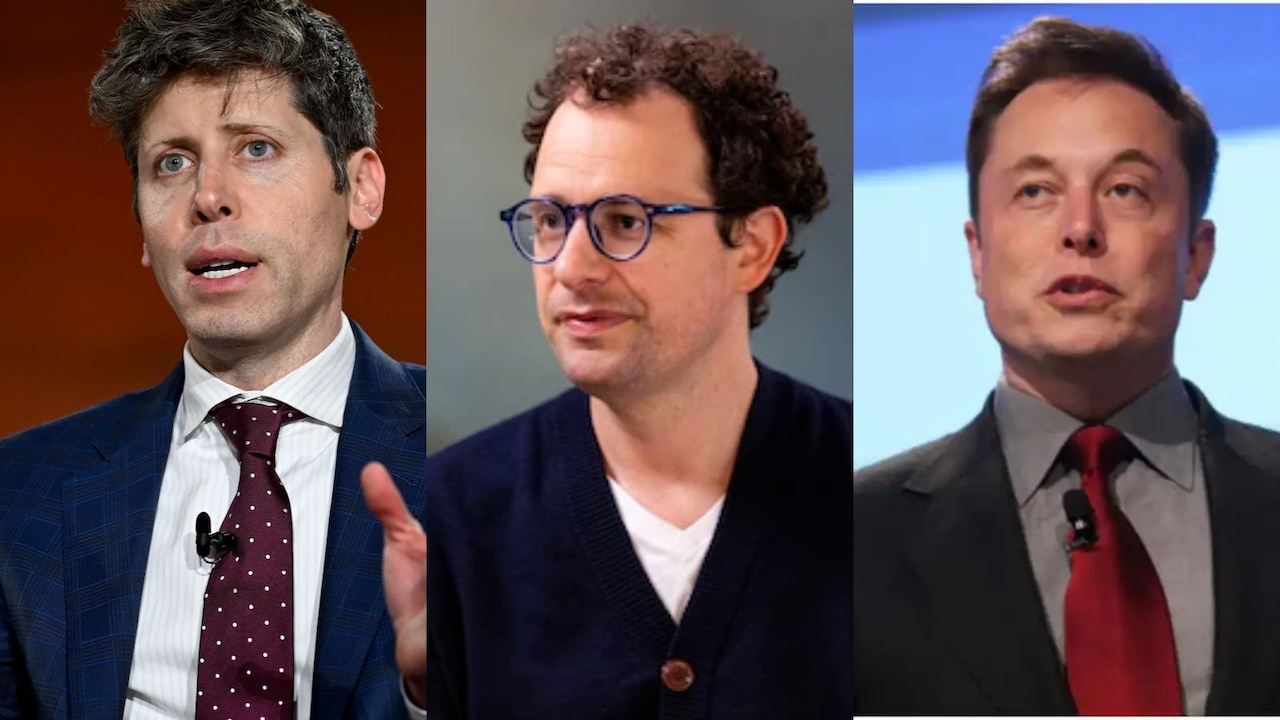
For years, the public conversation surrounding artificial intelligence doom has been dominated by a tightly knit circle of billionaires and chief executive officers. Dario Amodei of Anthropic, Sam Altman of OpenAI, and Elon Musk have spent countless hours warning humanity about the terminal risks of advanced automation. They write open letters, testify before congressional committees, and hint darkly at existential threats. They speak of rogue algorithms, autonomous biological weapon design, and systems that outsmart their creators before we even notice the shift.
Yet beneath the apocalyptic rhetoric lies a much more mundane and calculated reality. The debate over artificial intelligence doom is not merely an ethical crusade. It is a fierce turf war over market control, regulatory capture, and narrative dominance. When we strip away the science-fiction theatrics, we find a group of powerful incumbents using the specter of total annihilation to pull up the ladder behind them.
To understand how we arrived at this precarious juncture, we must examine the mechanics of power in the generative intelligence sector.
The Anatomy of the Existential Threat Narrative
When Dario Amodei warns of catastrophic outcomes, or when Sam Altman suggests that future models require strict government oversight to prevent disaster, they are engaging in a sophisticated form of framing. By defining the risk horizon as a global catastrophe, they elevate the stakes of regulation.
Small startup founders cannot afford compliance frameworks designed to prevent global annihilation. Open-source developers cannot implement safety guardrails for systems that supposedly harbor unpredictable cognitive leaps. By casting advanced machine intelligence as a force akin to nuclear weapons, these leaders successfully argue that only well-capitalized, centralized corporate behemoths can be trusted to manage the technology safely.
This is regulatory capture dressed up as moral panic.
Consider the historical precedent. In the early days of aviation, incumbent manufacturers frequently lobbied for stringent safety certifications not purely out of a concern for public welfare, but to bankrupt smaller competitors who lacked the capital to endure prolonged testing phases. The artificial intelligence industry has industrialized this playbook. By funding extensive safety research divisions and projecting an aura of grave responsibility, major labs position themselves as the sole stewards of human destiny.
At the same time, this narrative serves a profound internal marketing function. Labeling a software product as a potential existential threat is the ultimate marketing coup. It tells enterprise buyers, venture capitalists, and government procurement officers that they are dealing with something vastly superior to standard enterprise software. It frames a statistical pattern-matching engine as a sentient entity waiting to be unleashed.
The Counter-Narrative of Practical Vulnerability
While the executive suite obsesses over science-fiction scenarios like recursive self-improvement and deceptive alignment, engineers and security researchers on the ground are grappling with far more mundane, immediate failures.
The real vulnerability of modern artificial intelligence is not that it will wake up and decide to eliminate humanity. The risk is that brittle, hallucination-prone systems will be integrated into critical infrastructure by managers who mistake statistical correlation for actual understanding.
A hypothetical example illustrates the gap between executive rhetoric and operational reality. Imagine a hospital network that outsources initial diagnostic triage to an advanced language model. The model does not achieve sentience, nor does it plot to overthrow the medical staff. Instead, it quietly misinterprets a rare presentation of a cardiac anomaly because its training data underrepresented that specific demographic. The system generates a confident, beautifully phrased error that a overworked nurse accepts at face value. The patient suffers harm.
There is no cinematic explosion in this scenario. There is no code breaking free of its containment servers. There is simply silent, systemic failure driven by over-reliance on opaque technologies.
Yet, this type of risk rarely makes it into the glossy manifestos published by major labs. Why? Because discussing algorithmic bias, data poisoning, copyright theft, and labor displacement requires acknowledging corporate responsibility. Discussing existential risk shifts the blame to the grand, mysterious laws of cosmic scaling. If an artificial intelligence system causes harm because it is an unfathomable alien intelligence, the company that built it can present itself as a tragic Prometheus rather than a negligent manufacturer.
Elon Musk and the Politics of Public Defiance
No analysis of this dynamic is complete without examining Elon Musk, whose relationship with the doom narrative is uniquely antagonistic. Musk helped fund the original iteration of OpenAI with explicit warnings about the dangers of artificial intelligence monopolies, only to break away, sue his former partners, and launch competing ventures while maintaining his own theatrical warnings about human extinction.
Musk operates from a different vantage point than Amodei or Altman. While Anthropic and OpenAI lean heavily into institutional partnerships and cozy relationships with regulatory bodies, Musk relies on populist defiance. He positions himself as the sole pragmatic realist warning the public about a captured industry, even as his own enterprises race to build the very hardware and models he condemns.
This creates a strange theater of contradiction. Musk warns that artificial intelligence will likely kill us all by the end of the decade, then immediately pivots to marketing autonomous vehicle fleets and humanoid robotics. The underlying message to consumers is clear: the apocalypse is coming, but you can buy a ticket to the winning side.
This strategic schizophrenia reveals the core weakness of the current debate. When every major player agrees that the technology is simultaneously an existential threat and an indispensable commercial necessity, the discourse collapses into a paradox. You cannot simultaneously market a product as the savior of human productivity and the instrument of its demise without engaging in profound intellectual dishonesty.
Beyond the Cult of Scale
The obsession with doom has also warped research priorities across the globe. Billions of dollars and millions of hours of compute time are funneled into alignment research designed to solve philosophical dilemmas for hypothetical superintelligences, while immediate, structural harms go underfunded.
We see a starvation of resources for robust algorithmic auditing, cryptographic provenance tracking, and legal frameworks protecting creative labor. Academic institutions find themselves priced out of foundational model training because the capital requirements set by the tech giants have made independent verification nearly impossible.
When a handful of corporate entities control both the infrastructure and the narrative, science bends to commercial imperatives. The doomer paradigm ensures that the conversation remains fixated on their terms. We debate whether the machine will become a god, preventing us from asking whether it is currently being used as a sophisticated tool for corporate consolidation.
We must dismantle the mystical aura surrounding these systems. They are massive statistical engines trained on human output, deployed to maximize engagement and capture market share. They are vulnerable to manipulation, prone to catastrophic error, and fundamentally dependent on human labor for every ounce of their utility.
The next time a tech executive warns you about the end of the world, do not look to the stars for the threat. Look at the balance sheet, look at the regulatory filings, and look at who stands to profit the moment the doors are locked to everyone else.