The air in the southern Rhône Valley does not merely warm up during a July heatwave; it solidifies. It presses against your chest like a hot woolen blanket. Walking through rows of ancient vines at high noon, the leaves do not rustle. They curl inward, desperately holding onto whatever moisture remains in their veins. You can hear the earth cracking beneath your boots. A dry, hollow sound. The sound of a living system running out of time.
I remember standing in a plot of Grenache vines a few years ago, watching the canopy scorch before the harvest even began. The grapes did not ripen; they baked. They turned into raisins on the branch, shriveled little monuments to a climate that was rewriting the rules of agriculture faster than any textbooks could keep up. The local elders shook their heads. They spoke of vintages past with a nostalgic reverence, knowing deep down that those days were ghosts. The heat was no longer an anomaly. It was the new baseline. If you found value in this post, you should look at: this related article.
Enter Jean-Luc.
He is not a man given to grand pronouncements. Winemakers of his generation tend to be quiet, superstitious, deeply attuned to the micro-movements of wind and soil. When Jean-Luc decided to spend four million euros on six thousand solar panels, the banking sector in Paris thought he had lost his mind. Four million euros is not pocket change. It is the kind of capital that could buy a small estate or fund a retirement for generations. For another perspective on this story, see the recent update from Business Insider.
Instead, he bought shade.
To understand why a pragmatic vintner would sink a fortune into photovoltaic glass, you have to look past the spreadsheets. You have to look at the geometry of survival.
Tradition is a wonderful thing, right up until it kills you. For centuries, the recipe for great wine was simple: plant the vines, let them drink the rain, let the sun bake the fruit, harvest in autumn, ferment, age, repeat. Nature provided the parameters. We merely acted as stewards. But when the parameters shift—when summer temperatures routinely smash records and ultraviolet radiation scorches the very skins that hold the phenolic compounds, tannins, and flavors that define a grand cru—stewardship requires radical adaptation.
Jean-Luc did not install those six thousand panels to chase energy subsidies. He installed them as an umbrella.
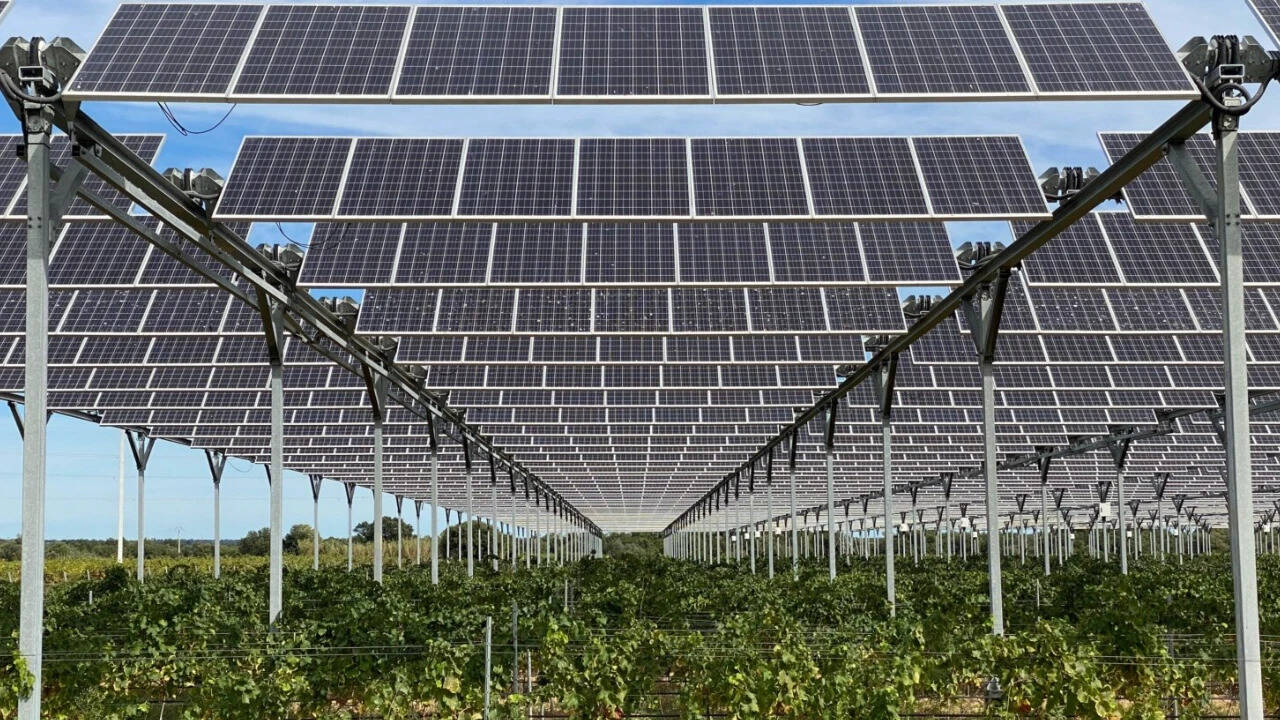
Picture this: towering rows of steel and silicon engineered to pivot dynamically above the vineyard canopy. When the morning sun is gentle, the panels tilt to catch the light, generating clean electricity that powers the winery and feeds excess power back into the grid. But when the afternoon mercury climbs past forty degrees Celsius, and the sky turns a pale, suffocating white, the system shifts. The panels flatten. They cast a cool, deliberate shadow over the vines below.
The drop in temperature under that canopy is instantaneous. Five degrees. Sometimes seven.
It sounds counterintuitive. Solar panels generate power by absorbing sunlight, yet here they were being used to block it. But the genius lies in the dual harvest. The vines get the respite they desperately need to slow down their respiration, preventing the sugar levels from spiking too quickly while the acidity—the structural backbone of any wine worth drinking—evaporates away. Meanwhile, the farm generates revenue from the sun it shields.
Critics called it an expensive gimmick. They argued that vines need unfiltered light, that artificial interference would ruin the terroir, that the terroir itself is defined by struggle, not coddling.
Struggle is one thing. Asphyxiation is another.
I walked beneath those elevated panels last summer. The difference was palpable. Outside the grid, the soil was a dusty powder, baking under a merciless glare. Beneath the panels, the ground was noticeably cooler, holding onto a quiet dampness. The leaves were broad, green, and flat, drinking in the filtered light with an almost audible sigh of relief. The grapes were plump, uniform, and developing at a natural, measured pace.
This is what modern agriculture actually looks like when the romantic veneer is stripped away. It is not about clinging to a pastoral fantasy of the nineteenth century. It is about engineering a bridge to the twenty-second.
Agrivoltaics is the technical term. It sounds sterile, clinical, bureaucratic. It sounds like something cooked up in a windowless conference room in Brussels by people who have never dirtied their fingernails in a vineyard. But on the ground, in the dirt, it is poetry written in steel and glass. It is a dialogue between technology and ecology.
Consider the economics for a moment. A vineyard is a generational asset. If your vines die of heat stress or produce unfermentable, over-sweet fruit year after year, your business model collapses. You sell the land to developers, and another piece of agricultural heritage is paved over for logistics warehouses. By investing four million euros, Jean-Luc did not just protect his current yield; he locked down the viability of his estate for the next thirty years. The energy generated by the panels offsets the winery's operational costs, creating a secondary revenue stream that cushions against a bad harvest.
It is a hedge against the sky.
We are living through an era of profound agricultural anxiety. Every farmer I speak with—whether they grow grapes in the Rhône, olives in Andalusia, or apples in Washington—shares the same quiet terror. They look at their calendar and wonder if the spring frost will hit too late, or if the summer drought will arrive too early. They are gamblers playing a game where the house keeps changing the rules.
Yet, human ingenuity has a stubborn way of showing up precisely when the outlook turns bleak.
When the first truckloads of steel arrived at Jean-Luc's property, the neighbors drove past slowly, shaking their heads. They thought he was building a monument to hubris. They thought he was trying to outsmart nature.
They were wrong. He was not trying to conquer nature. He was learning how to negotiate with it.
The harvest that followed the installation of the panels was hailed by critics as a miracle. The wine had a freshness, a vibrant acidity, and a structural balance that had eluded the region for nearly a decade. It tasted like the past, rescued by the future.
The sun will only grow hotter. The margins for error will only grow thinner. But somewhere in the south of France, six thousand panels tilt quietly toward the sky, casting a long, cool shadow over the roots of tomorrow.
A hawk circles lazily above the metallic canopy, riding the thermal currents before diving down into the cool shade of the vines.