The Slack channel went quiet at 2:14 AM on a Tuesday, and that silence was louder than any server farm in Santa Clara.
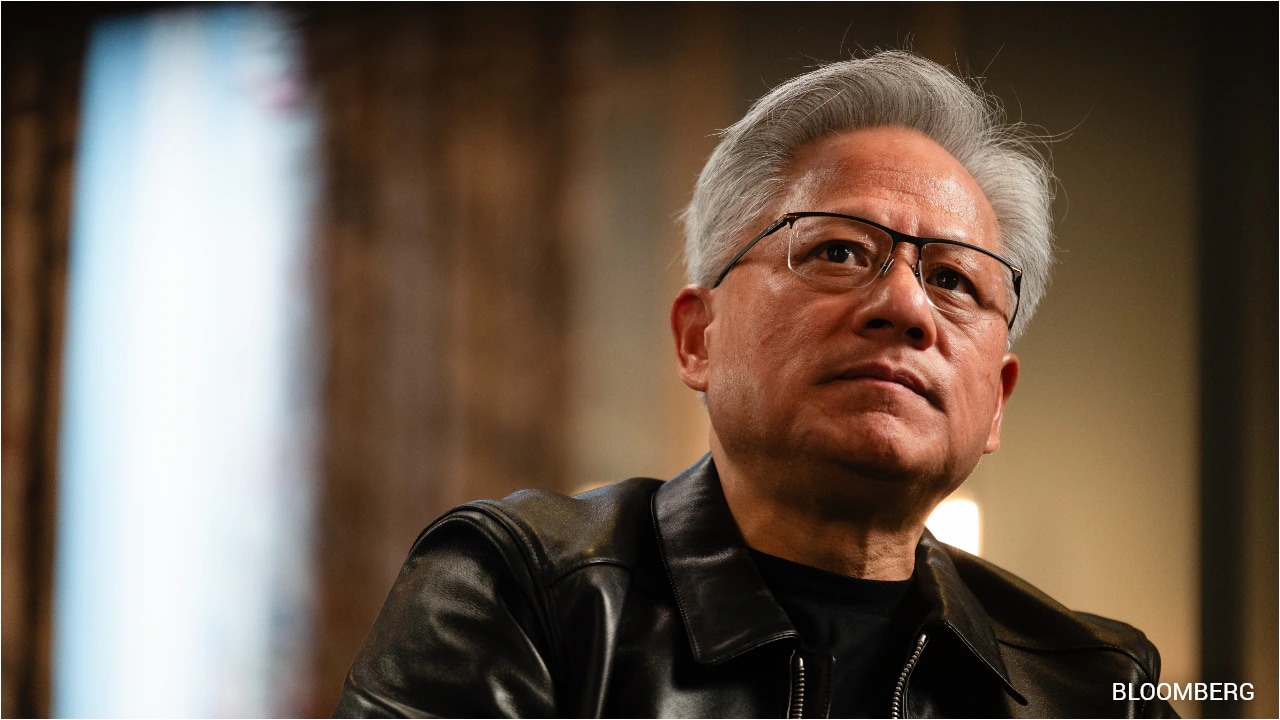
For three decades, the fluorescent-lit hallways of Nvidia’s Voyager building ran on a singular, unmistakable pulse. You knew when he was in the building before you ever saw the black leather jacket. You felt it in the sudden tightening of hallway conversations, the frantic last-minute checks of silicon architectures, and the electric, terrifying clarity that came from knowing the founder was about to ask a question you hadn't thought to answer yet. Then, suddenly, the jacket was gone. Whether through a sudden boardroom coup, a forced sabbatical, or the inevitable friction between an obsessive visionary and an institutional board tired of living on the razor's edge, the unthinkable had happened. Jensen Huang was out. And inside the company that quietly powers the entire modern artificial intelligence boom, a grassroots mutiny began to brew.
To understand why thousands of engineers—people with seven-figure stock options and recruiters from every mega-cap tech giant blowing up their phones—would risk their careers to demand the return of a notoriously demanding boss, you have to strip away the Wall Street ticker symbols. You have to look at what happens to a high-wire act when you remove the person who strung the wire.
The Anatomy of a Founder-Led Mutiny
Picture a hypothetical senior hardware architect named Marcus. Let’s call him Marcus because, while his exact name is protected by non-disclosure agreements and fear of corporate retaliation, his story is being lived out across dozens of cubicles in Silicon Valley right now.
Marcus has spent nine years designing interconnects—the microscopic highways that allow tens of thousands of graphics processing units to talk to one another as if they were a single, massive brain. Under Jensen Huang, Marcus didn't have a traditional manager. Nvidia famously operated with a flat hierarchy where forty or fifty vice presidents reported directly to the chief executive. There were no buffer layers. No corporate translators softening the blow of bad news. When Marcus presented a thermal dissipation flaw in a next-generation chip, Huang didn't send it to a committee. He sat down at the whiteboard, picked up a marker, and stayed until midnight dissecting the physics until they found a path forward.
Now, imagine Marcus sitting in a conference room three weeks after Huang’s departure. The interim leadership, installed by a board of directors eager for "predictable governance" and "risk mitigation," has just introduced a new three-tier product review process.
Marcus looks at the slide deck. He sees committees. He sees quarterly alignment meetings. He sees the slow, suffocating creep of corporate bureaucracy. And in that moment, a cold realization settles into his stomach. Without Huang, Nvidia isn't an engine of impossible speed anymore. It is just another semiconductor company.
That realization is the spark behind the employee rally. When workers circulate petitions, leak internal memos to the press, and threaten mass walkouts to bring back a chief executive, outsiders often mistake it for a cult of personality. They look at the leather jacket, the keynote speeches delivered in front of giant digital screens, and the three-trillion-dollar market capitalization, and they assume the employees are simply worshiping a celebrity CEO.
They are wrong. Completely wrong.
Engineers are pragmatic to a fault. They do not worship charisma; they worship competence and clarity. In the brutal, unforgiving physics of chip design—where a single miscalculation costs hundreds of millions of dollars and takes two years to fix—having a leader who actually understands the math is not a luxury. It is oxygen. When the board sidelines a technical founder in favor of traditional corporate stewards, the people in the trenches recognize the danger immediately. They know that the board is trying to protect the castle by firing the only person who knows how to build the walls.
Why Boards Always Panic at the Summit
History has a cruel sense of humor when it comes to technology boards and their founders. We have seen this exact movie play out before, and the ending is almost always a tragedy of corporate hubris.
Consider the ghosts haunting Silicon Valley’s boardrooms. In 1985, the board of Apple decided that Steve Jobs was too erratic, too intense, and too disruptive for a maturing company. They brought in John Sculley, a brilliant marketing executive from Pepsi, to bring "adult supervision" to the building. Within a decade, Apple was ninety days away from bankruptcy, saved only by the desperate, humiliating decision to bring Jobs back.
Decades later, in November 2023, the board of OpenAI abruptly fired Sam Altman over vague concerns about communication and governance. Within seventy-two hours, more than ninety-five percent of the company's workforce—over seven hundred researchers and engineers—signed a letter threatening to quit and follow him to Microsoft unless the board resigned and reinstated him. The board buckled before the week was out.
Why do boards keep making the same mistake? Because boards are structurally designed to optimize for safety, while generational tech companies only survive through controlled recklessness.
When a company reaches the summit of global finance, the incentives of the board of directors diverge sharply from the incentives of the founder. A board member looks at a multi-trillion-dollar valuation and thinks, How do we keep from losing this? Their instinct is to sand down the rough edges. They want succession plans, predictable margins, smoothed-over regulatory relationships, and a chief executive who doesn't bet the entire company on unproven architectures every twenty-four months.
A founder like Jensen Huang looks at that exact same valuation and thinks, How are we going to be killed tomorrow?
Huang spent thirty years operating under a famous, self-imposed mantra: "Our company is thirty days from going out of business." Even when Nvidia dominated the gaming market, even when data centers were begging for their chips, he refused to let the organization relax. He killed profitable product lines to chase nascent markets like CUDA—a software platform that Wall Street hated for years because it drained margins before artificial intelligence made it the most valuable moat in modern computing.
To a traditional board, that kind of relentless paranoia looks like instability. To the engineers building the future, it is the only thing keeping them ahead of hungry competitors like AMD, Intel, and the custom silicon teams inside Google and Amazon.
The Invisible Architecture of Trust
If you want to understand the visceral panic rippling through Nvidia’s campus right now, you have to understand how hard it is to build a culture that moves at the speed of light.
Most large corporations operate like cargo ships. When the captain turns the wheel on the bridge, it takes miles of open water before the bow actually shifts direction. Information has to travel down through senior vice presidents, directors, middle managers, and team leads. By the time an order reaches the person writing the code or laying out the transistors, the urgency has evaporated, diluted by a dozen cautious interpretations.
Huang built Nvidia to operate like a fighter jet. He famously hated status reports. He preferred to gather information directly from the edge of the organization, emailing junior engineers at random and reading the raw, unfiltered data himself. If a project was failing, he didn't want a polished PowerPoint presentation explaining why; he wanted to know what resources were needed to fix it by Friday.
Let’s look at what happens when you yank the pilot out of that cockpit.
Suddenly, the fighter jet doesn't become a steady cargo ship. It stalls. Because the organization was never built with middle-management shock absorbers, removing the central nervous system leaves every department paralyzed. Decisions that used to take ten minutes in a whiteboard session now stall for three weeks while interim executives try to figure out who owns the profit-and-loss statement.
For an employee on the ground, this isn't an abstract governance dispute. It is a daily, grinding nightmare. Imagine pouring your life into a project—missing your kid's soccer games, sleeping under your desk during tape-out weeks, believing wholeheartedly that you are building the foundational infrastructure of human intelligence—only to watch the people in charge suddenly start arguing about quarterly optics and compliance frameworks.
You don't just feel frustrated. You feel betrayed.
That is why the rally inside Nvidia isn't merely a protest; it is an immune response. The workforce is trying to reject a foreign transplant before it kills the host. When employees band together to demand the return of their founder, they are fighting to preserve the very thing that makes their grueling work meaningful: the certainty that their sacrifices are serving a grand, coherent vision rather than the career preservation of institutional caretakers.
The High-Stakes Game of Chicken
So, will the board allow it? Will they swallow their pride, admit that corporate orthodoxy cannot govern a lightning bolt, and hand the keys back to Jensen Huang?
To answer that, we have to look past the press releases and examine the brutal leverage sitting on both sides of the table.
On one side sits the board of directors. They hold the legal authority, the fiduciary duty, and the backing of massive institutional shareholders—pension funds, sovereign wealth funds, and index giants—who despise drama. If the board caves immediately to employee pressure, they set a terrifying precedent. They signal to the market that the inmates are running the asylum, that corporate governance at one of the world’s most consequential companies can be overturned by an internal Slack rebellion. Boards will fight tooth and nail to avoid looking weak. They will try to buy time. They will offer concessions, promise "strategic advisory roles," and assure the workforce that the core vision remains unchanged.
It won't work. And deep down, the board knows why.
Because on the other side of the table sits the only asset Nvidia actually owns: the brains of its engineers.
Nvidia does not own giant fabrication plants; Taiwan Semiconductor Manufacturing Company prints their chips. Nvidia does not own rare earth mines. Strip away the patents and the cash reserves, and Nvidia is entirely composed of human ingenuity—specifically, a few thousand rare, irreplaceable architects who understand the intersection of silicon physics, networking topology, and distributed software.
Every single one of those engineers is currently sitting on massive wealth. Many of them don't actually need to work another day in their lives. They stay at Nvidia because of the thrill of the chase, the momentum of the mission, and the leadership of the man who built the arena.
If the board digs in its heels, those engineers won't just complain. They will walk. And they won't walk into retirement; they will walk straight across the street to competitors who are desperate to break Nvidia's monopoly, or they will follow Huang to whatever new venture he decides to build next. Within six months, the board could find itself presiding over an empty palace—holding onto their precious "governance" while trillions of dollars in market value evaporate into the California air.
The Price of Genius
I will be honest with you: there is something deeply uncomfortable about this entire dynamic.
As someone who has watched tech cycles rise and crash for years, part of me wants to root for the board. We are supposed to believe in institutions over individuals. We are supposed to believe that no single human being should be indispensable to a public company, that healthy organizations have checks, balances, and smooth transitions of power. The idea that the global economy's most critical hardware supplier can be thrown into existential crisis by the absence of one man in a leather jacket is, frankly, terrifying. It exposes just how fragile our modern technological miracle really is.
We like to pretend that progress is an inevitable, automated conveyor belt. We think that once the blueprints are drawn and the factories are humming, anyone in a nice suit can sit in the corner office and keep the trains running on time.
We are fooling ourselves.
True innovation is fundamentally unnatural. Left to its own devices, every human organization drifts toward comfort, safety, and stagnation. It takes an almost unreasonable force of will to keep a massive company hungry, paranoid, and fast. It takes a founder who remembers what it felt like to be broke, who knows every bolt in the engine, and who refuses to accept that tomorrow has to look like yesterday.
The employees rallying for Jensen Huang aren't naive. They know better than anyone how hard it is to work for him. They know about the blistering emails, the impossible deadlines, the relentless standard of perfection that leaves no room for excuses. They aren't asking for an easy life. They are asking for a worthy fight.
The Leather Jacket on the Chair
Right now, inside a glass-walled conference room in Santa Clara, a handful of directors are staring at spreadsheets, trying to calculate the financial risk of admitting they were wrong. Outside those glass walls, in the labs and the server rooms, thousands of people are waiting to see if the heart of their company is going to be put back where it belongs.
The board can cite all the corporate bylaws they want. They can hire the most expensive executive search firms in New York and draft the most soothing statements for Wall Street analysts. None of it will change the fundamental physics of the situation.
You can replace a chief executive. You can replace a spokesperson. You can even replace a visionary, if you are willing to wait a decade and lose half your empire in the process.
What you cannot replace is the gravity that holds a star together. And if the board doesn't open the door and let him back in soon, they are going to learn what happens when the gravity disappears, and everything they built flies off into the dark.