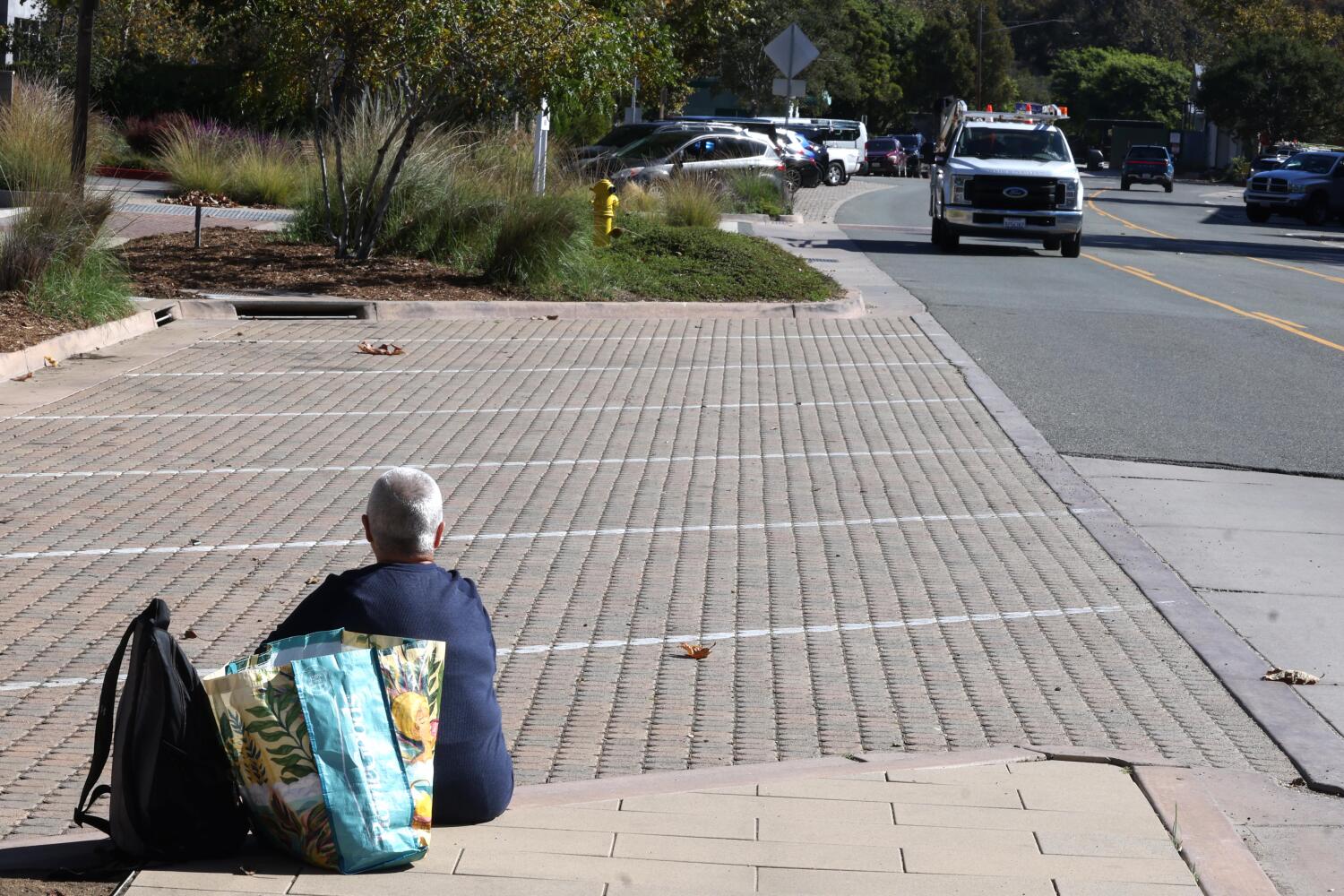
Wildfire season in Southern California arrives with a terrifying predictability. Santa Ana winds whip down dry canyons, humidity plunges into the single digits, and entire hillside communities hold their breath. When Malibu declared a local emergency to fast-track the removal of unhoused encampments along its brush-heavy canyons, city officials framed the policy strictly through the lens of life safety. The argument is direct. Discarded propane tanks, unauthorized cooking fires, and dense accumulations of personal property in high-fire-severity zones create an unacceptable ignition risk that threatens the entire coastal enclave.
Yet viewing California's chronic housing shortage exclusively through an emergency wildfire ordinance exposes a fundamental flaw in how local governments manage systemic crises. Clearing encampments under the banner of immediate disaster mitigation provides a quick operational victory, but it fails to alter the underlying environmental physics of wildfire progression. Malibu faces a geographic reality where steep topography, heavy chaparral, and erratic wind patterns dictate fire behavior far more than human habitation footprints. When bulldozers sweep through a ravine to remove temporary shelters, the dry brush remaining on either side of the cleared patch retains its explosive combustibility.
Understanding why municipal leadership repeatedly turns to emergency declarations requires looking past the immediate rhetoric of public safety and examining the legal mechanisms governing local authority during natural disasters.
The Emergency Powers Playbook
Municipalities possess broad latitude when exercising emergency powers. Under normal circumstances, clearing unhoused individuals from public land involves a complex web of constitutional protections, statutory notice requirements, and the mandate to offer shelter beds. Federal Ninth Circuit jurisprudence historically limited the ability of cities to cite unhoused individuals for sleeping on public property unless adequate alternative shelter existed.
Declaring a local emergency effectively compresses this administrative timeline.
- Bypassing Routine Environmental Review: Standard municipal projects require extended periods for public comment, environmental impact assessments, and bureaucratic coordination. Emergency declarations suspend these statutory hurdles.
- Accelerated Procurement: Cities can bypass competitive bidding processes to immediately hire private contractors for brush clearance and site remediation.
- Broadened Police Discretion: Law enforcement gains expanded authority to enforce abatement orders swiftly, citing imminent threats to life and property.
This acceleration offers an attractive mechanism for local leaders facing intense pressure from residents. When multimillion-dollar coastal properties sit adjacent to brush-choked gullies where unhoused populations camp out of sight, property owners demand immediate mitigation. Fire danger provides the precise legal justification needed to bypass the procedural friction that typically bogs down municipal policy.
The Physics of Chaparral and Risk
To evaluate the true efficacy of encampment sweeps as a wildfire prevention strategy, one must examine how fire moves through Malibu’s specific terrain. The dominant ecosystem along the Santa Monica Mountains is coastal sage scrub and chaparral. These native plants contain volatile oils that make them exceptionally flammable, acting as a natural fuel source that burns with intense heat.
Fires in this environment are driven primarily by three factors: wind velocity, topography, and fuel moisture.
[Wind Velocity] + [Topography (Slopes)] + [Dry Chaparral] = Extreme Fire Spread
An unhoused camp might introduce a localized ignition source, such as an open flame or a faulty heating coil. However, treating the human element as the primary driver of wildfire risk ignores the macro-environmental conditions. Even if every human presence is completely removed from a canyon, a single lightning strike, a downed power line, or a stray spark from a passing vehicle on Pacific Coast Highway can ignite the surrounding brush.
Furthermore, sweeping an encampment without a comprehensive plan for land restoration often leaves disturbed soil susceptible to invasive grasses. These non-native weeds dry out much faster than deep-rooted native chaparral, creating a fine-fuel matrix that actually accelerates fire spread during the peak of the dry season. The focus on human displacement distracts from the massive structural investments needed to harden infrastructure, such as retrofitting homes with ember-resistant vents, clearing defensible space around physical structures, and burying vulnerable electrical lines.
The Displacement Loop
When local authorities enact rapid clearance protocols without securing permanent, long-term housing alternatives, individuals are rarely integrated into stable systems of care. Instead, they are pushed into a continuous cycle of displacement.
The mechanics of this loop are straightforward:
- Enactment: An emergency ordinance passes, citing imminent environmental hazards or fire risk.
- Enforcement: Notice is posted, and law enforcement or private contractors clear the designated ravine or roadside.
- Dispersal: Individuals pack what belongings they can carry and move deeper into remote canyons or across municipal boundaries into neighboring jurisdictions.
- Re-establishment: Within weeks, new camps form in adjacent high-risk areas because the underlying structural lack of affordable housing remains entirely unaddressed.
This movement does not eliminate risk; it simply relocates it. Pushing vulnerable populations deeper into brush-heavy backcountry areas often places them in locations with zero emergency egress routes, minimal cellular coverage, and an even higher exposure profile should a fast-moving wildfire breach the ridge.
The Economics of Crisis Management
The financial allocation dedicated to emergency sweeps reveals skewed municipal priorities. Funding private contractors for rapid cleanups, deploying specialized sanitation crews, and maintaining increased police patrols during enforcement actions require substantial capital outlays.
Investing these funds into temporary enforcement provides immediate political visibility. Elected officials can point to cleared hillsides and assure anxious constituents that direct action was taken. By contrast, investing in permanent supportive housing, regional mental health infrastructure, or preventative hardening programs yields results on a timeline that spans electoral cycles rather than news cycles.
Municipal budgets are statements of institutional values. When cities treat homelessness strictly as an emergency enforcement problem rather than a structural housing and health crisis, they lock themselves into a perpetual expenditure loop. They pay repeatedly to clear the same patches of dirt year after year, while the underlying factors driving people into high-risk natural environments continue to multiply.
True resilience requires shifting away from reactionary ordinances that treat symptoms while ignoring the structural mechanics of both housing poverty and wildfire ecology. Malibu's emergency declaration demonstrates how quickly a municipality can mobilize its legal machinery when a visible crisis intersects with environmental threat, but it also highlights the profound limits of using temporary enforcement tools to manage permanent structural failures. The brush remains dry. The Santa Ana winds will return. The policy adjustments made so far treat only the footprint of the vulnerable, leaving the broader landscape as volatile as ever.