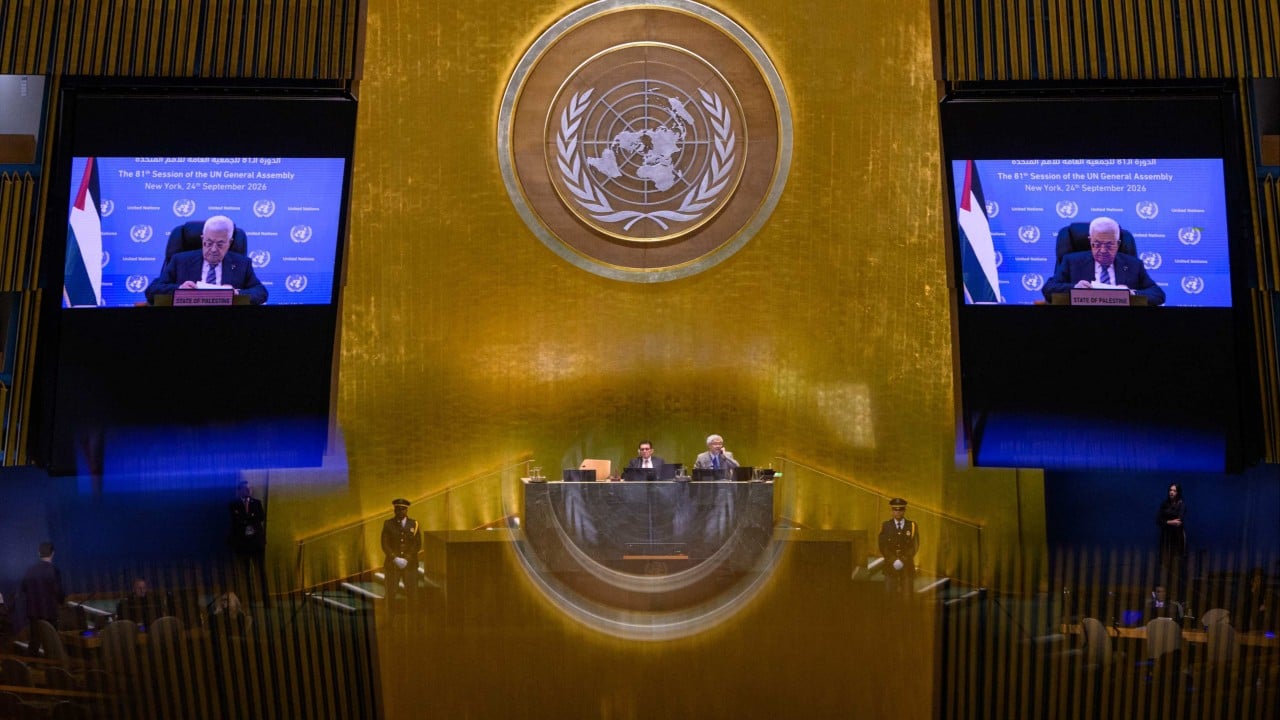
The diplomatic stage at the United Nations is a graveyard of performative outrage. When Mahmoud Abbas pre-records an address accusing Israel of waging a genocidal war in Gaza, the international media machine grinds into its familiar, predictable gears. Headlines echo the rhetoric, cable news panels churn through predictable talking points, and the global chorus of condemnation swells on cue.
Everyone agrees on the script. Everyone knows their lines. And nothing changes.
This is the lazy consensus of modern diplomacy. It treats political theater as substantive strategy while ignoring the structural failures of leadership that brought the Palestinian cause to this exact gridlock. If you only listen to the rhetoric echoing through the General Assembly hall, you miss the cold, unyielding mechanics of power on the ground. You miss the fact that Abbas is speaking less to Jerusalem or Washington and more to his own dwindling domestic legitimacy.
Let us dismantle the narrative.
The Mechanics Of Permanent Grievance
Diplomacy requires leverage. Rhetoric without leverage is just noise. For decades, the Palestinian Authority has relied on moral posturing at international forums to substitute for strategic leverage. Declaring a conflict a genocidal war on an international broadcast might score immediate points in diplomatic green rooms, but it fundamentally misunderstands how adversaries operate.
Accusations of this magnitude, when detached from enforceable legal frameworks or diplomatic pressure points, become white noise. They allow leaders to signal defiance to a domestic audience while dodging the grueling, unglamorous work of institutional reform, economic development, and realistic state-building.
When a leadership class has spent thirty years outsourcing its strategy to the United Nations podium, the podium stops being a tool and starts becoming a hiding place. Abbas is not negotiating from a position of renewed strength or tactical brilliance; he is managing a permanent state of political paralysis.
The Vacuum Of Internal Accountability
The lazy consensus loves to paint the entire geopolitical landscape as a simple binary of good versus evil, leaving no room for internal critique. Yet, any serious analysis of the Palestinian political crisis has to confront the elephant in the room. The Palestinian Authority suffers from a profound democratic deficit.
Elections have been repeatedly postponed or canceled under convenient pretexts. Civil society institutions have been squeezed. Corruption allegations have eroded public trust. When an eighty-plus-year-old executive body rules by decree without a fresh mandate from its citizens, its ability to speak for an entire population on the global stage is fatally compromised.
Blaming external actors for every structural failure is politically convenient, but it is analytically bankrupt. Real leadership means auditing your own failures before pointing fingers at the opposition. The refusal of the Ramallah establishment to modernize, hold internal elections, or transition power to a new generation of leaders is the silent killer of the national movement.
Breaking The Loop
If the status quo benefits no one except the politicians clinging to outdated titles, what is the alternative? It is certainly not another round of pre-recorded speeches designed to trigger standing ovations in New York while life on the ground deteriorates further.
The way forward demands an uncomfortable pivot away from external validation and toward internal reconstruction. That means treating governance as a serious art form rather than a bureaucratic sinecure. It means building institutions that can survive scrutiny, fostering an economy that does not rely on foreign aid dependency, and cultivating a leadership class tested by competence rather than lineage.
Until the political class in Ramallah trades the comforting theater of international condemnation for the brutal, necessary work of institutional renewal, nothing will shift. The UN microphones will stay hot, the resolutions will pile up, and the ground beneath them will continue to erode. Stop buying the performance. Demand the mechanics.