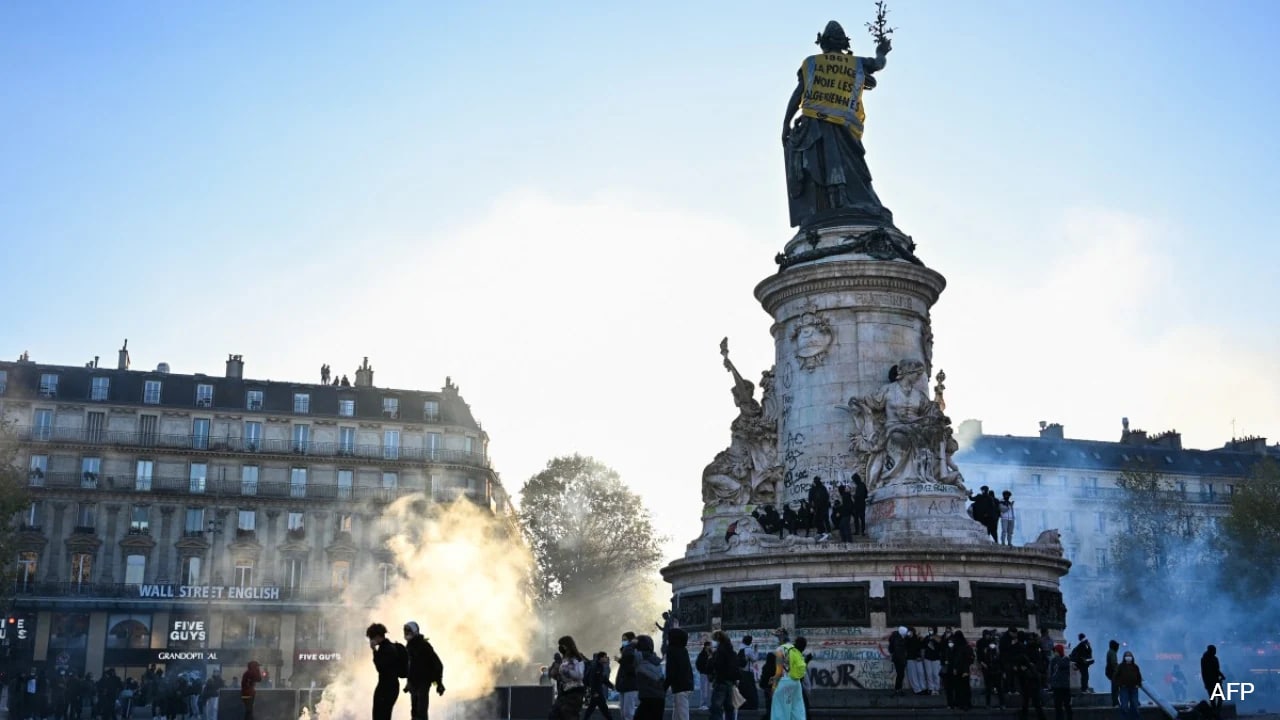
When Emmanuel Macron condemned those who "sought to bring down the Republic" following October's explosive nationwide riots, he fell back on a political playbook French leaders have relied on for decades. Blame the extremes. Focus on the burning trash bins at Place de la République. Decry the collapse of Limoges' historic City Hall roof.
It's a convenient framing. It transforms a deep, systemic breakdown across French society into a simple story of law-abiding citizens versus subversives. But if you've been tracking French politics—or lived through the Yellow Vest crisis in 2018—you know this narrative misses the point entirely.
Over 2,400 people were arrested in a single wave of unrest. That surpasses the single-day arrest tallies of the peak 2018 mobilizations. When thousands of high school students, public sector workers, and suburban families spill into the streets, framing the situation as purely the work of "seditious elements" isn't just inaccurate—it's dangerous policy.
What Actually Sparked the October Unrest
The official line from the Élysée Palace focuses heavily on "ultra-left" agitators and opportunists. That ignores why hundreds of thousands of ordinary French citizens marched in the first place.
The movement didn't start in an underground political cell. It started in overcrowded high school classrooms with crumbling infrastructure, missing teachers, and a surging cost of living that has squeezed the middle class past its breaking point.
┌─────────────────────────────────────────────────────────────┐
│                 CRITICAL IMPACT METRICS                     │
├──────────────────────────────┬──────────────────────────────┤
│ Nationwide Arrests           │ 2,400+                       │
├──────────────────────────────┼──────────────────────────────┤
│ Peak Protester Attendance    │ 250,000+                     │
├──────────────────────────────┼──────────────────────────────┤
│ Historical Comparison        │ Higher single-day total      │
│                              │ than Yellow Vests (2018)     │
└──────────────────────────────┴──────────────────────────────┘
When students started blockading campuses, they were pointing out basic operational failures:
- Classrooms lacks heating during cold spells.
- Severe staffing shortages leave core subjects untaught for months.
- Purchasing power for young families has plunged alongside inflation.
By the time trade unions joined the march alongside student collectives, the grievances had coalesced. What began as a focused protest over public education funding quickly morphed into a general indictment of Prime Minister Sébastien Lecornu's domestic agenda.
The Escalation Mechanics: How Demonstrations Turn Violent
People often ask why peaceful demonstrations in France disintegrate into street battles so rapidly. Having analyzed European civil unrest for years, I've observed a predictable, repeating cycle.
First comes the legitimate strike. Tens of thousands walk down designated parade routes, surrounded by union marshals. As the official parade winds down in the late afternoon, smaller, more agile groups detach themselves.
These aren't student organizers. They're black bloc networks, localized agitators, and young men from disenfranchised housing projects seeking a confrontation.
  [Peaceful Student & Union Rally]
                 │
                 ▼
    [Official Parade Concludes]
                 │
  ┌──────────────┴──────────────┐
  ▼                             ▼
[Peaceful Crowd     [Opportunistic Groups &
 Disperses]          Agitators Remain]
                                │
                                ▼
                   [Property Damage Begins]
                                │
                                ▼
                   [Heavy Police Containment]
                                │
                                ▼
                  [Broad Tactical Escalation]
Police response tactics frequently exacerbate the problem. French law enforcement relies heavily on heavy containment strategies, tear gas, and sting-ball grenades.
When police fire kinetic impact projectiles into dense crowds, non-violent protesters get trapped in the crossfire. In Saint-Étienne, a young demonstrator lost a hand to explosive ordnance. In Paris, an onlooker died of a heart attack during police operations near Place de la République.
Instead of isolating violent actors, heavy-handed policing often turns bystanders into angry participants, validating the far-left claim that the state treats its own populace like an enemy force.
The Political Failure of Condemnation Without Reform
"Those who destroyed must pay. Those who looted must pay back," Macron declared in his address.
Legally, he's right. Destroying civic heritage like Limoges City Hall or smashing independent retail storefronts doesn't build a better school system. Paris Mayor Emmanuel Grégoire rightly highlighted the devastating economic hit to local business owners who had nothing to do with government austerity policies.
┌──────────────────────────────────────────────────────────────┐
│                    THE RHETORIC GAP                          │
├──────────────────────────────┬───────────────────────────────┤
│ Executive Response           │ Civic Reality                 │
├──────────────────────────────┼───────────────────────────────┤
│ Focus on "Seditious Groups"  │ Widespread Middle-Class Anger │
│ Emergency Security Directives│ Unresolved Funding Deficits   │
│ Rhetorical Stigmata          │ Growing Institutional Distrust│
└──────────────────────────────┴───────────────────────────────┘
Relying entirely on condemnation creates a dangerous political blind spot. When executive power brushes off massive public mobilizations as the work of criminal instigators, it cuts off the pressure valve that democratic protest provides.
Far-left leaders like Jean-Luc Mélenchon immediately exploited this gap, accusing the government of deliberately letting conditions deteriorate to justify a crackdown. Meanwhile, right-wing factions weaponized the disorder to call for harsher border policies—even though local law enforcement acknowledged no link between the rioting and immigration.
When a president attributes widespread rage entirely to malicious agitators, he gives up the chance to address the core policy failures driving people to the streets.
How to Understand What Comes Next
If you're watching France from afar or trying to gauge where European political stability is headed, ignore the televised burning barricades for a moment. Look at these structural indicators instead:
Watch the Union-Student Alliance: French governments can usually survive localized student strikes or isolated transit walkouts. They cannot survive sustained, coordinated strikes that link student groups with major trade unions like the CGT. If union leadership calls for open-ended strikes, the government will be forced to roll back its budgetary stance.
Monitor Police Tactical Revisions: The Interior Ministry is under intense international and domestic pressure over crowd-control injuries. Watch whether prefectures start banning specific riot munitions. If law enforcement shifts to softer, de-escalation tactics, property damage might rise briefly, but total injuries and broad-scale radicalization will fall.
Track Legislative Budget Adjustments: Macron directed prefects to issue protest bans and secure public buildings. But security decrees don't fix leaky school roofs or hire math teachers. The true test of this crisis lies in whether the Lecornu administration injects real emergency funds into public infrastructure during upcoming budget debates.
Condemning violence is easy for a head of state. Fixing the institutional decline that brings 250,000 citizens to the edge of revolt requires real political courage—and so far, Paris hasn't shown much of it.