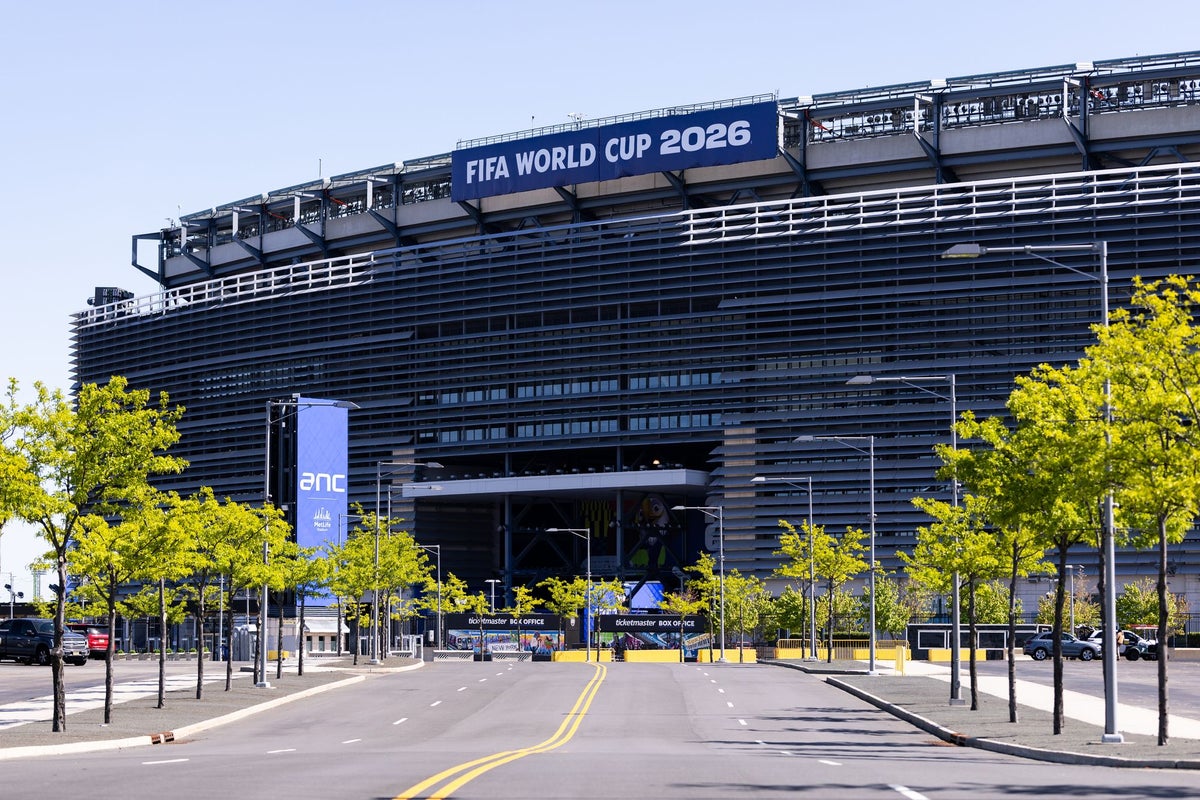
The 2026 FIFA World Cup operates as a dual exercise in hyper-scaled sports capitalism and high-stakes national team transition. While public narratives focus on gross economic impacts and home-field advantages, a structural divergence exists beneath the surface. For host cities, the tournament presents an asymmetrical fiscal architecture where municipal liabilities are certain, but revenue capture is highly restricted. Simultaneously, for the United States Men’s National Soccer Team (USMNT), the tournament introduces a complex tactical calibration under Mauricio Pochettino, where structural fluidity must offset a distinct deficit in world-class individual talent.
The Host City Cost Function: Asymmetric Extraction
The financial model of a modern World Cup is built on an asymmetric distribution of economic capital. FIFA projects gross tournament revenues to exceed $10 billion, and some models forecast up to $13 billion. However, the institutional framework dictated by host city agreements ensures that revenue streams are centralized while operational costs are localized.
To quantify the net fiscal impact on a municipality, the host city economy must be evaluated through a rigid expenditure framework.
Total Municipal Outlay = Base Infrastructure Costs + Variable Operational Scaling + Revenue Displacements
1. Capital Expenditure and Infrastructure Conversion
Unlike previous tournaments requiring entirely new stadiums, the 2026 North American footprint capitalizes on existing NFL venues. However, the cost of retrofitting these venues to meet strict international standards is substantial. The conversion of artificial turf to specialized hybrid grass systems requires structural sub-base alterations, advanced vacuum-ventilation installation, and integrated grow-light arrays.
Furthermore, stadium configurations must be physically altered to accommodate wider pitch dimensions, necessitating the temporary removal of lower-bowl concrete seating sections. These upfront capital expenditures are borne entirely by stadium operators or local organizing committees, frequently subsidized by public bonds.
2. Operational Elasticity and Public Safety
The structural bottleneck for cities lies in municipal services. Public safety, counter-terrorism logistics, and transit scaling are mandated by the host city agreement but funded locally. The federal government distributed $625 million in grants across the 11 US host cities, yet this capital arrived less than three months prior to kickoff, leaving local authorities to manage cash-flow deficits through municipal debt issuance.
The security perimeter required for a mega-event dictates thousands of overtime hours for local police, emergency medical services, and traffic management personnel. These expenditures scale linearly with the number of matches hosted, yet they yield no direct dividend from ticket sales or broadcast rights.
3. The Displacement Effect and Revenue Stripping
The primary fallacy in raw economic impact projections is the failure to account for tourism displacement. During a tournament window, traditional business travelers and high-spending conventions avoid the host city due to inflated hotel rates and transit congestion. The consumer base shifts from broad-based economic actors to highly localized sports consumers.
Crucially, the primary mechanisms of wealth generation within the stadium—including ticket sales, premium corporate hospitality, and in-stadium sponsorships—are entirely tax-exempt and funneled directly to FIFA. Local municipalities are restricted to taxing hotel occupancy, restaurant sales, and car rentals.
Consumer Extraction: The Ticket Inflation Paradigm
The consumer-facing aspect of the tournament highlights a drastic evolution in sports ticketing design. The 2026 cycle represents the formal integration of dynamic pricing models into international soccer, resulting in an unprecedented financial barrier to entry.
The pricing structure functions across three distinct tiers:
- The Supporter Allocation Floor: Nominally priced at $60, this tier is restricted to fans clearing stringent historical attendance verification systems managed by national federations. It is decoupled from the open market and comprises a minor percentage of total stadium capacity.
- The General Public Baseline: Opening at a minimum face value of $120 for neutral group-stage fixtures, this baseline inflates to between $1,500 and $2,735 for Category 1 seats during host-nation group stage games.
- The Knockout Escalation: As the tournament progresses to the single-elimination bracket, the price floor compounds rapidly. A Category 1 ticket for the final ranges between $6,730 and $7,875 at face value—a 400% expansion relative to the 2022 equivalent in Qatar.
This escalation is sustained by an algorithmic secondary market where platforms impose double-sided transaction fees, charging up to 13% to both the buyer and the seller. This mechanism incentivizes speculative ticket procurement and effectively prices out the domestic sporting demographic.
The resulting economic ecosystem shifts consumer behavior from local match attendance to highly restricted regional travel hubs, forcing hospitality networks to implement multi-night minimum stays and 300% premiums to extract value from a transient fanbase.
Tactical Architecture: The Pochettino Overhaul
While the administrative apparatus manages fiscal variables, Mauricio Pochettino is executing a profound tactical transformation of the USMNT. The previous era under Gregg Berhalter relied heavily on a structured, possession-oriented 4-3-3 system designed to monopolize territory through a deliberate, methodical buildup.
Pochettino has recognized a critical structural limitation: the U.S. roster lacks elite, world-class central progressive passers capable of systematically breaking down low defensive blocks. The tactical blueprint has shifted toward functional adaptability and transition optimization.
Possession Phase: The 3-2-5 Structural Stagger
In the attacking phase, the USMNT abandons its defensive baseline to construct a asymmetrical 3-2-5 or 3-1-6 shape. This structural mutation is executed via specific player movements:
[Defensive Line: 4-4-2]  --->  [In Possession: 3-2-5 / 3-1-6]
     CB   CB   LB                   CB   CB   LB
  RB                                           Wingback (High)
     CM   CM                             CM   CM  (Double Pivot)
  RM      LM                        Winger        Winger
     ST   ST                             ST   ST
- Left-Side Overload Mechanics: Central defender Chris Richards occupies the left lateral channel of the back three. Being naturally left-footed, Richards alters the passing geometry, enabling the team to bypass the first line of the opponent’s press via direct, angled balls into the half-spaces rather than relying on lateral recycling.
- The False Fullback / Advanced Wingback: The right fullback pushes aggressively into the final third, effectively operating as a high winger to provide maximum horizontal stretching. Simultaneously, the left fullback tucks inward to form the third member of the rest-defense rest-structure alongside the central defenders.
- The Double-Pivot Filter: Sitting ahead of the back three, a double-pivot occupies the central corridor. Their primary objective is not complex playmaker orchestration, but rather acting as a defensive filter designed to destroy immediate counter-pressing angles and secure secondary balls.
Defensive Phase: The Mid-Block Stratagem
The high, aggressive counter-pressing that defined Pochettino’s tenures at Tottenham and Paris Saint-Germain has been intentionally curbed due to national team physical constraints. Instead, the USMNT implements a disciplined, compact 4-4-2 or 5-3-2 mid-block.
The line of confrontation is established near the center circle, denying elite opponents the ability to exploit space behind the defensive line via vertical long balls. The objective is to constrict the space between the midfield and defensive units, funneling the opponent’s possession into wide, low-leverage areas where boundary lines act as extra defenders.
Structural Bottlenecks and Tactical Fragility
This strategic design contains clear operational risks. The primary vulnerability is the team's vulnerability to rapid vertical transitions when their attacking shape is uncoordinated.
If the double-pivot fails to delay the opponent's initial pass after a turnover, the back three is forced to defend large lateral spaces isolated against elite attackers. This structural flaw was evident in a 5-2 defeat against Belgium, where the defensive structure collapsed due to poor positioning during defensive transitions.
Opponent Turnover ---> Double Pivot Bypassed ---> Back Three Isolated in Wide Space ---> High-Value Concession
The second limitation is personnel depth at the center-back position. The system relies heavily on mobile, positionally intelligent defenders who can read play effectively in isolated situations.
If injuries disrupt the starting unit, Pochettino is forced into a tactical compromise: deploying a five-man backline to protect weaker individual defenders, which naturally reduces the number of creative attackers on the pitch.
Strategic Playbook for Host-Nation Progress
To maximize tournament longevity and mitigate these structural liabilities, the USMNT must execute a highly specific tactical playbook throughout the group stage against Paraguay, Australia, and Turkey.
First, Pochettino must prioritize game state over possession metrics. Against lower-tier opposition, the U.S. will see up to 60% of the ball. Possession must be highly deliberate and oriented toward vertical penetration rather than horizontal possession.
Second, Christian Pulisic must be kept in Central Zone 14 during transition phases. Rather than isolating him on the flank where he can be doubled by a compact defensive block, the system must use structural overloads to free him in the half-spaces, allowing him to drive directly at central defenders.
Finally, the coaching staff must manage the squad's physical load across vast geographic distances. With matches rotating between Los Angeles and Seattle, travel fatigue operates as a silent tactical variable.
Pochettino must use his bench proactively, transitioning to a low-energy, possession-killing 5-4-1 mid-block immediately once a two-goal advantage is established in the second half. Preserving physical capacity will ultimately dictate knockout execution, where small physical margins determine performance outcomes.
To better understand the complex tactical frameworks deployed by elite modern managers, analyze the structural mechanics of transitional systems explored in The Evolution of Modern Tactical Formations, which details how contemporary managers adjust defensive shapes between mid-blocks and high-pressing lines to disrupt structured opposition possession.