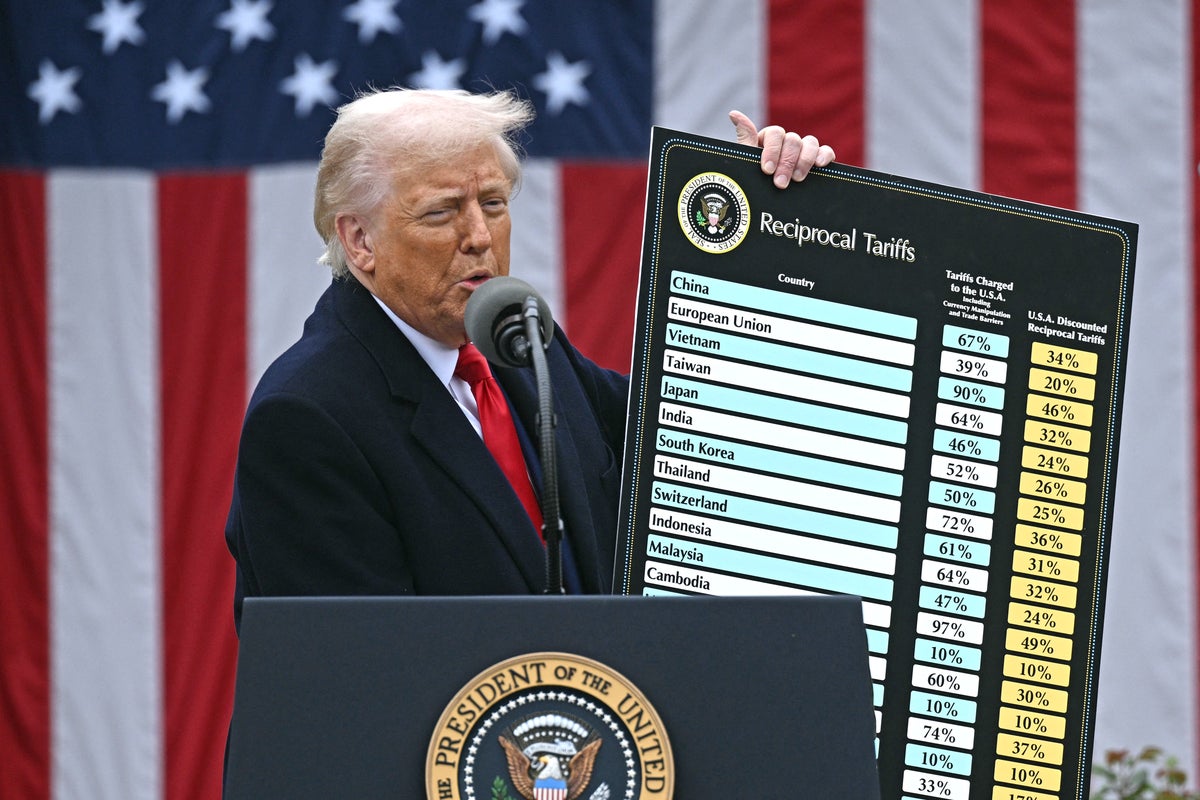
A structural imbalance occurs when the architect of macroeconomic volatility also serves as the primary liquidity provider to their own private capital accounts. The release of the 2025 Office of Government Ethics (OGE) financial disclosure reveals an intersection of statecraft and capital allocation: on April 8, 2025, investment portfolios tied to the executive branch executed 327 systematic equity purchases, committing up to $12.8 million in aggregate capital. Within twenty-four hours, a unilateral executive declaration paused the highly disruptive "Liberation Day" tariffs for 90 days. The subsequent capital market reaction—a 9.52% expansion in the S&P 500 and a 12.1% surge in the Nasdaq—presents a case study in systemic policy arbitrage.
To comprehend the mechanics of this market movement, the event must be decoupled from partisan rhetoric and analyzed through quantitative frameworks. The underlying economic phenomenon is not merely a question of political ethics; it is an examination of how informational asymmetry, policy-induced volatility compressions, and structural gaps in regulatory frameworks alter asset pricing models.
The Tri-Partite Framework of Policy Arbitrage
The profitability of these trades relies on a highly predictable execution sequence. Policy arbitrage in this context operates across three distinct mechanical phases:
- Volatility Cultivation: The introduction of exogenous economic shocks—such as the global import taxes initiated on April 2, 2025—artificially depresses equity valuations by inflating the systemic risk premium.
- Asymmetric Liquidity Capture: Capital is deployed at the absolute nadir of the asset prices, precisely when market uncertainty is maximized for the general public but neutralized for the policy architect.
- Volatility Compression via Decree: The sudden, unilateral reversal of the policy shock removes the risk premium, forcing a rapid upward revaluation of the underlying equities.
The trade distribution on April 8 focused heavily on high-beta, tariff-sensitive megacap technology equities. The portfolio concentrated allocations in blocks valued between $100,001 and $250,000 across a specific basket of market leaders: Apple, Nvidia, Microsoft, Amazon, and Alphabet.
The structural relationship between policy announcements and equity revaluations can be mapped through a simple mathematical representation of the asset risk premium:
$$R_e = R_f + \beta(\mathbb{E}[R_m] - R_f) + \gamma_{policy}$$
Where $\gamma_{policy}$ represents the artificial risk premium introduced by tariff uncertainty. When $\gamma_{policy}$ is driven to zero by executive decree, the required rate of return drops instantly, forcing an immediate, vertical appreciation in the equity price.
Microeconomic Vector: Sector-Specific Tailwinds
The choice of megacap technology as the primary vehicle for capital deployment highlights a sophisticated understanding of corporate cost structures. Tech corporations maintain supply chains that are highly exposed to international trade frictions.
Apple shares had declined for four consecutive sessions leading up to April 8, closing at $172.42 due to anticipated supply chain disruptions. Following the tariff pause announcement on April 9, the equity surged 15.6% to close at $198.85. The removal of the tariff threat acted as an immediate balance-sheet normalization event.
Nvidia experienced an identical 15.6% jump on April 9, rising from $96.30 to $114.33. The company’s exposure to international manufacturing nodes makes its equity highly sensitive to changes in trade policy. The execution of these purchases right before the announcement demonstrates an optimization of the delta between macro-uncertainty and policy certainty.
Regulatory Asymmetry and the $200 Compliance Arbitrage
The public disclosure of these transactions did not occur within the standard timeframe dictated by federal statutes. The Stop Trading on Congressional Knowledge (STOCK) Act mandates that executive branch officials report any securities transaction exceeding $1,000 within 45 days via Periodic Transaction Reports (Form 278-T).
The 327 transactions executed on April 8, 2025, were withheld from public view for over 14 months, eventually appearing in a 927-page annual filing on July 1, 2026. This delay exposes a fundamental structural defect in federal regulatory design: the cost-benefit asymmetry of non-compliance.
| Variable | Statutory Framework | Operational Reality |
|---|---|---|
| Reporting Deadline | 45 Days from Execution | 440+ Days Delayed (Annual Filing) |
| Non-Compliance Penalty | Capped Statutory Late Fee | $200 per filing cycle |
| Capital Deployed | Disclosed in wide intervals | Up to $12.8 Million |
| Estimated Market Gain | Immediate paper appreciation | ~9.5% to 15.6% within 24 hours |
The statutory fine for failing to file a Form 278-T is capped at $200. When contrasted against a multi-million dollar equity deployment that yielded double-digit returns within 24 hours, the financial penalty ceases to function as a deterrent. It becomes an affordable operational cost of maintaining informational opacity.
The strategy of choosing to pay a nominal compliance penalty rather than granting real-time visibility to the market ensures that the capital positions remain unburdened by public scrutiny or front-running by institutional algorithms.
Institutional Defensibility and Discretionary Structures
The official defense of the trading volume relies on the segregation of capital control. The executive branch maintains that all personal assets are held within fully discretionary accounts managed by independent third-party financial institutions. Under this structure, asset managers possess sole authority over investment choices, theoretically isolating the policy maker from individual trade decisions.
The structural limitation of this defense lies in the systemic nature of the policy changes. An asset manager does not require explicit instructions to buy specific tickers if the overarching macroeconomic directive is clear. A portfolio manager operating a broad market-tracking or tech-heavy mandate will systematically accumulate depressed blue-chip equities during a market rout.
If the manager anticipates or is broadly informed of an impending stabilization of trade policy, the automated rebalancing of a discretionary account yields the exact same outcome as a directed insider trade. The systemic correlation between the policy shifts and the portfolio's net asset value shifts creates an institutional conflict that discretionary account labels fail to neutralize.
Recurring Strategic Deployments Throughout 2025
The April 8 buying spree was not an isolated incident within the 2025 trading data. The 927-page OGE disclosure outlines a persistent pattern where specific portfolio allocations immediately preceded significant regulatory or legislative adjustments.
The Semiconductor Intervention Vector
On August 18, 2025, the executive’s investment accounts executed massive capital deployments into Apple, Microsoft, and Nvidia, with transaction bands ranging between $5 million and $25 million per position. One week later, the White House announced a structural compromise with Nvidia and AMD.
The agreement permitted the export of specialized H20 semiconductor chips to China in exchange for a 15% revenue share paid directly to the U.S. government. This policy opened a multi-billion dollar revenue channel that had been frozen by previous export restrictions. The capital accounts were fully positioned in the asset class prior to the public announcement.
The Antitrust Settlement Vector
A separate equity allocation occurred on September 23, 2025, targeting Amazon with a purchase valued between $500,000 and $1 million. This position was established on the exact day that a highly publicized Federal Trade Commission (FTC) lawsuit regarding Prime membership deception entered its trial phase.
Two days later, the corporate entity settled with the federal government on terms far more favorable than institutional analysts had projected. The equity recovered its litigation risk premium immediately, providing another short-term capital appreciation event for the portfolio.
Structural Implications for Global Asset Allocation
The persistence of policy-driven equity trading by sovereign leaders alters how institutional risk models must be constructed. When executive decrees become the primary driver of beta compression, standard fundamental analysis loses its predictive validity.
Institutional asset managers must now incorporate political decision-making cycles directly into their quantitative models. This means treating policy announcements not as exogenous random variables, but as endogenous catalysts tied directly to capital positioning schedules.
Portfolio exposure must be dynamically adjusted based on the following operational criteria:
- Sovereign Position Disclosures: Tracking historical trading patterns reveals which specific sectors receive capital injections during market downturns.
- Regulatory Fee Arbitrage Inversion: Recognizing that a lack of periodic transaction filings indicates active capital positioning during periods of high policy uncertainty.
- Decree Timeline Modeling: Measuring the maximum duration an administration can sustain an economically damaging policy before the domestic political costs necessitate a forced reversal.
The structural reality of modern capital markets is that transparency frameworks are entirely inadequate when dealing with executive authority. The optimization of personal capital portfolios through policy-induced market fluctuations will continue unabated as long as compliance penalties remain functionally non-existent.
Institutional traders must abandon the assumption of an even playing field and instead treat sovereign policy changes as a deliberate corporate restructuring event, trading alongside the state's capital flow rather than attempting to fight the regulatory crosscurrents.