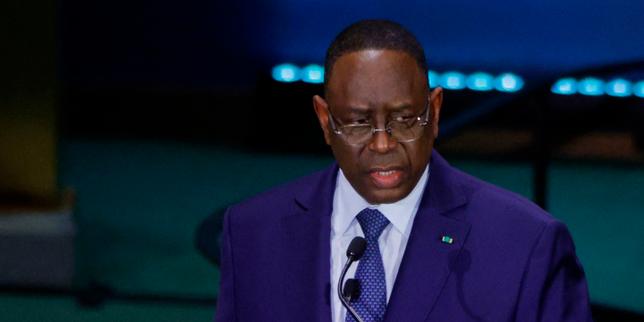
Former Senegalese President Macky Sall exited the race to succeed António Guterres as Secretary-General of the United Nations on October 17, 2026, following the sixth straw poll of the UN Security Council, yet his withdrawal functions less as a diplomatic retreat than as a capital reallocation toward domestic political competition in Senegal ahead of the 2029 presidential cycle.
Standard commentary on Sall's exit treats the UN campaign and Senegalese party politics as separate tracks: first he pursued a multilateral post, then that door closed, and now he looks back home. That sequence misreads the underlying incentives. In high-stakes executive politics, multilateral candidacies often serve as reputational holding patterns while domestic coalitions fracture or consolidate. Understanding Sall's move requires separating verifiable institutional mechanics from educated hypotheses about his post-exit positioning, mapping the veto math of the Security Council, and evaluating the real constraints facing a former head of state returning to an opposition or comeback role.
Deconstructing Conventional Coverage and Its Blind Spots
Conventional reporting on Sall's withdrawal typically relies on three surface-level claims: he stepped aside after an inconclusive straw poll to help build consensus, regional and gender rotation dynamics weighed against his bid, and he retains political ambitions despite leaving New York. Each claim points to a real surface event, yet each stops short of explaining why the outcome was structurally probable long before October 2026.
The first analytical gap involves selection and veto mechanics. Securing the UN Secretary-Generalship requires crossing a dual threshold in the 15-member Security Council: at least nine affirmative votes alongside zero vetoes from the five permanent members (China, France, Russia, the United Kingdom, and the United States). In polarized geopolitical environments, a single permanent member can block a candidate regardless of broader regional support. Leaked straw-poll reporting around the autumn 2026 rounds indicated that Sall faced persistent net negative sentiment and potential vetoes from multiple permanent members, while Senegal's official endorsement from President Bassirou Diomaye Faye arrived in July 2026 without reversing that trajectory.
The second blind spot concerns timing and domestic signaling. When a former president remains visible on international stages—issuing statements from abroad while mobilizing party structures around key anniversaries—multilateral diplomacy acts as an insulation mechanism. Exiting a losing multilateral race before the final selection lock-in prevents further reputational erosion from repeated negative ballots and lets the candidate frame departure as statesmanship rather than defeat.
Facts Versus Educated Hypotheses
Rigorous strategy analysis requires drawing a sharp line between documented facts and plausible strategic interpretations.
Known Facts:
- Macky Sall announced his withdrawal from the UN Secretary-General race on October 17, 2026, one day after the Security Council's sixth informal straw poll, stating a desire to support an international consensus candidate ahead of António Guterres's term ending December 31, 2026.
- Sall drew more "discourage" than "encourage" votes across straw polls, and reporting on the October 2026 color-coded round indicated prospective vetoes from three permanent Security Council members.
- Senegal's government under President Bassirou Diomaye Faye formally backed Sall's candidacy in July 2026.
- Following the withdrawal, discussions and organizational activity around Sall's party, the Alliance for the Republic (APR), intensified around mobilization and Senegal's 2029 presidential election horizon.
Educated Hypotheses:
- Sall's withdrawal was likely timed to cut sunk diplomatic costs once straw-poll trajectories confirmed that a veto-free path was unavailable, preserving leverage for domestic realignment rather than pursuing a symbolic final ballot.
- Renewed organizational energy inside the APR reflects a calculated effort to convert external visibility into a structured domestic faction capable of bargaining or competing in the run-up to 2029.
- Whether Sall's return to active domestic maneuvering helps or divides the opposition landscape depends on how his base interacts with the governing camp of Bassirou Diomaye Faye and National Assembly President Ousmane Sonko.
Two Core Analytical Frameworks
To evaluate Sall's position without relying on punditry, two frameworks clarify the constraints he faces in New York and Dakar.
The Veto-Threshold and Timing Matrix
Every UN Secretary-General campaign operates inside a two-stage filter: informal Security Council straw polls followed by formal selection and General Assembly appointment. Three variables govern whether a candidate stays in or exits early:
- Permanent-member veto exposure: Even strong regional backing cannot offset a single P5 veto. Once color-coded or leaked tallies signal multi-veto resistance, staying in yields diminishing marginal returns.
- Home-state alignment lag: A former leader's UN bid is heavily shaped by the current government in Dakar. Late or contested domestic endorsement limits diplomatic cohesion early in the cycle.
- Exit optics: Voluntarily stepping out after an inconclusive round allows a candidate to claim a consensus-building rationale rather than waiting to be eliminated at the finish line.
The cause-and-effect chain runs directly from veto math to exit timing. Persistent negative tallies compress the probability of winning to near zero, making an earlier exit rational for preserving political capital elsewhere.
The Domestic Comeback Cost Function
Returning to domestic politics after leaving office and losing an international race entails specific structural costs that observers often overlook:
- Coalition friction: Former incumbents carry both loyalist networks and baggage from their time in power, creating friction both with rival factions and with internal party figures who managed the transition.
- Generational and electoral clocks: With Senegal's next presidential election set for 2029, any comeback strategy must bridge years of shifting voter coalitions, economic pressures, and legislative dynamics.
- Credibility of intent: Re-engaging at home after invoking consensus and global service requires a clear narrative explaining why domestic mobilization is now the primary arena.
Answering Core Questions Through Structure
Why would a former president pursue a top UN post only to step aside months before the term ends? High-profile multilateral races offer low-cost global visibility and test whether major powers view a candidate as an acceptable broker. When straw polls demonstrate entrenched resistance among key permanent members, continuing consumes diplomatic bandwidth without changing the veto reality.
What does abandoning the UN race mean for his political ambitions at home? It shifts focus from an external appointment controlled by five veto holders to a domestic contest governed by party organization, public legitimacy, and alliance building. Yet domestic influence is not automatic. A comeback requires rebuilding grassroots and cadre discipline—such as mobilizing youth, women, and party milestones—while navigating a political environment reshaped by the current administration.
Operational Playbook and Strategic Limitations
For a political strategist advising a former head of state executing this pivot, the sequence follows four operational steps:
- Audit loyalty and cadre readiness first: Map active party chapters, regional coordinators, and constituency groups before staging large public rallies so organizational mobilization outlasts news cycles.
- Define a distinct value proposition for 2029: Clarify whether the goal is an outright presidential run, kingmaker leverage, or institutional opposition, avoiding mixed signals that confuse voters and allies.
- Manage relations with the incumbent camp deliberately: Calibrate rhetoric between confrontation and pragmatic engagement so legal, political, and institutional risks are accounted for.
- Control the narrative around the UN exit: Frame the withdrawal around institutional realism and consensus rather than grievance, turning a closed international track into a disciplined domestic launchpad.
Every strategy carries limits. A comeback bid can stall if internal party divisions resurface, if public sentiment remains resistant to former-incumbent leadership, or if shifting alliances between 2026 and 2029 alter the competitive field faster than party machinery can adapt. No single organizational move guarantees political recovery.
Strategic Recommendation
To convert a closed UN candidacy into durable political leverage without overextending into an unwinnable early campaign, Macky Sall's camp should treat late 2026 through 2027 as a disciplined organizational consolidation phase rather than an immediate electoral sprint toward 2029. Prioritize internal party cohesion, clear messaging on governance and economic priorities, and selective coalition outreach—testing real grassroots traction incrementally before committing fully to a high-stakes presidential bid.
Macky Sall Withdraws From UN Secretary-General Race
This video provides direct coverage of Macky Sall's withdrawal from the UN Secretary-General race and his stated rationale regarding a consensus candidate, complementing the strategic analysis above.