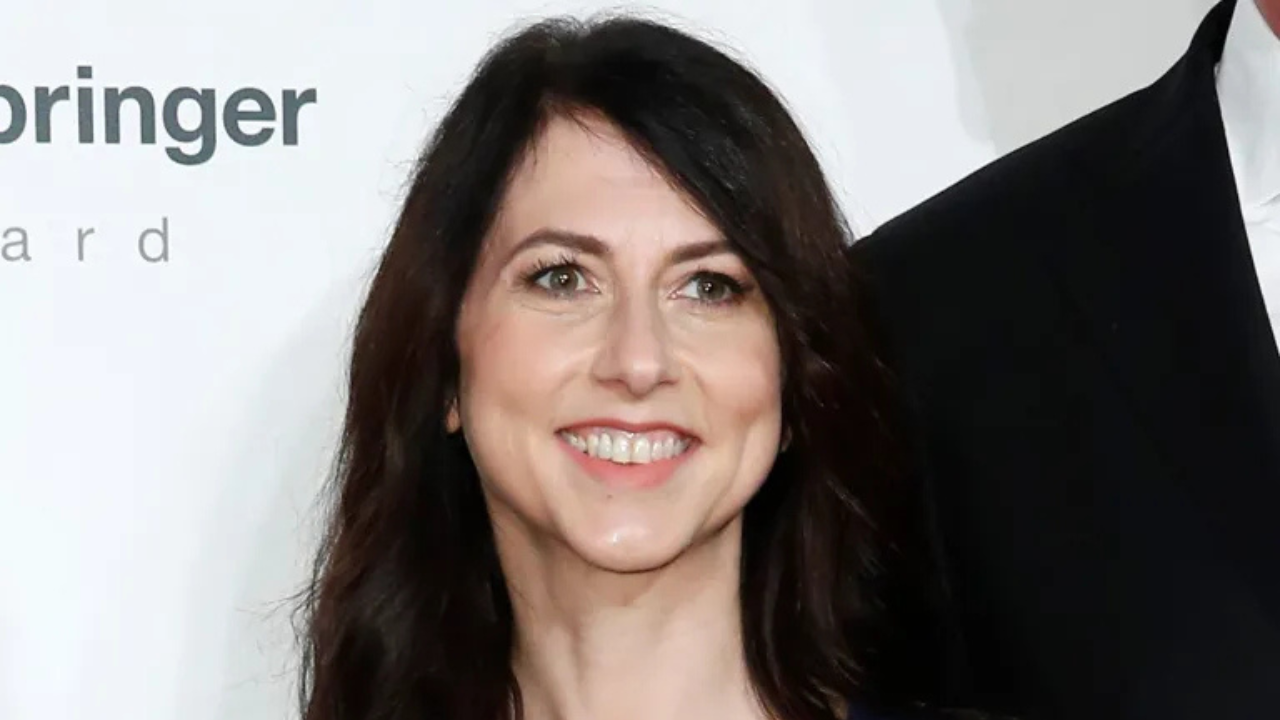
MacKenzie Scott doesn't want your name on a building. She doesn't want a board seat, she doesn't want a ten-page quarterly progress report, and she definitely isn't waiting around for a press release.
By donating an astronomical $26.4 billion in less than seven years, Scott has broken every unwritten rule in the billionaire philanthropy playbook. Her relentless pace recently landed her a spot on the Forbes Iconoclast 50 list. Forbes started tracking charitable giving back in 2012, and nobody has ever dropped cash this fast. In 2025 alone, she dumped $7.2 billion into the nonprofit sector.
But the sheer dollar amount isn't what makes old-money donors sweat. It's the way she gives it away.
Traditional mega-donations look like a business contract. A tech mogul gives money to a prestigious university, demands their name on the science wing, and outlines 45 different conditions for how the funds can be spent. Scott does the exact opposite. She finds an organization, wires them millions of dollars, and tells them to spend it however they see fit.
It is called unrestricted giving. It sounds simple, but it is causing a quiet revolution in the nonprofit world.
The Trust Experiment That Actually Worked
For decades, big philanthropy operated on an insultingly simple premise. The premise was that billionaires know how to solve societal problems better than the people living through them. Rich donors assumed that because they made billions selling software or retail goods, they were naturally qualified to dictate how a homeless shelter or a rural clinic should run.
Scott flipped that script. Her organization, Yield Giving, operates on a different thesis. The people closest to the problem are the ones who know how to fix it.
When you look at the numbers, her strategy targets places that traditional wealth completely ignores. Historically Black Colleges and Universities (HBCUs) have been starved of institutional capital for generations. They survive on tiny endowments compared to elite Ivy League institutions. Scott has poured over a billion dollars directly into these schools.
Look at the recent numbers.
- Howard University: Received an $80 million unrestricted gift.
- Prairie View A&M University: Nabbed $63 million, pushing her total investment in that single Texas campus to $113 million.
- Elizabeth City State University: Scored a record $42 million.
These aren't tiny grants for specific research projects. They are massive injections of liquid capital. When Howard gets $80 million with zero strings attached, the university leadership can breathe. They can build new dorms, fund scholarships for low-income students, or boost faculty salaries so they don't lose top talent. They don't have to beg a board of trustees for permission.
Why No Strings Attached Philanthropy Terrifies the Elite
If you want to understand why traditional philanthropists hate this model, look at how the establishment reacted when Scott started her giving spree. Critics predicted disaster. They claimed that dumping millions into small grassroots organizations would overwhelm them. They argued that without strict oversight, the money would be wasted on administrative bloat or poor investments.
They were wrong.
The Center for Effective Philanthropy tracked the data over three years, publishing a massive study called Breaking the Mold. They checked in on hundreds of organizations that received Scott’s wealth. The results were telling.
Nonprofits didn't blow the money on reckless projects. Instead, they did exactly what any smart business owner does when they get a windfall. They stabilized their balance sheets. They built up cash reserves so they wouldn't go under during an economic downturn. They updated ancient IT infrastructure, paid their overworked staff a living wage, and expanded services that already worked.
How Scott's Capital Transforms an Organization:
[Raw Wealth Transfer] ➔ [Zero Restrictions] ➔ [Immediate Cash Reserves + Infrastructure Growth]
Traditional donors hate this because it strips them of their power. Philanthropy has long been used as a tool for reputation laundering and social control. If you give a charity $10 million but restrict it so they can only spend it on a specific initiative that you like, you still control that charity. You dictate their priorities.
Scott’s method completely eliminates the ego trip. She didn't even put her own last name on her website. It is just Yield Giving. You won't find a MacKenzie Scott Hall on any of the HBCU campuses she funded.
The Math of Giving It All Away
There is a bizarre irony to Scott’s wealth. She signed the Giving Pledge in 2019, promising to give away at least half of her fortune during her lifetime. She keeps trying to empty the vault, but the stock market keeps filling it back up.
When she divorced Jeff Bezos, she walked away with a 4% stake in Amazon, worth roughly $36 billion at the time. She immediately started unloading shares to fund her donations. Yet, because Amazon stock surged over the subsequent years, her net worth frequently rocketed upward even as she wrote billion-dollar checks.
She has sold or gifted more than 255 million Amazon shares since the divorce. Experts calculate that if she had simply sat on that stock and done nothing, she would be worth nearly $87 billion today. Instead, her net worth hovers around $31 billion.
She has actively burned off tens of billions of dollars in personal wealth. Compare that to Elon Musk, Larry Page, or her ex-husband. They talk about changing the world through massive corporate structures or space exploration, but their actual charitable giving represents a tiny fraction of their net worth. Scott is one of only a handful of billionaires on the Forbes 400 who has actually cleared the 20% lifetime giving mark.
Radical Transparency vs. Corporate Secrecy
The mechanics of how Yield Giving operates are fascinatingly quiet. Traditional foundations have massive offices, armies of program officers, and lengthy application processes that take months to navigate. They force nonprofits to spend dozens of hours writing grant proposals just for a shot at $50,000.
Scott uses an outsourced team of advisors to quietly research organizations from afar. Most nonprofits have no idea they are even being looked at until they get a phone call telling them that millions of dollars have been wired to their bank account.
Lately, she has modified the approach slightly to include open calls. In collaboration with an organization called Lever for Change, she ran a competitive process that ended up awarding $640 million to 361 grassroots groups. It opened the door for tiny community organizations that don't have high-society connections to get noticed.
She is also shifting some focus toward for-profit solutions for systemic issues, looking at investments in mission-aligned ventures that handle affordable housing or digital health platforms for women. The goal remains identical. Move the money out of her hands and into communities that can use it.
How to Fix Your Own Giving Strategy
You don't need billions of dollars to learn from what Scott is doing. The lessons of her hyper-efficient philanthropy apply to local donors, family foundations, and everyday giving. The current system of charitable giving is broken because it is built on distrust. Change your mindset by implementing these steps.
- Stop restricting your donations: If you give money to a local food bank or animal shelter, stop telling them it can only be used for buying kibble or soup. Let them use it to pay their electricity bill or fix their broken delivery van. Trust them to know what they need.
- Cut the paperwork: If you run a small family foundation or a corporate giving program, simplify the application. Stop making non-profit leaders jump through bureaucratic hoops to secure small grants. Every hour they spend writing a report for you is an hour they aren't spending helping people.
- Look for funding deserts: Stop sending checks to elite institutions that already have multi-billion-dollar endowments. Your alma mater doesn't need another million dollars for a stadium. Look for community colleges, local equity initiatives, and grassroots groups that are operating on shoestring budgets. That is where your money actually moves the needle.
The legacy of MacKenzie Scott won't just be the $26.4 billion she moved. It will be the fact that she proved nonprofits run better when rich people just give them the money and get out of the way.