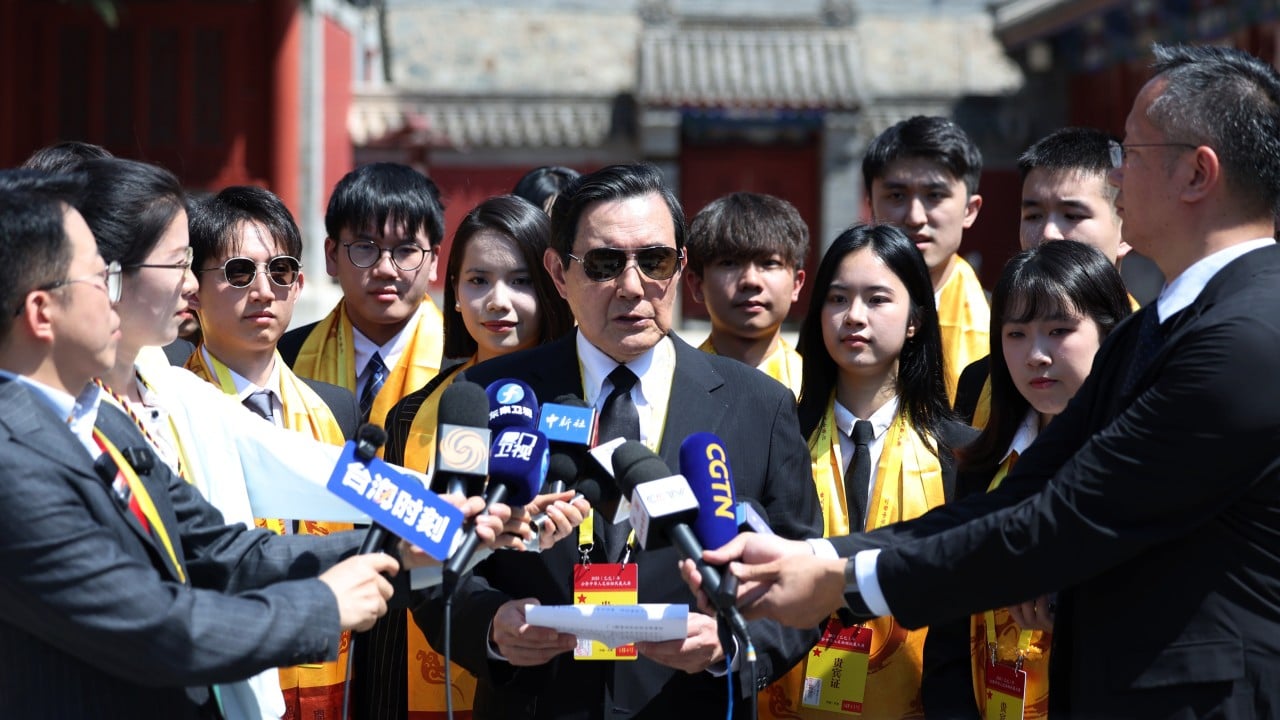
Political scandals love a vacuum, and right now, Taiwan's media is filling its blank spaces with the deeply uncomfortable, highly public fracturing of former President Ma Ying-jeou's inner circle. We have allegations of unrecorded cash bundles. We have a bitter family feud involving Ma’s wife and sister over his cognitive health. We even have rumors of Beijing and Washington fighting a proxy war through KMT foundation staffers.
If you read the mainstream analysis, you're probably being told this turmoil will tank the Kuomintang (KMT) in the upcoming local elections.
It won't.
That is the short answer. The long answer is that local elections in Taiwan don't run on the same tracks as national identity or the legacy of a retired 75-year-old statesman. To think a messy foundation dispute will dictate who wins a mayoral seat in Taichung or a magistrate seat in Yilan is to misunderstand how Taiwanese voters actually behave at the ballot box.
The Messy Reality of the Ma Foundation Scandal
To understand why this won't move the needle, we have to look at what's actually happening. This isn't just a political disagreement. It's a soap opera with serious legal undertones.
At the center of the storm is King Pu-tsung, a long-time Ma heavyweight and former secretary-general of the National Security Council. King went public with some wild accusations. He claimed that Hsiao Hsu-tsen, the former CEO of the Ma Ying-jeou Foundation, and another employee, Wang Kuang-tzu, engaged in serious financial misconduct. We're talking about roughly NT$1.20 million in cash brought into the office in late 2025 or early 2026, handed out as employee bonuses without hitting the official accounting books.
An internal committee actually cleared Hsiao and Wang of wrongdoing. But King and his allies doubled down, showing the media photos of cash bundles. Hsiao defended his actions by saying he didn't record a NT$1 million donation immediately because he feared the ruling Democratic Progressive Party (DPP) would weaponize government scrutiny against the donor.
Then it got personal. Rumors exploded that Ma is suffering from dementia. His wife, Chow Mei-ching, and his sister, Ma Yi-nan, tried to install the sister as his court-appointed trustee to manage his legal and financial affairs. Ma responded with a handwritten letter and a video. He looked shocked, angry, and explicitly said his sister "absolutely cannot" take over his life.
It is tragic, human, and messy. But is it an electoral death sentence for the KMT? No.
Local Elections Are About Gutters Not Cross-Strait Relations
Taiwanese voters are incredibly sophisticated at splitting their tickets. They view national elections and local "nine-in-one" elections as two entirely different beasts.
When voters choose a president, they are voting on sovereignty, relations with Beijing, and Taiwan's place on the global stage. That’s where Ma Ying-jeou’s pro-unification rhetoric—like his June 2025 comment that the two sides should pursue "peaceful and democratic unification"—can become a heavy anchor for the KMT. The broader Taiwanese public is deeply skeptical of Beijing, especially as the PRC blocks Taiwan from the World Health Assembly and ramps up military intimidation.
But local elections? They are stubbornly, beautifully provincial.
Voters care about electricity grid stability, local traffic congestion, sewage systems, and whether the incumbent mayor successfully built that new sports center. They care about factional patronage networks that have existed for decades. A voter in Kaohsiung isn't going to change their mind about a local city councilor because a retired president's foundation in Taipei didn't log a cash donation properly.
Look at history. In 2014, Ma Ying-jeou was president, and his popularity was in the absolute gutter after the Sunflower Student Movement. The KMT got absolutely crushed in the local elections that year, forcing Ma to resign as party chair. But just four years later, in 2018, the pendulum swung violently back. The KMT routed the DPP locally, taking 13 jurisdictions to the DPP's six, because voters were angry at President Tsai Ing-wen's domestic labor and pension reforms.
Local elections are a referendum on the current ruling party's domestic performance, not a trial of a past leader's legacy.
The Real Threat to the KMT Isn't Ma, It's the Factional Rift
While the scandal won't sway average voters over local issues, it does expose a structural fault line inside the KMT that could complicate campaign strategy.
The whispers in Taipei's political circles suggest this foundation fight is a proxy war for the soul of the party under Chairwoman Cheng Li-wun. There are reports that Beijing has quietly told its Taiwan-affairs officials to protect Hsiao Hsu-tsen because they want to preserve the Beijing-friendly, exchange-heavy policy line that Ma championed. On the flip side, critics allege that King Pu-tsung is leaning into a pro-US faction that wants to distance the KMT from China to win back moderate voters.
This internal ideological tug-of-war is the real headache for KMT strategists.
- Fundraising distractions: Big-money donors hate being dragged into the spotlight. When Hsiao admits he hid a donation to protect a donor from scrutiny, it makes other wealthy benefactors nervous. Local campaigns run on serious money, and an unstable party apparatus can freeze checkbooks.
- Media oxygen: Every day the media spends dissecting Ma's handwritten letters or investigating cash bonuses is a day the KMT isn't hitting the DPP on rising inflation, housing costs, or energy policies.
- Cohesion: Local campaigns rely on a unified party machine getting out the vote. If the party's elite are sniping at each other in press conferences, grassroots mobilization suffers.
How the DPP and KMT Will Play This
Expect the DPP to try and tie this scandal around the neck of every local KMT candidate. They will frame the unrecorded cash and the alleged Beijing involvement as proof that the KMT is structurally opaque and too close to the mainland. It’s an easy, effective political playbook.
The KMT’s best counter-strategy is radical isolation. Local candidates are already doing this. When asked about the foundation drama, KMT Legislative Caucus Secretary-General Lin Pei-hsiang basically said that foundation matters should stay inside the foundation. They are keeping their heads down, focusing on local town halls, and pretending the drama in Taipei isn't happening.
Honestly, it’s the smartest move they can make.
If you want to know who will win the local elections, stop looking at the Ma Ying-jeou Foundation. Start looking at unemployment numbers, local infrastructure budgets, and the approval ratings of individual city mayors. That’s where the real race is being run. The family feud is just background noise.