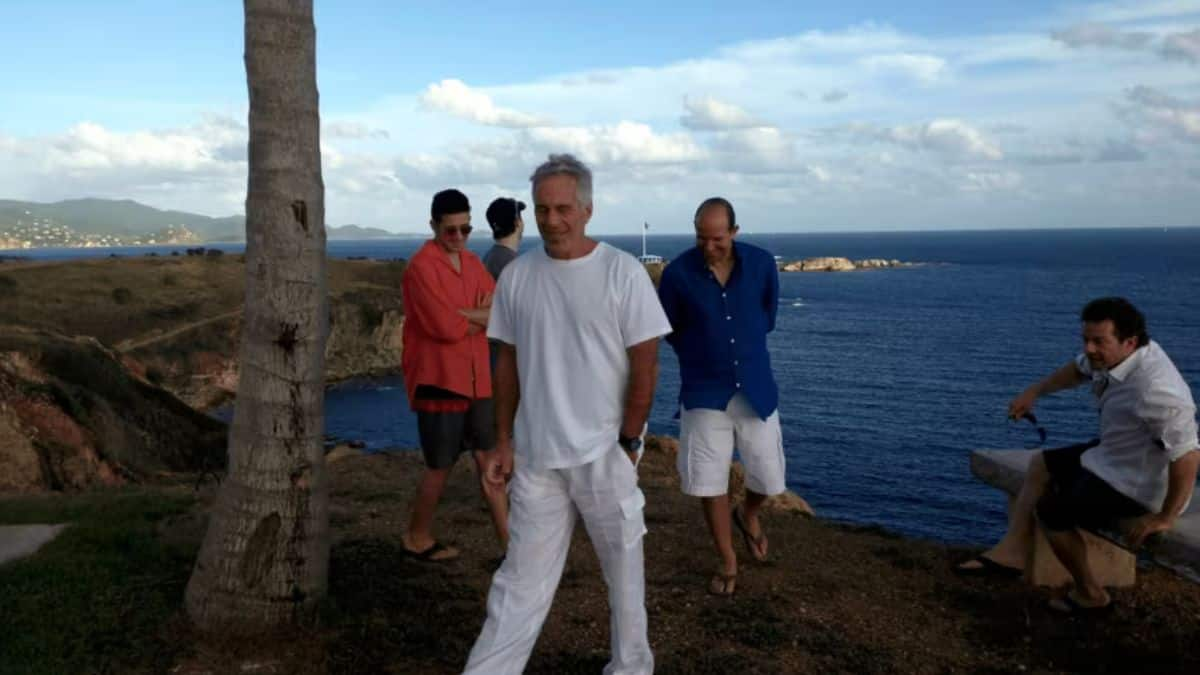
The internet is currently vibrating with the kind of performative outrage that makes for great clickbait but terrible analysis. A "deleted" photo of Howard Lutnick surfaces on a Department of Justice server, and suddenly every amateur sleuth and armchair prosecutor is demanding a deposition. They think they’ve found a smoking gun. They think they’ve found the thread that finally unravels the Epstein tapestry.
They’re wrong.
This isn't a cover-up. It's worse. It’s the mundane reality of high-level proximity. If you spend forty years at the top of the global financial food chain, you are going to end up in a frame with a monster. That isn't a conspiracy theory; it’s a statistical certainty of the billionaire class. The obsession with this single photograph is a symptom of a deeper intellectual rot: the belief that "guilt by association" is a substitute for actual forensic evidence.
The Myth of the Accidental Billionaire
The prevailing narrative suggests that Howard Lutnick—a man who rebuilt Cantor Fitzgerald from the literal ashes of 9/11—was somehow "snared" or "caught" in the Epstein web. This ignores how the elite social circuit operated in New York during the nineties and early aughts.
Epstein wasn't a shadow figure. He was a utility. He was the social lubricant for the ultra-wealthy. To suggest that a photograph with him constitutes evidence of a crime is like suggesting that everyone who flew on a TWA flight in 1985 is responsible for the company’s eventual bankruptcy.
I’ve spent two decades watching how these circles move. At this level of wealth, your calendar isn't yours. It belongs to your Chief of Staff, your foundations, and your strategic partners. You attend four galas a week. You shake five hundred hands. You pose for three dozen photos. If you haven't been photographed with someone who eventually gets canceled, you aren't actually in the room.
Why the DOJ Deleted the Photo (And Why It Doesn't Matter)
The "deleted" status of the photo on the DOJ website is being treated as the ultimate proof of a deep-state scrub. Let’s look at this with a shred of operational logic. If the Department of Justice were actually intent on hiding Lutnick’s connection to the case, they wouldn't host the image on a public-facing server in the first place.
Digital hygiene in government agencies is notoriously incompetent. Files get moved, directories get renamed, and cache errors happen every single hour. The idea that a high-level conspiracy would leave the breadcrumbs on a .gov domain for "citizen journalists" to find is laughable.
The real reason these photos disappear from official narratives? Risk management. Not legal risk—brand risk.
Public relations teams at the highest level operate on a "remove and replace" strategy. They aren't hiding a crime; they are hiding an embarrassment. By screaming "Conspiracy!" every time a server refreshes, the public misses the actual mechanism of power: the fact that these individuals were allowed to operate in the same air for decades without a single regulatory body blinking an eye.
The Cost of Professional Proximity
Let’s talk about the math of the "Epstein Case."
The legal system thrives on specific, actionable testimony. What do the people calling for Lutnick’s testimony actually expect him to say?
"Yes, I was at a party. Yes, he was there. No, I didn't see the basement."
That is the reality of 99% of the names in that black book. They are boring. They are witnesses to the mundane. But the public doesn't want boring. They want a villainous cabal. They want a secret handshake.
By demanding testimony from every person who ever appeared in a JPEG with Epstein, we are diluting the judicial process. We are turning a horrific criminal investigation into a tabloid circus. This helps the actual perpetrators. Every hour spent speculating about Howard Lutnick’s social calendar is an hour not spent investigating the financial institutions that processed the actual wire transfers.
Follow the Money Not the Megapixels
If you want to find the "truth" about the Epstein network, stop looking at photos and start looking at ledger entries.
Photos are cheap. They are snapshots of a moment in time, often devoid of context. In my experience, the people who are actually "in" on the scheme don't take photos. They don't show up in the DOJ archives. They operate through shell companies and offshore trusts.
Lutnick is a public figure. He is loud. He is visible. He is an easy target for a public that wants a face to hate. But being an easy target doesn't make you a co-conspirator.
The Flaw in the "People Also Ask" Logic
People are asking: Why won't Lutnick testify? The better question: What legal basis exists to compel him?
In the United States, we have this pesky thing called the Fourth and Fifth Amendments. You don't get to haul a CEO into court because a photo exists of him at a fundraiser. If that were the standard, every politician in Washington would be under permanent subpoena.
The calls for his testimony aren't about justice. They are about leverage. In a hyper-partisan environment, an Epstein connection—no matter how tenuous—is a weapon to be used against anyone with proximity to power.
The Selective Outrage Problem
The most exhausting part of this "newly discovered" photo is the selective memory of the mob. The Epstein files are filled with names from across the political and financial spectrum. Yet, the internet chooses its targets based on who is currently in the news cycle for other reasons.
If Lutnick wasn't currently influential in the political sphere, this photo wouldn't even be a footnote. This proves the outrage is manufactured. It’s not about the victims; it’s about the optics.
I’ve seen this play out a dozen times. A "scandal" is manufactured out of a decade-old social interaction to derail a current business deal or political appointment. It’s a standard move in the New York power playbook.
The Nuance You’re Missing
Is it possible that some people in those circles knew more than they let on? Absolutely. But the "all-or-nothing" approach to guilt makes it impossible to find the people who actually facilitated the crimes.
When you treat a photo of a handshake the same way you treat a signed NDA or a flight log to a private island, you lose all credibility. You become part of the noise.
Lutnick’s "guilt" in the court of public opinion is based on a fundamental misunderstanding of how the 1% live. They don't vet every person at a cocktail party. They don't run background checks on the guy standing next to them at the buffet. They assume that if someone is in the room, they belong there.
That was the Epstein genius. He mastered the "belonging." He made sure he was in the frame so that, years later, the frame would protect him or destroy everyone else in it.
By obsessing over this photo, you are doing exactly what Epstein intended. You are focusing on the glitter and the guests instead of the mechanics of the machine.
Stop looking for a smoking gun in a photo album. The real evidence isn't on a DOJ server. It’s in the compliance departments of the banks that let the money move for twenty years. But that’s a harder story to tell, and it doesn't get as many clicks as a deleted photograph.
Go ahead. Demand the testimony. Waste the court's time. In the end, you’ll find exactly what you found before: a lot of expensive suits, a lot of "I don't recalls," and a public that is no closer to the truth because they were too busy chasing a ghost in a digital file.
The photo isn't the story. Your reaction to it is.
Get over the image. Look at the ledger.