The headlines are screaming about a crisis. Bloomberg is tracking every minute of the Saudi LPG delivery suspension like it’s the end of global industrial heating. The narrative is predictable: a key site takes a hit, the regional giant tightens the taps, and the world is supposed to hyperventilate about supply chain fragility.
It is lazy journalism. It’s even lazier economics. You might also find this similar story useful: Why Costco Entering Medicare Advantage Changes Everything for Shoppers.
Everyone is staring at the damage report of a single facility. They are missing the structural reality of the 2026 energy market. We aren't in 1973. We aren't even in 2019. If you think a temporary suspension of Saudi liquefied petroleum gas is a systemic threat, you are trading on outdated maps. In reality, this "crisis" is the stress test the market actually needed to flush out inefficient players and prove that the era of Saudi dominance over your local fuel price is dead.
The Fragility Fallacy
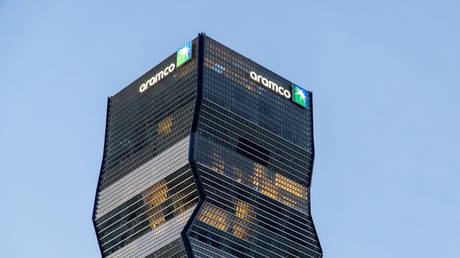
The mainstream media loves the word "fragility." They want you to believe the global energy grid is a house of cards. They argue that when a kingpin like Saudi Aramco pauses deliveries, the dominoes must fall. As discussed in recent coverage by Investopedia, the results are notable.
They’re wrong.
What they call fragility, I call a necessary correction. For decades, the global market has been addicted to subsidized stability. We’ve relied on a handful of massive, centralized nodes to keep the lights on. When one of those nodes flickers, the "experts" panic because their models can't handle a week of redirection.
I’ve sat in boardrooms where executives treated Saudi supply like a guaranteed physical law, similar to gravity. That’s not strategy; that’s negligence. This suspension isn't a disaster—it’s a wake-up call for every procurement officer who got comfortable. The "fragility" isn't in the supply line; it's in the stagnant minds of the buyers who failed to diversify.
The US-UAE Pivot the Markets are Ignoring
While the press focuses on the smoke over Saudi facilities, look at the flow data from the United States and the UAE. We are seeing a massive, aggressive ramp-up in North American NGL (Natural Gas Liquids) exports that the Bloomberg desk seems to treat as a footnote.
The US is currently sitting on record-breaking shale output. The infrastructure is there. The export terminals are humming. Every day the Saudi suspension continues, American and Emirati suppliers are locking in long-term contracts with buyers who used to be "Saudi-only."
This isn't just a temporary fill-in. This is a permanent land grab. By extending this suspension, Saudi Arabia isn't just "managing a site"; they are handing over market share on a silver platter to competitors who have spent the last five years building the most flexible logistics network in history.
Why High Prices are the Cure for High Prices
The "People Also Ask" sections of the internet are currently flooded with one question: "When will LPG prices go back down?"
It’s the wrong question. You should be asking: "How high do prices need to go to force my business to stop wasting energy?"
Low prices breed stupidity. When LPG is cheap and the Saudi taps are wide open, companies ignore efficiency. They use outdated boilers. They run half-empty trucks. They treat energy as a fixed cost rather than a variable they can control.
This supply pinch is the best thing to happen to industrial efficiency in three years. It forces the transition to hybrid systems. It makes that expensive heat-pump upgrade look like a bargain. High prices are the only thing that actually moves the needle on innovation. If you’re waiting for the "Saudi giant" to save you, you’ve already lost the competitive race.
The Myth of the "Key Site"
The media fixates on the "key site." They describe it in hushed, reverent tones, as if the entire global economy hinges on a few square miles of desert infrastructure.
Let’s dismantle that.
Modern LPG logistics is a game of arbitrage and floating storage. At any given moment, there are millions of tons of product sitting in Very Large Gas Carriers (VLGCs) in the middle of the ocean, waiting for a price signal. When the Saudi site went offline, those ships didn't disappear. They just changed their GPS coordinates.
The physical volume hasn't vanished from the earth; it has simply moved behind a higher paywall. If you can't afford the paywall, that’s not a supply crisis—that’s a capital crisis. The sophisticated players—the ones I’ve worked with who actually understand hedge spreads—are making a killing right now. They aren't reading the news; they are watching the vessel tracking data and the futures curve.
The Geopolitical Ego Trip
There is a subtext in the competitor's reporting that suggests Saudi Arabia is doing this to flex its muscles. The "giant" is "extending" the suspension, implying a choice, a move on a chessboard.
Give me a break.
This isn't a flex; it's a maintenance nightmare. Aramco is a bureaucracy like any other. They aren't trying to starve the world; they are trying to fix pipes without blowing themselves up. The contrarian truth is that the Saudi "control" over the market is far more precarious than they want you to believe. If they could turn the taps back on tomorrow, they would, because every day they stay offline, they lose relevance.
The real danger to Riyadh isn't the damaged site—it’s the realization by the rest of the world that we can survive without them.
Stop Tracking Deliveries, Start Tracking Storage
If you want to know what’s actually happening, stop reading the Bloomberg tickers on "suspended deliveries." That’s a lagging indicator. It’s noise.
Instead, look at the inventory levels in Chiba, Japan, and the ARA (Antwerp-Rotterdam-Amsterdam) hub. Look at the drawdown rates.
What you’ll find is that storage is remarkably resilient. We have built massive buffers specifically for this scenario. The fact that the world hasn't ground to a halt despite a "major" Saudi suspension proves my point: the market has already priced in the decline of the Middle Eastern monopoly.
The Brutal Truth for the Consumer
I’ll give it to you straight, even if it hurts: You are going to pay more for your gas this winter. Not because there isn't enough gas, but because you are paying a "competence tax."
The competence tax is what happens when you rely on a single-point-of-failure supply chain. If your business model relies on cheap, uninterrupted Saudi LPG, your business model is a relic.
The companies that are thriving right now are the ones that shifted to multi-fuel capabilities two years ago. They are the ones that treated "energy security" as a line item on the balance sheet, not a political slogan.
The Scenario Nobody Mentions
Imagine a scenario where the Saudi site is repaired tomorrow. What happens?
Prices will dip, the media will move on to the next "crisis," and thousands of companies will go back to sleep. They will cancel their efficiency projects. They will stop looking for alternative suppliers. They will wait for the next "suspension," and next time, the US might not have the surplus to bail them out.
The Saudi suspension is a blessing because it keeps the pressure on. It prevents the "lazy consensus" from settling back into a dangerous comfort zone.
How to Actually Play This
Most "experts" will tell you to hedge your exposure now. They’ll tell you to buy the peak.
Don't.
That is panic-buying, and it's how the big banks make their bonuses. The move isn't to chase the current price; the move is to divest from the dependency entirely.
- Audit the wastage: I’ve seen industrial plants lose 20% of their LPG-derived heat through poor insulation and ancient valves. Fix the hardware before you moan about the price.
- Contract for flexibility, not volume: Demand contracts that allow for diversions and swaps. If your supplier can only source from one region, fire them.
- Ignore the "Saudi Giant" narrative: They are one player in a crowded room. Treat them like a utility, not a deity.
The Bloomberg article treats this as a tragedy of logistics. It isn't. It’s a comedy of errors for anyone who still thinks the 20th-century energy model is alive. The Saudi suspension hasn't broken the system; it has revealed that the system has already evolved beyond the need for a single, reliable giant.
If you’re still waiting for the deliveries to resume to "get back to normal," you are already obsolete. Normal isn't coming back. The world is moving on, with or without the Saudi taps.
Buy the disruption. Sell the panic.