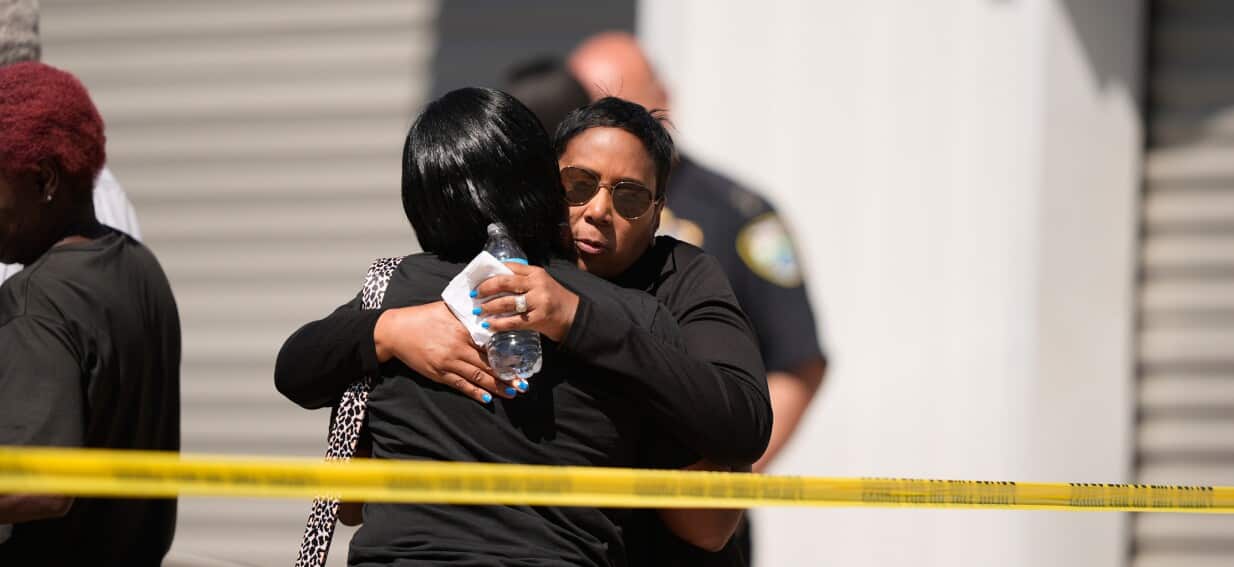
The recent massacre of eight children in a Louisiana domestic violence shooting stands as a grim indictment of a legal and social safety net that remains porous. While initial reports focused on the immediate horror of the crime scene, the reality is that such mass casualty events are rarely unpredictable. They are the final, violent eruptions of a pattern that local authorities often have documented for years. In this case, the slaughter of innocents highlights a lethal intersection between domestic disputes and firearm accessibility that continues to plague the state despite legislative attempts at reform.
Louisiana consistently ranks among the states with the highest rates of women murdered by men. This is not a coincidence or a statistical anomaly. It is the result of a culture where domestic incidents are often handled with a "cooling off period" rather than aggressive intervention. When eight children lose their lives at the hands of a guardian or a family member, the conversation must shift from shock to a forensic examination of the missed opportunities that preceded the first shot.
The Anatomy of an Avoidable Catastrophe
In the aftermath of a mass shooting involving domestic violence, the public often asks how one person could reach such a level of depravity. For investigators and industry analysts, the question is different. We look for the paper trail. Most high-lethal domestic offenders follow a recognizable path. This path includes previous arrests for battery, violations of protective orders, and documented threats of "familial homicide-suicide."
The problem in Louisiana is not a lack of awareness but a failure of enforcement. The state has laws on the books designed to strip firearms from individuals subject to domestic abuse protective orders. However, the mechanism for actually seizing those weapons is fragmented. In many parishes, it falls on the offender to voluntarily surrender their cache. This is a policy based on a hope that defies logic. An individual prone to domestic rage is the least likely person to comply with a polite request to disarm.
The Lethality of the Protective Order Gap
A protective order is frequently described as a "piece of paper." To a victim, it is supposed to be a shield. To an aggressor, it can often act as a trigger. Data from the Bureau of Justice Statistics indicates that the period immediately following the filing of a protective order is the most dangerous time for a victim and their children.
Without a simultaneous, physical removal of weapons by law enforcement, the filing of an order can escalate a tense situation into a terminal one. The massacre of these eight children likely happened in that volatile window where the state had acknowledged the danger but failed to neutralize the threat. We see this cycle repeat because the judicial system prioritizes the property rights of the accused over the immediate physical safety of the household.
Why Children Become the Primary Targets
There is a specific, dark logic to why domestic shooters target children. It is rarely about the children themselves and almost always about the total destruction of the partner. In the mind of a domestic annihilator, killing the children is the ultimate act of control. It ensures that the surviving partner—if they are left alive—will suffer a lifetime of psychological torment that exceeds the pain of their own death.
Louisiana's social services are chronically underfunded and overwhelmed. Caseworkers often manage double the recommended number of families. When a report of domestic violence enters the system, the focus is frequently on the adult victim, while the children are viewed as "witnesses" rather than primary targets. This is a fatal misunderstanding of the offender’s psychology. These eight lives were not collateral damage. They were the center of a calculated strike designed to exert absolute power.
The Failure of the Mandatory Reporter System
Every teacher, doctor, and coach in Louisiana is a mandatory reporter. They are the front line. Yet, they are often hesitant to report "suspicious" domestic situations because they fear the repercussions for the family or do not believe the police will act. This hesitation creates a vacuum where a violent parent can operate with impunity.
If the system does not protect the reporter or the victim after a call is made, the reporting mechanism becomes a liability. We need to move toward a model where domestic violence reports trigger an immediate, multi-agency response that includes a weapons sweep and a mandatory relocation of the family to a secure facility. Anything less is just waiting for the next headline.
The Financial and Social Cost of State Negligence
Beyond the immeasurable human tragedy, mass domestic shootings carry a massive economic burden. A single homicide involves millions of dollars in law enforcement costs, judicial proceedings, and long-term psychological support for the community. When eight children are killed, an entire generation of a neighborhood is hollowed out.
The state legislature often balks at the cost of funding specialized domestic violence units in rural parishes. They argue that the budget is tight. This is a short-sighted perspective. The cost of one mass casualty event like the one we just witnessed exceeds the annual budget for several domestic violence prevention programs. We are paying for our negligence in blood and taxes.
- Weapon Seizure: Current laws lack the teeth to ensure immediate firearm removal.
- Case Loads: Social workers are spread too thin to provide meaningful oversight.
- Judicial Leniency: Bond for domestic offenders remains dangerously low in many jurisdictions.
The Rural Resource Desert
Louisiana’s geography plays a role in these tragedies. In rural areas, the nearest domestic violence shelter may be two hours away. The local sheriff's department might have only two deputies on patrol for an entire parish. In these "resource deserts," a victim has nowhere to run.
The shooter knows this. They rely on the isolation of the rural landscape to carry out their violence without interference. Until the state invests in mobile crisis units and regional safe houses that are accessible within minutes rather than hours, the death toll in the backcountry will continue to rise. We cannot expect victims to escape when the exits are boarded up by geography and poverty.
Breaking the Cycle of Jurisdictional Confusion
One of the most frustrating aspects of investigating these cases is seeing how information is siloed. A man may have a history of violence in one parish, but when he moves across the line, his record doesn't always follow him in a way that alerts local officers during a domestic call. This lack of a unified, real-time database for domestic offenders is a technical failure that has lethal consequences.
Police arrive at a home thinking they are dealing with a "verbal dispute" because they don't see the history of aggravated assault from three towns over. They leave, the door closes, and the situation turns deadly. Modernizing the way we track these offenders isn't a luxury; it is a basic requirement for public safety in a state with Louisiana's violent track record.
The Role of Mental Health and Substance Abuse
While the primary driver of these events is a desire for control, substance abuse and untreated mental health issues act as chemical accelerators. Louisiana has some of the highest rates of opioid and alcohol abuse in the country. When you combine a history of domestic rage with a bottle of whiskey and a loaded handgun, the outcome is predictable.
The state has shuttered mental health facilities over the last two decades, pushing the burden onto the prison system. But the prison system is reactive. It doesn't stop the shooting; it only houses the shooter after the damage is done. We are trying to solve a 21st-century violence crisis with a 19th-century mindset of "lock them up later."
The Myth of the Sudden Snap
The media often portrays these shooters as men who "just snapped." Neighbors say he was a "quiet guy" who "kept to himself." This narrative is a lie. Nobody snaps and kills eight children without a long history of red flags.
The "sudden snap" theory is a way for society to absolve itself of responsibility. If it was a freak accident, we don't have to change our laws or our behavior. But if it was a predictable escalation of documented abuse, then we are all complicit for not stopping it. We have to stop treating these events as lightning strikes and start treating them as the man-made disasters they are.
A New Standard for Intervention
If Louisiana wants to stop being a leader in domestic homicides, it must adopt a "zero-tolerance" framework for domestic weapon possession. This means that at the first sign of physical domestic abuse, the right to bear arms is temporarily suspended until a full psychological and judicial review is completed.
It is a controversial stance in a state that prides itself on gun rights. However, the rights of the living must eventually outweigh the rights of the violent. Eight children are dead because a man was allowed to keep his guns long after he had proven he was a danger to his own blood.
Immediate Actionable Steps for Local Communities
Waiting for the state legislature to act is a losing game. Local communities must take the lead. This involves:
- Establishing High-Risk Teams: Groups of police, prosecutors, and advocates who meet weekly to review the most dangerous domestic cases in the parish.
- Mandatory Firearm Surrender: Local judges must demand the physical surrender of weapons in court, not through a mailed-in form.
- Expanded Shelter Access: Using vacant state-owned buildings to create temporary housing for victims in rural areas.
The slaughter of eight children in a domestic shooting is not just a "tragedy." It is a systemic failure. It is the result of a chain of events where every link was weak. From the police officer who didn't file the report to the judge who set a low bond, to the neighbor who heard the screaming and didn't call 911—the responsibility is shared.
We must stop looking for excuses and start looking for the weapons. If we do not change the way Louisiana handles domestic violence, the next massacre is not a matter of "if," but "where." The names of the children will change, but the story will remain the same. The blood of these eight children is a permanent stain on the state's conscience, and the only way to wash it away is through a radical, uncompromising shift in how we protect the most vulnerable among us.
Demand that your local sheriff implement a mandatory weapon seizure policy for every domestic violence arrest. Don't wait for the next set of names to appear on the news.