The conference room smelled of stale coffee and expensive cologne. Standing at the head of the mahogany table was a man named Julian—a hypothetical composite of every fast-talking executive I have ever encountered in my fifteen years of corporate consulting. Julian was pacing. His arms chopped the air. He spoke in a rapid-fire torrent of strategic pivots, disruptive initiatives, and visionary milestones. He promised the board a quarterly growth trajectory that looked less like a financial chart and more like a rocket launch.
Everyone in the room was nodding. We are trained to nod at noise. We mistake volume for velocity, and charisma for competence.
Sitting three chairs down from Julian was a woman named Elena. She was the lead developer for the very software Julian was selling. Throughout his twenty-minute monologue, she said exactly nothing. She didn’t check her phone. She didn’t doodle. She simply watched him, her hands folded neatly over a plain yellow legal pad.
When Julian finally stopped to take a breath, flushed and triumphant, the CEO turned to Elena. "Can we deliver this by Q3?"
Elena paused. The silence stretched for three uncomfortable seconds.
"No," she said. Her voice was quiet, flat, and entirely devoid of drama. "The legacy architecture won't support the load. We can deliver a stable beta by November. If we rush it for September, the database will crash under ten thousand concurrent users."
She didn't elaborate. She didn't defend her position. She just stated the reality and waited.
The contrast was jarring. Julian had built a magnificent castle in the air out of pure vocabulary. Elena had just pointed out that the ground beneath it was quicksand. That moment encapsulates a profound human crisis we face today. We live in an era that rewards the promise but forgets the product. We are drowning in speech, yet starving for action.
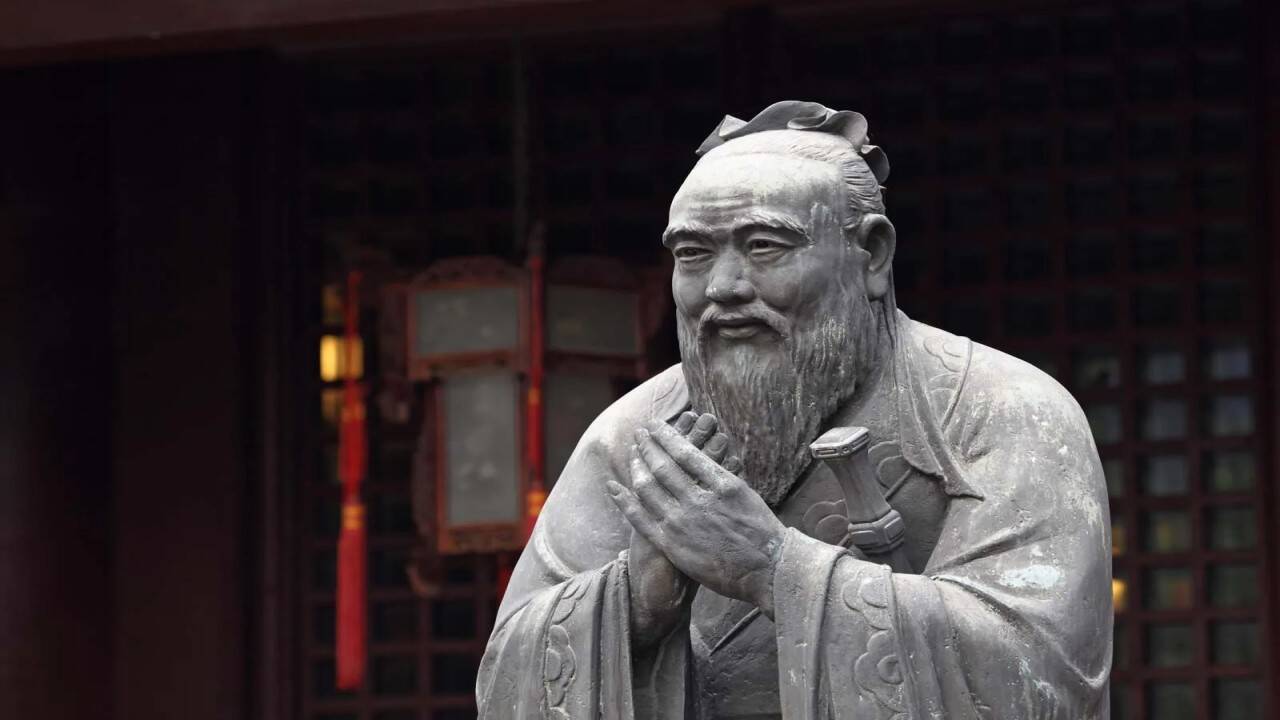
Twenty-five hundred years ago, a Chinese philosopher observed this exact flaw in human nature. Confucius noted that the superior person is modest in their speech, but exceeds in their actions. He saw, even then, that the human ego possesses a dangerous urge to let the tongue outrun the hands.
We have turned that ancient warning upside down.
The Neurochemistry of the Empty Promise
Why do we talk so much about what we plan to do, rather than just doing it? The answer lies in the deeply flawed way our brains process validation.
Consider a common modern phenomenon. You decide you want to run a marathon. You buy the shoes. You download the training app. Then, you open your phone and announce your new goal to five hundred acquaintances on social media. Instantly, the likes pour in. Friends comment, telling you how inspiring you are, how disciplined you must be.
Here is the psychological trap. Your brain cannot distinguish between the social validation of announcing a goal and the actual satisfaction of achieving it. The identity claim triggers a rush of dopamine. You feel like a runner before you have even laced up your shoes for a single mile.
Psychologists call this the social reality effect. When others notice your intent, it becomes a reality in your mind. The problem is that this premature reward drains your actual motivation. You have already received the applause, so why bother doing the heavy lifting? The speech has consumed the energy required for the action.
I used to fall into this trap constantly. In my early twenties, I wanted to write a novel. I told everyone about it. I discussed the plot at dinner parties. I explained the character arcs to anyone who would listen. I felt like a writer. But when I sat down in front of the blank cursor, the room was quiet. The audience was gone. The agonizing, mundane work of stringing sentences together felt tedious compared to the glamorous performance of talking about it.
The novel was never written. The talk had killed it.
The Hidden Tax of the Chronic Talker
When a culture prioritizes speech over action, it creates an invisible tax that everyone pays. In businesses, this tax takes the form of endless meetings designed to report on work, rather than perform it. In relationships, it manifests as repeated apologies followed by the exact same hurtful behaviors.
Let us look at the corporate world, where the gap between rhetoric and reality is often widest. A study analyzing corporate communications found a fascinating correlation: companies that used the most complex, buzzword-heavy language in their annual reports frequently underperformed compared to companies that communicated in simple, direct prose.
When a leader lacks the substance of action, they weaponize vocabulary. They use words as a smoke screen to obscure a lack of progress.
But consider what happens next when the illusion shatters.
Trust is a fragile ecosystem. It is not built on grand declarations or inspiring manifestos. It is built on predictability. When a person repeatedly says they will do something—whether it is delivering a project, showing up for a dinner date, or changing a bad habit—and fails to follow through, they are committing micro-treasons against the relationship.
Each unfulfilled word is a small withdrawal from the bank of credibility. Eventually, the account hits zero. At that point, it does not matter how eloquent or persuasive the person is. Their words carry no weight. They become noise.
The Anatomy of Quiet Execution
If the talker is driven by a need for immediate external validation, the doer is driven by something entirely different. True competence is inherently quiet. It does not need to shout because the results speak for themselves.
Think back to Elena, the quiet developer in the conference room. Why was she so comfortable with her silence?
- She possessed deep situational awareness. She understood the technical reality so thoroughly that she felt no need to dress it up in optimistic jargon.
- She lacked the desire to perform. Her validation came from the integrity of the code, not the applause of the board.
- She respected the weight of her words. She knew that if she said "yes," she was signing her name to a promise. She refused to lie to make a meeting run smoother.
This is what Confucius meant by modesty in speech. Modesty is not false humility. It is not putting yourself down or pretending you don't know the answer. Modesty is a precise calibration of language to reality. It is saying exactly what you can do, and not a fraction more.
When you practice this level of linguistic discipline, something remarkable happens to your presence. People stop filtering you out. In a world where everyone is shouting, the person who speaks softly and rarely becomes the gravity well in the room. Everyone leans in to listen.
Reclaiming the Value of the Done Deed
Shifting from a culture of speech to a culture of action requires a deliberate, often painful rewiring of our daily habits. It requires us to sit with the discomfort of being unnoticed.
Imagine a week where you do not post a single accomplishment online. Imagine working on a difficult project, learning a new skill, or helping a friend entirely in the dark. No status updates. No casual mentions in conversation to prove how busy or successful you are.
It feels lonely at first. The ego screams for its fix. It wants the quick hit of dopamine that comes from external praise.
But if you can survive the initial withdrawal, you notice a shift in your internal environment. The energy that used to leak out through your mouth begins to pool in your hands. You focus better. The work becomes deeper. You develop a private relationship with your own capability, independent of what anyone else thinks.
This is the ultimate secret of the superior individual. They do not work to be seen; they work because the work demands to be done.
Julian, the charismatic executive from our story, eventually got his way. The board chose his aggressive schedule over Elena's realistic warning. The project was greenlit for September. The marketing campaign was launched with massive fanfare. The speeches were magnificent.
On the third week of September, the database crashed. Ten thousand users were locked out, their data corrupted. The fallout cost the company millions and damaged its reputation for years.
Julian spent those weeks in frantic damage-control meetings, spinning new narratives, blaming external vendors, and promising a rapid recovery strategy. He talked through the entire crisis.
Elena didn't join the meetings. She stayed at her desk, her headphones on, her fingers moving steadily across the keyboard. She didn't say "I told you so." She didn't write a memo explaining why she was right. She simply rebuilt the architecture, block by block, line by line, until the system was whole again.
The next time you feel the urge to speak, to promise, to impress, or to convince the world of your worth before you have earned it, pause. Close your mouth. Let the silence stretch. Let the world think what it wants for a moment, while you quietly put your head down and build something that cannot be argued away.