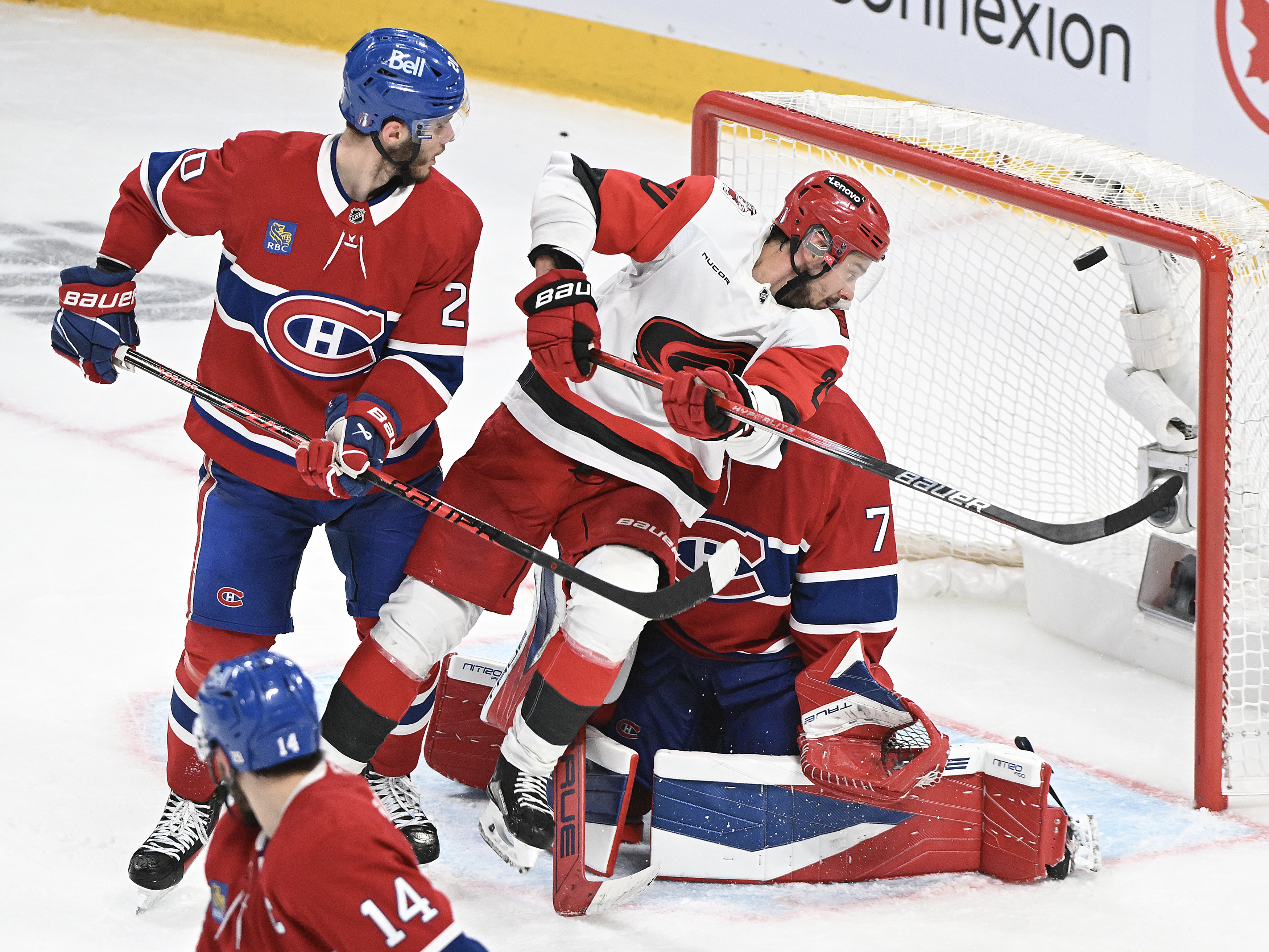
The Montreal Canadiens just dropped their second consecutive overtime game to the Carolina Hurricanes, and the hockey media is right on cue, serving up the usual comforting warm milk. They call it a hard-fought battle. They point to the "loser point" in the standings as a sign of progress. They praise the plucky underdog spirit of a young squad going toe-to-toe with a Stanley Cup contender.
It is a lie.
Accepting overtime losses as building blocks is the exact mechanism that traps franchises in permanent mediocrity. The conventional hockey narrative treats a 4-3 overtime loss as a moral victory. In reality, it is a catastrophic failure of game management, a symptom of tactical cowardice, and proof that the current roster construction is fundamentally flawed.
Stop looking at the single point in the standings and start looking at how those points are earned. The Canadiens did not win a point; they surrendered the game because they do not possess the tactical infrastructure or the elite talent to close out modern NHL hockey games.
The Myth of the Hard-Fought Overtime Loss
Mainstream sports writers love to analyze hockey through the lens of grit and effort. They look at a game against Carolina—a metrics juggernaut—and conclude that because Montreal hung around for 63 minutes, the gap between the two franchises is closing.
It is not.
The Hurricanes play a suffocating, high-volume shot-generation system under Rod Brind'Amour. They are comfortable playing in chaos because their underlying puck-possession metrics are elite. When a team like Montreal plays them close, it is rarely because Montreal dictated the pace. It is because the Canadiens played a low-event, risk-averse system designed to survive, not to win.
In the modern NHL, surviving until the three-on-three overtime period is a losing strategy. Three-on-three hockey is not hockey; it is an NBA fast-break drill on ice. It strips away the structural systems coaches spend months implementing and reduces the game to pure individual talent, lateral skating speed, and puck retention.
When the game opens up into a three-on-three track meet, the Canadiens get exposed every single time. They do not lose in overtime because of bad luck or a bad bounce. They lose because their top-six forwards lack the elite, dynamic edge-work and vision required to manipulate space when there are only six skaters on the ice.
The Danger of the NHL Standings Illusion
Let us talk about the data that the mainstream media refuses to contextualize. The NHL’s "Gary Point"—the single point awarded for an overtime loss—is the ultimate management narcotic. It skews the standings, inflates the perceived value of mediocre teams, and convinces fanbases that a rebuild is closer to completion than it actually is.
Consider the basic math of an NHL season. A team that finishes the year with a record of 38-32-12 has 88 points. On paper, they look like a competitive squad that missed the playoffs by a handful of bounces. In reality, they are a sub-.500 hockey team that lost 44 games. They are a bad team wearing a tuxedo.
The "loser point" creates an environment where coaches prioritize getting to overtime over winning in regulation. It encourages conservative, fear-based hockey in the third period.
When the Canadiens enter the third period tied with a team like Carolina, the bench management shifts. Instead of pushing the pace and exploiting defensive transitions, the system compresses. The defensemen stop pinching. The forwards dump the puck deep without a heavy forecheck, opting instead to trap the neutral zone. They play for the guaranteed point.
I have tracked NHL front offices for years, and I have seen franchises set themselves back half a decade by falling in love with their own fake progress. They look at a season inflated by overtime loss points, decide they are "one or two pieces away," and weaponize their cap space on B-tier free agents in July. They lock themselves into a ceiling of a first-round exit.
Tactical Cowardice vs. Carolina's Suffocation
To understand why Montreal cannot close these games, you have to dissect the tactical breakdown that occurs against elite competition. The Hurricanes do not change their identity in the third period. They continue to run their defensemen down the walls to keep plays alive in the offensive zone.
Montreal, conversely, collapses into a low-zone collapse. They allow the Hurricanes to possess the puck on the perimeter, praying that their goaltender can track shots through layers of traffic.
Look at the underlying numbers from the last two overtime losses. In the final ten minutes of regulation and the duration of overtime, Montreal’s Expected Goals For percentage (xGF%) plummeted below 40%. They were out-shot, out-chanced, and completely hemmed in their own zone.
That is not a team matching a contender. That is a team drowning while waiting for the whistle.
The defense is consistently caught running around because the forwards fail to provide a clean outlet on the breakout. When the opposition runs a heavy, aggressive F1 forecheck, Montreal’s young defensemen panic. They ring the puck around the glass, turning it over at the blueline, starting the defensive zone clock all over again. You cannot win hockey games when your primary method of zone exit is a prayer.
The Harsh Reality of the Core Roster
Everyone wants to talk about the culture Martin St. Louis is building. Culture is fine. Culture keeps ticket sales steady during a rebuild. But culture does not defend a backdoor pass on a three-on-two rush in extra time.
The uncomfortable truth that Montreal fans must face is that the current core, as constructed, has glaring holes that passion cannot fill:
- Lack of Elite Neutral Zone Manipulators: To win in overtime, you need players who can back defensemen up with sheer speed or freeze them with elite vision. Montreal has pieces, but they do not have a game-breaker who commands gravity the way Sebastian Aho or Martin Necas does for Carolina.
- Defensive Transition Deficiencies: The young defensemen are highly capable of generating offense from the blueline down, but their backward skating pivots and rush defense under pressure remain well below championship standards.
- The Goaltending Paradox: Strong goaltending is masking structural flaws. When your goalie stops 38 of 41 shots, the post-game narrative praises the netminder instead of interrogating why the team surrendered 41 shots in the first place.
If you want to build a team that actually challenges for Stanley Cups, you have to stop grading on a curve. You have to stop celebrating the fact that a young group "showed heart." Every player in the NHL has heart. Heart is the baseline requirement; execution is the differentiator.
Stop Trying to Save the Game; Go Win It
The solution to Montreal's overtime woes is not to tweak the penalty kill or shuffle the lines on the second power-play unit. The solution is a total philosophical shift in how the organization views these contests.
The coaching staff needs to banish the idea of playing for overtime. If a game is tied with five minutes left in regulation, that is the exact moment to accelerate the forecheck. Take the risk. Pinch the defenseman. Force the opponent into making a mistake under duress rather than allowing them to comfortably dictate the terms of engagement.
Yes, this approach will occasionally backfire. You will give up an odd-man rush and lose in regulation. You will leave the arena with zero points instead of one.
Good.
Losing in regulation forces an honest evaluation of your roster. It strips away the comforting illusion of the loser point. It exposes the players who cannot handle the pressure of elite-level execution when the game is on the line. It gives management the raw, unvarnished data they need to make ruthless personnel decisions.
Championships are not built on incremental regular-season point accumulation. They are built on developing a killer instinct and an unshakeable tactical system that functions under maximum stress. Right now, the Canadiens are learning how to lose comfortably. Until the organization, the media, and the fanbase stop treating overtime losses like steps in the right direction, that is exactly what they will continue to do.