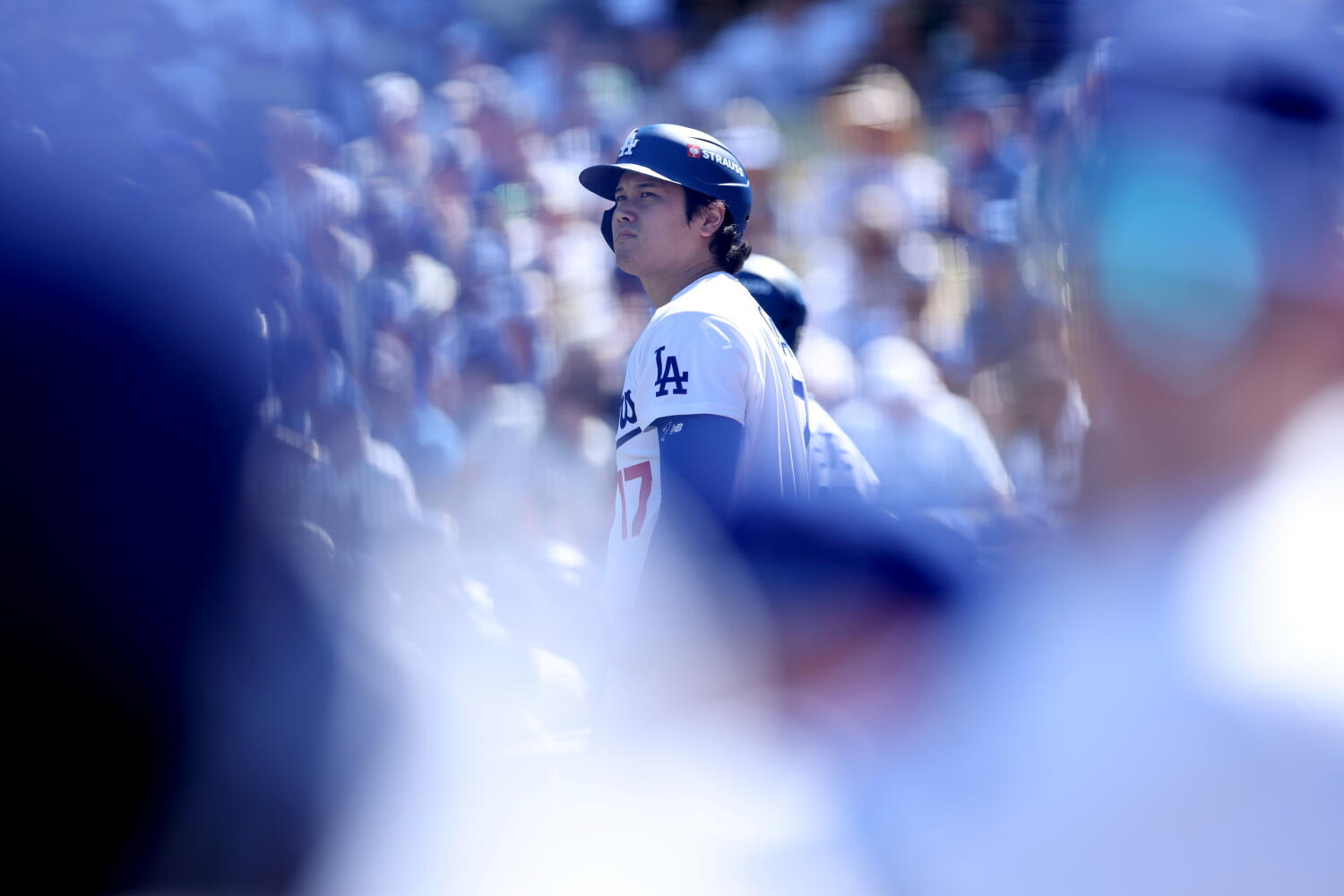
Winning a championship exposes the exact structural flaws that nearly derailed the season, and for the Los Angeles Dodgers, the immediate winter priority is resolving the tension between elite top-end talent and severe pitching attrition. A championship run masks regular-season inefficiencies, yet the operational reality facing the front office is an acute bullpen workload deficit paired with the complex biomechanical rehabilitation of Shohei Ohtani. Addressing these variables requires treating roster construction not as an exercise in star acquisition, but as a problem of risk management, innings distribution, and marginal efficiency under Competitive Balance Tax penalties.
The Structural Deficit in the Relief Corps
Standard offseason evaluations treat bullpen construction as a linear accumulation of high-velocity arms. That approach fails because relief pitching performance exhibits massive year-over-year variance driven by cumulative workload and mechanical fatigue. When a pitching staff navigates an extended postseason run, the high-leverage relievers absorb concentrated stress across compressed timeframes. This creates a structural deficit entering the following spring: the exact arms most trusted in October carry the highest probability of velocity decline or soft-tissue injury by May.
To stabilize the late innings without overpaying for volatile free-agent closers, front-office architecture must categorize bullpen assets into three distinct operational tiers:
- Multi-Inning Bulk Bridges: Pitchers capable of covering six to nine outs between the fourth and sixth innings. These arms absorb the immediate shock of shortened starter outings, protecting the primary leverage unit from early-game deployment.
- Platoon-Neutral Leverage Specialists: Relievers whose pitch shapes—specifically high-spin breaking balls or split-finger fastballs—generate comparable whiff rates against both left-handed and right-handed hitters. Relying on strict platoon specialists fails under the three-batter minimum rule, creating exploitable matchups late in games.
- High-Variance Reclamation Assets: Pitchers acquired via minor league deals or low-cost trades who possess a single elite physical trait, such as extreme extension or vertical approach angle, waiting for pitch-mix optimization.
The core mechanism governing bullpen efficiency is substitution elasticity. If the starting rotation averages fewer than five innings per start due to injury management, the bullpen's effective talent pool degrades rapidly through overexposure. Acquiring one premier reliever does not solve a volume problem; adding depth across the middle innings preserves the effectiveness of the existing high-leverage group.
Biomechanical Constraints and the Two-Way Return
Integrating Shohei Ohtani back into the starting rotation alters the entire roster's resource allocation model, yet treating him as a standard top-of-the-rotation starter introduces catastrophic risk. Recovering from a second major ulnar collateral ligament procedure requires strict adherence to load-management protocols. The biological constraint is straightforward: tendon healing and structural adaptation to rotational torque operate on a fixed timeline that cannot be accelerated by offensive production or payroll investment.
Reintroducing a two-way player creates three cascading operational bottlenecks across the 26-man roster:
- Rotation Rhythm Disruption: Standard Major League rotations operate on a five-man, four-days-rest cycle. A returning pitcher on an innings cap typically requires five or six days of rest between starts. This forces the remaining starters to either pitch on irregular schedules or necessitates a six-man rotation, which directly reduces the total innings pitched by the team's healthiest frontline starters.
- The Designated Hitter Lock: Occupying the designated hitter spot permanently eliminates the manager's primary tool for giving position players partial rest days. Veteran corner infielders and outfielders must absorb higher defensive innings totals, increasing the probability of lower-body muscle strains during the summer months.
- Roster Spot Compression: Under current league rules, a two-way player does not count against the 13-pitcher limit. While this provides a theoretical 14th pitcher, the benefit disappears whenever Ohtani skips a start for load management, temporarily leaving the staff short-handed during dense stretches of the schedule.
The strategic imperative is separating Ohtani's offensive value from his pitching floor. Projecting 150 innings from a pitcher coming off a second major elbow reconstruction ignores historical survivorship data. A disciplined front office models Ohtani for 90 to 110 regular-season innings, back-loaded toward the second half of the schedule, while securing enough starting depth to absorb his absence during April and May.
The Cost Function of Championship Roster Maintenance
Every roster decision in Los Angeles operates under the punitive financial reality of the upper-tier Competitive Balance Tax thresholds. Once a payroll crosses the highest surcharge tier, every marginal dollar spent on a free agent carries an effective tax penalty exceeding 100 percent, alongside draft-pick compensation penalties and international bonus pool reductions.
This economic framework invalidates traditional free-agent shopping. Signing a mid-tier starting pitcher to a market-rate contract of $20 million annually actually costs ownership over $40 million in real capital while degrading future amateur talent acquisition. Under these conditions, capital efficiency dictates shifting resources toward two specific avenues:
- Arbitration-Eligible Trade Targets: Acquiring pitchers with two to three years of remaining club control trades prospect capital—which carries zero immediate payroll impact—for cost-controlled production. The limitation of this strategy is farm system depletion, which eventually removes the internal pipeline needed to replace aging veterans.
- Deferred Compensation Structures: Utilizing deferred money lowers the present-day net present value calculations for luxury tax purposes, though it creates long-term cash-flow obligations that restrict financial flexibility in subsequent decade cycles.
Uncertainty during this winter stems directly from the intersection of medical timelines and market inflation. Competitors recognize the Dodgers' acute need for reliable innings and price their trade demands accordingly. Overpaying in prospect capital to solve a short-term April rotation gap compromises the organizational depth required to survive a 162-game attrition war.
Execution Priorities for the Winter Cycle
To resolve the competing demands of bullpen fatigue, Ohtani's pitching ramp-up, and luxury tax efficiency, the front office must execute a disciplined sequence of moves rather than reacting to market headlines.
First, avoid long-term financial commitments to free-agent relief pitchers. The historical failure rate of four-year bullpen contracts is too high when compounded by 110 percent luxury tax surcharges. Instead, allocate modest one-year guarantees to starters transitioning into multi-inning relief roles, securing volume and durability over peak ninth-inning velocity.
Second, formalize a hybrid six-man rotation blueprint before spring training begins. Acquire a durable, ground-ball-oriented starting pitcher capable of logging 170 innings with a sub-4.00 FIP to anchor the middle of the rotation. This insulates the staff against the scheduled rest days required for Ohtani and prevents early-season bullpen burnout.
Third, preserve top-tier minor league pitching prospects for mid-season deployment rather than trading them in December. Internal depth provides cost-free, optional roster flexibility during the summer months when the 40-man roster experiences maximum strain, ensuring the active roster reaches October with its highest-leverage arms intact.



