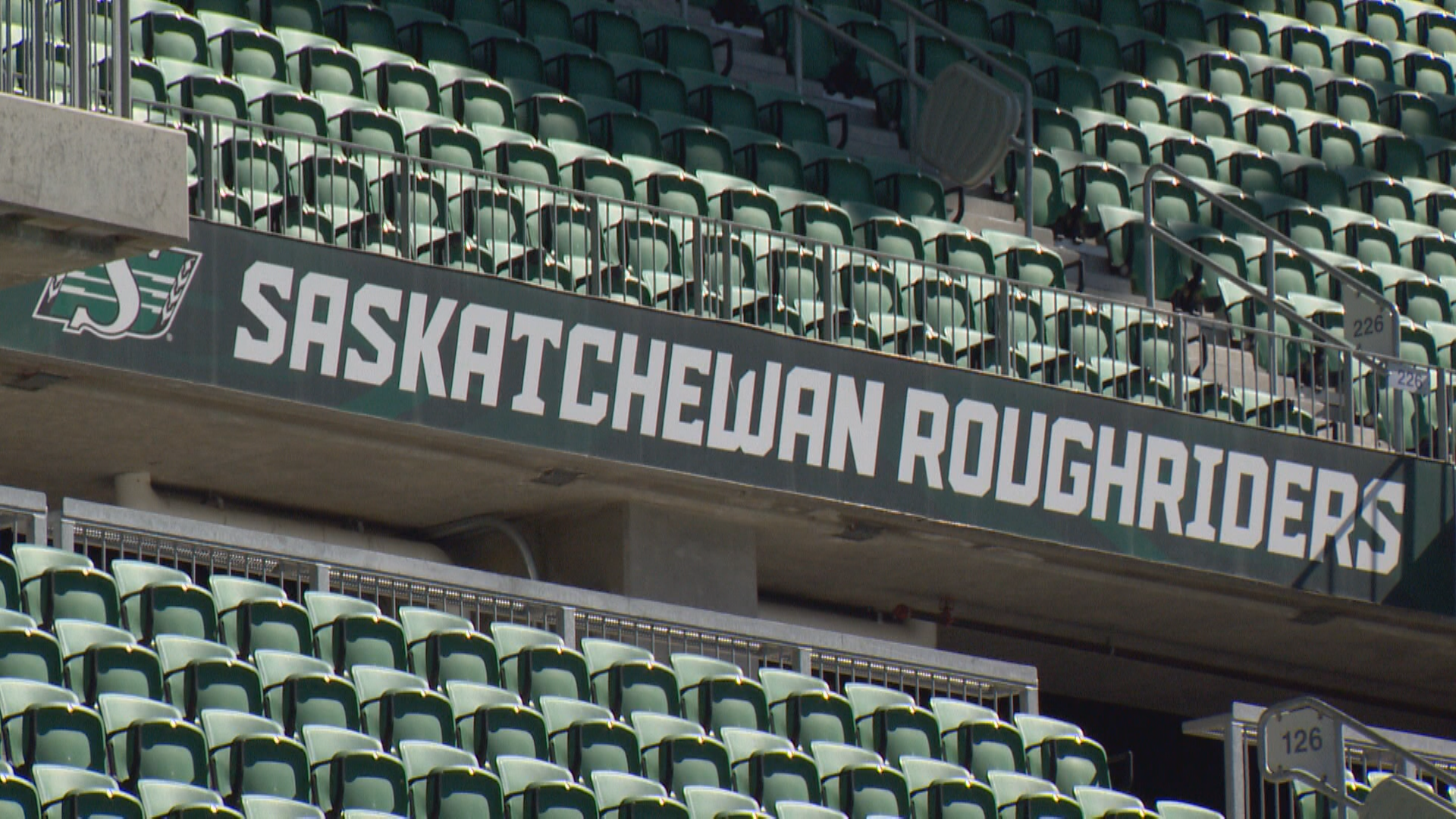
The plastic seats in the Atlanta stadium were still warm, but the silence that descended upon the English end was freezing.
If you have ever loved a football team, you know this silence. It is not the sudden, shocking quiet of an unexpected disaster. It is the heavy, suffocating weight of a tragedy you saw coming from a mile away but powerless to stop. It is the sound of hope evaporating in real-time.
For thirty minutes, England was on the precipice of something miraculous. When Anthony Gordon slot the ball home in the 55th minute to make it 1-0, there was a collective intake of breath across an entire island thousands of miles away. Pubs in London erupted in beer-soaked, feral joy. Neighbors who hadn't spoken in years embraced on suburban driveways. For a fleeting moment, the ghosts of 1990, of 2018, of every penalty shootout that has scarred the national psyche, seemed to back away into the shadows.
Then, the retreat began.
The Gravity of the Defending Mindset
It is a human instinct to protect what is precious. When a climber is near the summit, they tread carefully. They look down. They hesitate.
Thomas Tuchel’s team, so brave and fluid during their journey through North America, fell victim to this very human frailty. Once they had the lead, the tactical blueprint shifted from ambition to preservation. They tried to hold onto the 1-0. Against a team possessing the sheer, relentless genius of Lionel Messi and the clinical edge of Argentina, survival is not a viable strategy.
The South Americans smelled the hesitation. They traded their metaphorical boxing gloves for boots, turning up the pressure until the English defensive dam began to crack.
Consider the sequence of events:
- The Warn-Off: Alexis Mac Allister striking the woodwork, a shuddering reminder of the thin margin of safety.
- The Equalizer: In the 85th minute, Enzo Fernández unleashed a devastating strike that Pickford could only watch fly past him.
- The Heartbreaker: In the second minute of stoppage time, Lautaro Martínez rose to meet a Lionel Messi cross, heading home to make it 2-1.
Just like that, the door was slammed shut.
The Weight of Sixty Years
To understand why this defeat hurts with a unique, dull ache, one must understand the mathematics of English longing.
England has been waiting sixty years. Sixty. That is not just a sports drought; it is an entire lifetime. Children who watched Bobby Moore lift the Jules Rimet trophy on a grainy black-and-white television screen in 1966 are now grandfathers, sitting with their own grandchildren, explaining once again why the blue shirt of Argentina or the red of Spain always seems to celebrate while England walks away.
Harry Kane, standing on the pitch after the final whistle, looked like a man carrying the physical weight of those six decades. He spoke of "missing pieces" and "fine margins". He talked about how the group had given every drop of blood, sweat, and tears.
He was right. They had. But in elite football, as in life, sometimes your absolute best is still a fraction of a millimeter short.
The Saturday Play-off and the Unwanted Bronze
The tournament does not end immediately. England must gather their shattered spirits, pack their bags, and prepare for a third-place play-off against France on Saturday.
It is the game nobody wants to play. It is a fixture designed for television schedules rather than human hearts. To ask players who were seconds away from a World Cup Final to put on their boots and play for a bronze medal is a form of emotional cruelty.
Yet, they will do it. They will walk out under the lights once more, professional to the end, while Spain and Argentina prepare for the grand stage on Sunday.
The long walk back to the dressing room in Atlanta was not just a physical journey. It was the return to a familiar reality. The English tragedy has written another chapter, not with a bang, but with the quiet, devastating realization that the final remains, as always, just out of reach.