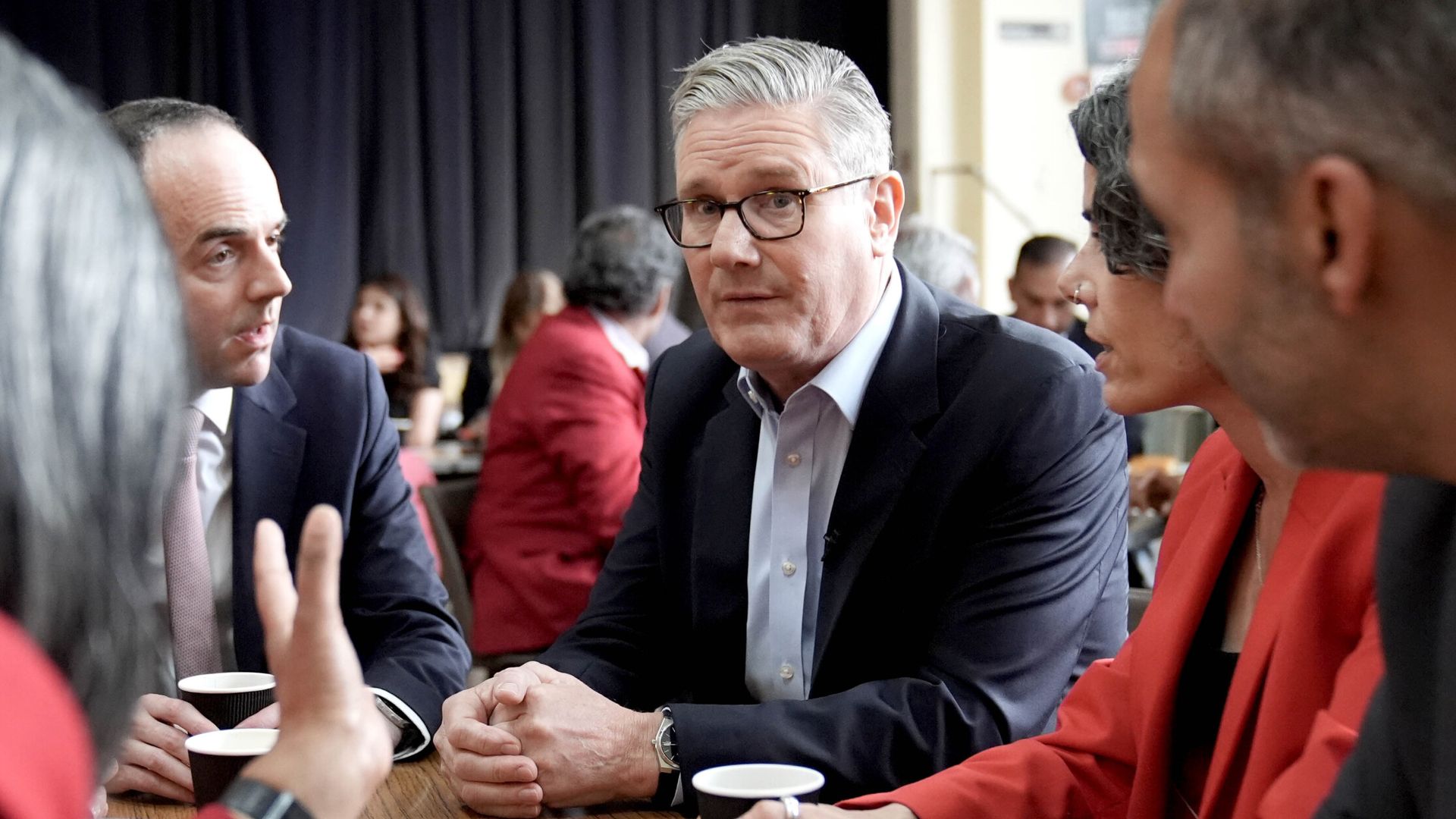
The air inside the Palace of Westminster has a specific weight. It smells of floor wax, damp wool, and the peculiar, metallic scent of anxiety. For Keir Starmer, that weight has become a physical burden. To walk down those corridors is to run a gauntlet of whispers that stop the moment you turn a corner. It is the sound of a thousand knives being sharpened, then quietly put away—for now.
Politics is rarely about the grand speeches delivered under the glare of television lights. It happens in the shadows of the tea rooms and the desperate silence of the division lobbies. Right now, the silence surrounding the Prime Minister is deafening. The polls are cratering. The winter fuel payment cut remains a jagged glass shard in the throat of the Labour backbenchers. The "freebies" row lingers like a bad smell that no amount of industrial-strength PR can mask.
Yet, something strange is happening. The widely anticipated coup, the "plunging of the knife" that Westminster watchers have been predicting with ghoulish glee, is losing its momentum. Not because Starmer has suddenly found a reservoir of charisma, but because his enemies have looked at the clock and realized they have nowhere else to go.
The Mathematics of Misery
Imagine standing on a sinking pier. You can jump into the freezing water, or you can stay on the wood and hope the tide turns. That is the current state of the Parliamentary Labour Party.
The numbers are brutal. Recent polling suggests a level of disillusionment that usually takes years to ferment, not months. The optimism of July has evaporated, replaced by a cold, grey reality. But here is the thing about political assassinations: they require a successor. They require a vision. They require a belief that the next person in line won't just inherit the same sinking pier.
When MPs gather in small, hushed groups, the conversation isn't about how to remove Starmer. It is about the terrifying lack of an alternative. The "Left" of the party is fragmented, more interested in ideological purity than the messy business of governance. The "Right" is terrified of looking like the chaotic Conservatives they just replaced. They are trapped in a Room of Requirement where the only thing they require is a way out that doesn't exist.
The Ghost of 1992
There is a historical ghost haunting these halls. It is the memory of how quickly a mandate can turn into a cage. In the early 90s, the sense of inevitable victory turned into a decade of wandering the wilderness. Labour MPs, especially the new intake who haven't yet learned how to decorate their offices, are looking at their slim majorities and feeling the floor tilt.
One backbencher, who we will call Sarah for the sake of her career, describes the atmosphere as "sedated panic." She spent ten years knocking on doors to get here. Now that she is in Westminster, she finds herself voting for measures she promised to oppose, all while the man at the top remains an enigma.
"It’s not that we’re loyal," Sarah says, twisting a cheap lanyard around her finger. "It’s that we’re tired. We just got here. If we blow it up now, we’re not just killing him. We’re killing the next five years of our lives."
This is the invisible stake. It isn't just about Starmer’s survival; it is about the collective survival of a party that spent fourteen years dreaming of power only to find it tastes like ash.
The Budget as a Shield
The upcoming fiscal statements act as a sort of gravitational pull. In the world of high-stakes finance and national budgets, uncertainty is a poison. Any move against the Prime Minister now would send the markets into a tailspin that would make the Truss era look like a minor accounting error.
The Chancellor, Rachel Reeves, is the iron gate standing between Starmer and the executioner's block. As long as she holds the line on the "black hole" narrative, the party feels it must remain unified, if only out of fear. You don't change the captain of the ship while you're navigating a minefield, even if you hate the captain’s navigation skills.
But fear is a volatile fuel. It burns hot and fast, and eventually, it runs out.
The "knife-plungers" are fading because they realized that the blade is double-edged. If they strike now, they take ownership of the mess. They become responsible for the winter deaths, the stagnant wages, and the crumbling hospitals. By leaving Starmer in place, they have a lightning rod. He takes the hits. He absorbs the public’s anger. He is the human shield for an entire generation of politicians who aren't ready to lead.
The Man in the High Castle
Starmer himself remains a study in controlled isolation. Those who work closely with him describe a man who views politics as a series of legal briefs to be won. He is methodical. He is relentless. He is also, according to his detractors, fundamentally disconnected from the emotional pulse of the country.
When he speaks about "tough choices," he sounds like a doctor delivering a terminal diagnosis with no bedside manner. He expects the public to understand the logic. He expects his MPs to fall in line because it is the "sensible" thing to do. But politics is not a court of law. It is a theater of the heart.
The tragedy of the Starmer premiership so far is the gap between the efficiency of his machine and the emptiness of his message. He won by not being the other guy. Now, he has to be someone.
The threats of a leadership challenge haven't gone away; they have simply moved into a different phase of the moon. They are waiting for the spring. They are waiting to see if the budget provides a flicker of light or merely more gloom.
The Loneliness of the Long Distance Leader
There is a specific kind of loneliness that comes with being a Prime Minister under siege from your own side. You see it in the way he enters the chamber—shoulders slightly hunched, eyes fixed on the dispatch box. He knows that half the people sitting behind him are checking their watches.
The knives are fading into the background because the party has realized that a civil war is a luxury they cannot afford. They are broke, the country is exhausted, and the opposition is slowly waking up from its post-election coma.
If Starmer survives this winter, it won't be because of a brilliant tactical maneuver or a surge in popularity. It will be because of the grim, cold reality of political math. The rebels have looked into the abyss and realized that if they push him in, they’re going down with him.
The knife remains in the pocket. The hand stays still. But the grip is tightening.
Outside, the fog over the Thames is thickening. Inside, the lights stay on late into the night. There are no cheers in the corridors, only the sound of footsteps on stone, echoing in a building that has seen a thousand men believe they were safe right up until the moment they weren't.
He walks on, alone, through the mist of his own making.