The rain in the hills does not sound like water. It sounds like a drumline played by someone who is angry.
If you have ever stood in a Himalayan valley while the monsoon shifts from a gray nuisance into a roaring, liquid avalanche, you know the sound. It starts as a distant rumble—the groan of limestone and topsoil giving up their grip after months of thirst or weeks of drowning. Then the air pressure drops, your ears pop, and the mountain itself decides to slide down into the kitchen. If you found value in this article, you might want to look at: this related article.
In the Trishuli corridor, the air tasted like wet slate and diesel fuel.
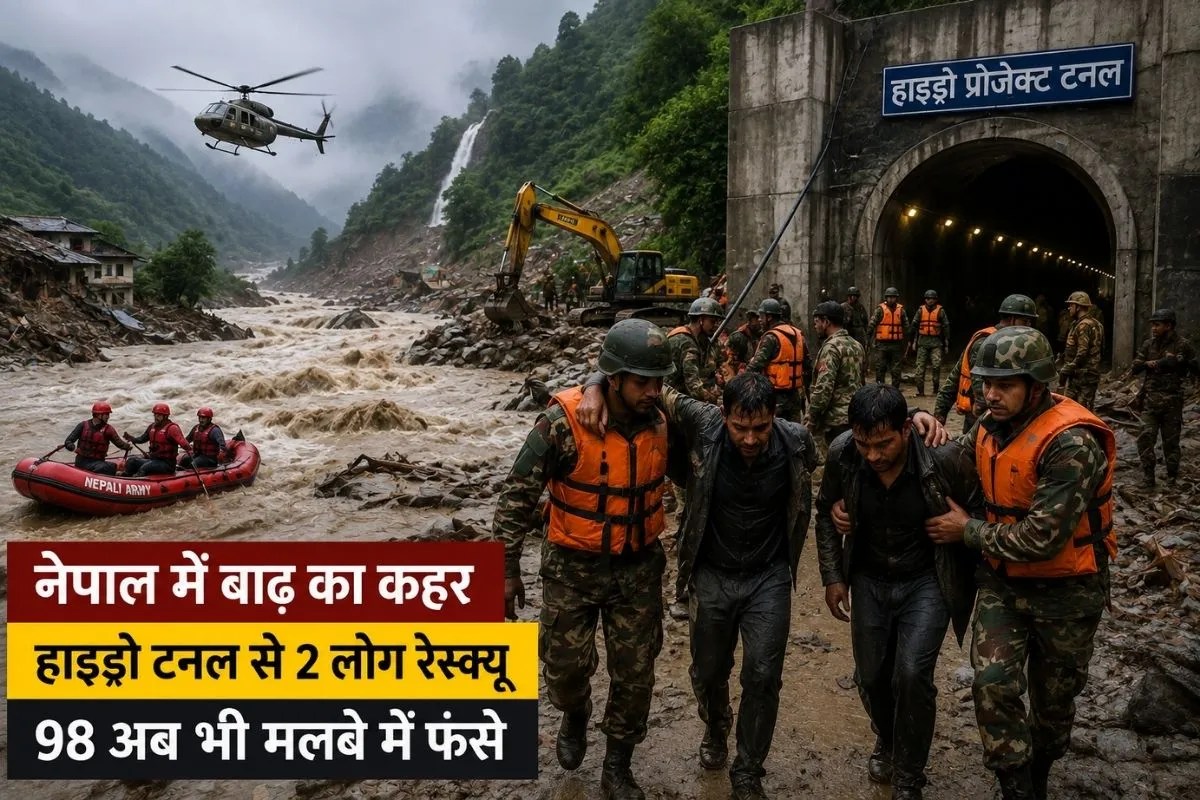
Let us ground ourselves in what actually happened, beneath the roar of the water. Two lives pulled out of a dark concrete tunnel where the breath was running thin. Ninety-eight others still out there, swallowed by gray silt that sets as hard as concrete once the river shifts its course. The statistics are clean on paper. Ninety-eight. Two. For another angle on this development, refer to the recent coverage from The Guardian.
Numbers are comfortable. Numbers let politicians in Kathmandu drink their tea while it is still hot. But numbers are a lie because they subtract the mud.
Imagine a man named Ramesh. (This is a hypothetical scenario to anchor what cannot be easily filmed by a drone). Ramesh is thirty-four. He knows the sound of the national highway collapsing because he has heard it twice before in his life. He works maintenance near the hydroelectric project tunnels—those massive subterranean arteries carved into the belly of the earth to capture the kinetic rage of melting glaciers and monsoon cloudbursts. When the hillside gave way last Tuesday, the slide did not just block the road; it sealed the tunnel mouth like a thumb pressing into an ant hill.
Inside that concrete tube, the world shrank to the height of a man's chest and the oxygen supply of whatever air was trapped in the pocket before the transformers blew.
Darkness in a mountain tunnel is not ordinary darkness. It is heavy. It smells of stagnant seepage, hot copper from fried electrical lines, and the quiet, metallic taste of rising panic. For hours—which stretch like wet leather—Ramesh and his coworker sat on a ledge of equipment, listening to the boulders grinding against the exterior steel doors. Every time the earth shuddered, they wondered if the next tremor would pinch the tunnel shut like a soda straw.
Outside, the rescue operation was a logistical nightmare orchestrated in the blinding white glare of halogen floods and pouring rain.
Heavy excavators clawed at the debris, but every bucket of mud removed risked triggering another cascade from the unstable slope above. This is the cruel geometry of landslide rescue. You cannot rush the earth. If you move too fast, the mountain collapses on the very people you are trying to pull out.
When the rescue teams finally breached the airlock of that tunnel and dragged the two survivors into the pale gray dawn, there was no cheering. There was only the dull, heavy fatigue of men who knew that ninety-eight more souls were somewhere down-valley, tangled in the debris field where the raging torrent had swept away makeshift settlements and traveler buses alike.
We have got this entirely backward when we talk about natural disasters in the media. We treat them as events. We call them incidents.
They are not incidents. They are slow-motion systemic collapses.
The hills of Nepal have always been fragile, held together by ancient root systems and stubborn terraces carved by generations of farmers. But when unscientific road expansion cuts raw scars into the toes of these mountains, and when unpredictable climate shifts dump a month’s worth of rain into forty-eight hours, the physics change. The earth loses its memory of stability.
Consider what happens next in these valleys. The floodwaters recede, leaving behind a crust of fine grey silt that coats everything—vegetable patches, school benches, the framed photographs of grandparents hanging crookedly on mud-splattered walls. The international headlines move on to the next earthquake, the next election, the next stock market panic. But the people whose fields are now buried under six feet of rocky debris do not move on. They spend their days with long iron rods, probing the silt along the riverbanks, looking for the shape of a relative's shoulder or the fabric of a jacket they bought in the bazaar last autumn.
This is the hidden cost of development without caution.
We build our tunnels and our highways because modern life demands energy, connection, speed. We need the power generated by these rushing Himalayan rivers to light the cities down on the plains. But the river always collects its tax. And the currency it demands is paid almost exclusively by people whose names never make it past the third paragraph of an international news brief.
The rescue workers in the Trishuli sector do not wear high-tech gear. They wear rubber boots that leak at the seams and orange plastic ponchos that tear on jagged rebar sticking out of collapsed concrete. They use their bare hands when the mechanical shovels are too clumsy to dig near a trapped vehicle. They smell like sweat, wet wool, and cheap tobacco.
When you watch them from a distance, through the safety of a television screen or the glass of a smartphone, it looks heroic. Up close, it is desperate, exhausting, and agonizingly slow.
Every monsoon season brings the same grim arithmetic. We write editorials about climate resilience. We talk about early warning systems, satellite mapping, and reinforced retaining walls. Yet every June, July, and August, the mountains remind us that human engineering is merely a temporary lease on a very old, very restless planet.
The two survivors pulled from that dark tunnel are alive today because an air pocket held long enough for the rescue crews to find the seam in the debris. Ninety-eight families are waiting for a miracle that the river rarely returns.
The rain has stopped for now. The sky over the valley has turned that peculiar, bruised shade of purple that follows a violent storm, promising a brief window of false peace before the next front rolls in from the Bay of Bengal. Down by the water's edge, a single yellow excavator sits idle in the mud, its engine ticking as the metal cools in the damp evening air, waiting for tomorrow.