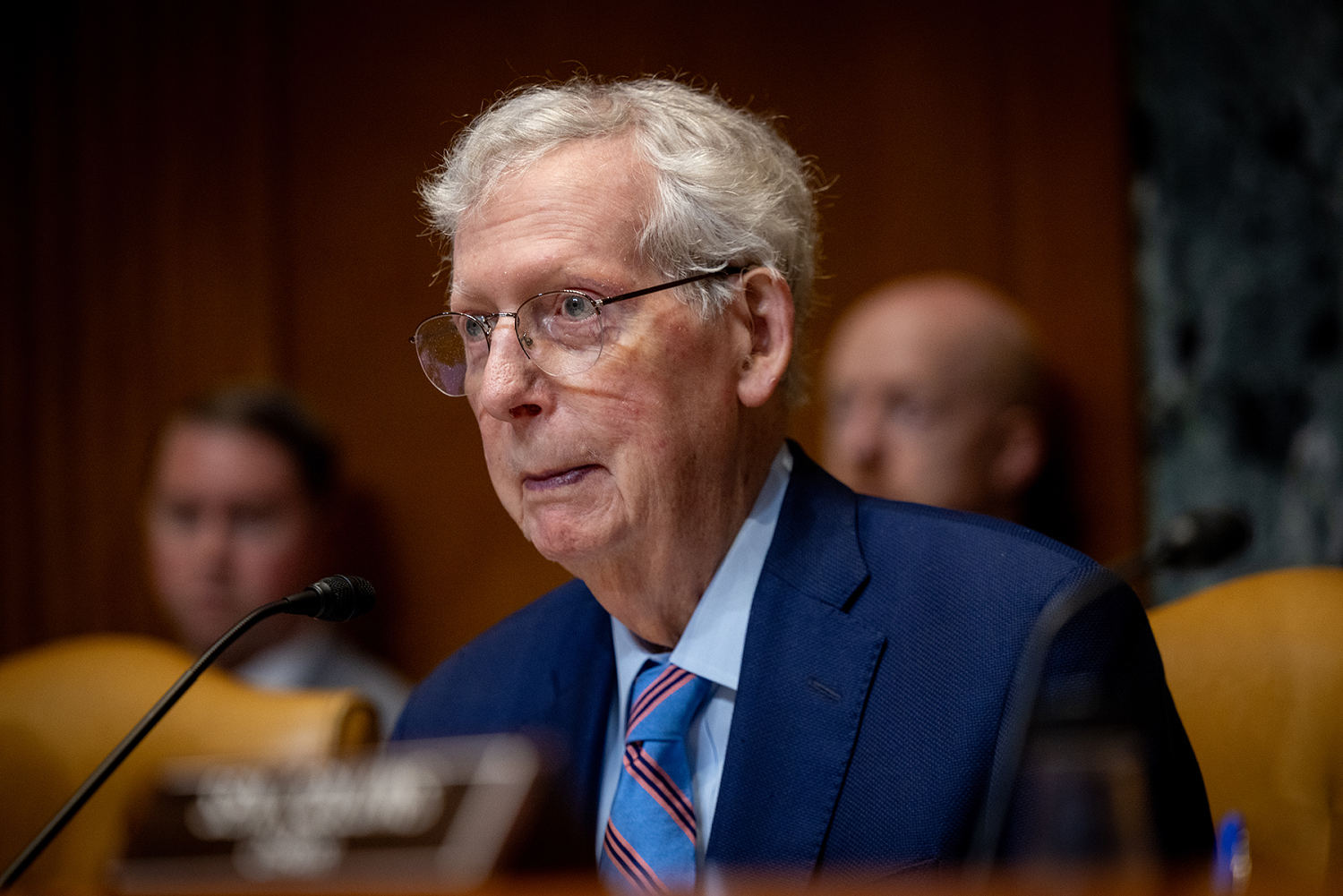
The marble of the United States Capitol is notoriously unforgiving. It is polished to a high sheen, cold to the touch, and completely indifferent to the status of the feet walking across it. For decades, those feet belonged to a man who moved through the corridors of power with an deliberate, unstoppable momentum.
But gravity eventually collects its debts from everyone.
When the news broke that Senator Mitch McConnell had been rushed to a Washington hospital after being found unconscious at his home, the initial dispatches read like a typical piece of clinical Washington PR. Word emerged from behind closed doors, via leaked emergency dispatch recordings, that an Advanced Life Support ambulance had been called to his residence on a quiet summer morning. The official statements from his office arrived much later, heavily filtered through the cautious syntax of political self-preservation. They described a man who was "receiving excellent care" and "working closely with staff." They did not use the word that was hanging heavily over the entire chamber.
Fragility.
The Momentum of the Unyielding
To understand the weight of a powerful man losing his balance, consider an aging architect who has spent forty years building a fortress, only to realize the steps leading up to the front door have grown too steep to climb.
McConnell has never been an orator who relies on physical charisma. His power always lay in his stillness. While others paced and gestured, he waited. He counted votes in his head. He mastered the clock, using the agonizingly slow mechanics of the Senate to freeze his opponents in place.
But over the past few years, that legendary stillness began to look less like a strategy and more like a symptom.
The trouble did not start on that quiet morning in his residence. It built up in a series of quiet, terrifying moments that played out under the harsh television lights of Capitol press conferences and the grand ballrooms of Washington hotels. Think back to the Waldorf Astoria. A private dinner, a misstep, and suddenly the man who controlled the judicial landscape of the country was on the floor with a fractured rib and a concussion.
Then came the freezing spells.
If you watched the footage, it wasn't just political theater; it was deeply human, and deeply uncomfortable to witness. A reporter would ask a routine question, and suddenly, the Senator would stop. His eyes would lock on a distant point in the room. His mouth would remain slightly open. For twenty, thirty seconds, the entire machinery of American government seemed to pause with him. His aides would gently step in, take his elbow, and guide him away from the microphones. The official medical explanation cited dehydration and the lingering aftereffects of a concussion.
But anyone who has ever watched a grandparent navigate a crowded living room knew what they were really seeing. It was the slow, stubborn battle against a body that was no longer taking orders from the mind.
The Geography of a Fall
Every time an elderly leader falls, the stakes are elevated far beyond the immediate physical pain. It becomes a question of legacy, control, and the terrifying prospect of letting go.
Consider what happens next in the ecosystem of Washington when a central pillar wobbles. The capital is a city built on the illusion of permanent strength. The moment a leader shows physical vulnerability, the whispers begin in the cloakrooms. Aides scramble to fill the silence with reassuring updates. Colleagues offer public prayers while privately eyeing the seating charts of the powerful committees.
The human instinct is to hide the weakness. We see this not just in politicians, but in our own lives. A fiercely independent parent refuses to use a walker, hiding their bruised shins under long trousers because admitting the need for help feels like admitting defeat. They choose the risk of the fall over the certainty of the concession.
For McConnell, the stakes of conceding are immense. He has spent his life in the arena. The Senate is not just his job; it is the language he speaks. To step away early, to trigger a chaotic special election or hand an advantage to a rival faction within his own party, goes against every instinct he has honed since 1985.
So the protective wall goes up. The statements remain brief. The public is told he is "dialed in" to Senate business, even as the weeks in the hospital stretch on and the rumors on the internet grow wilder and more detached from reality.
The Final Metric
We often treat our leaders like institutions rather than flesh and bone. We demand that they be infallible, entirely forgetting that beneath the tailored suits and the security details, they are subject to the same biological decay that awaits us all.
There is an inherent tragedy in watching a master tactician confront an opponent he cannot outmaneuver or filibuster. You cannot negotiate with time. You cannot pass a bill to repeal the effects of a concussion.
The true story of Mitch McConnell's recent health struggles isn't found in the sparse press releases or the partisan squabbling over who might fill his seat. It is found in the quiet reality of an 84-year-old man, surrounded by the immense, cold power of the nation's capital, facing the one thing that commands absolute surrender from everyone.
The Senate chamber will eventually move on, the marble floors will be walked on by younger feet, and the speeches will continue. But for now, the silence coming from the hospital room speaks louder than any floor debate ever could.