The air in the dugout always changes when September bleeds into the final weeks of the regular season. It is a subtle shift, born of tired legs, blistered fingers, and the collective, heavy breathing of a clubhouse that has carried a city's expectations on its back for six grueling months. You can smell the stale bubblegum, the liniment, the faint trace of old leather, and beneath it all, an electric, humming anxiety. October is coming. And nobody wants to limp through its gates.
For the Los Angeles Dodgers, this autumn stretch has never been about simply punching another ticket to the postseason dance. That is expected. That is the baseline minimum written into the franchise's DNA. The real battle, the one whispered about behind closed doors and chewed-over fingernails in the training room, is about wholeness. It is about glue and gauze, about piecing together a fractured machine and hoping every gear holds firm when the stakes turn blindingly bright.
Picture the scene under the arched concrete bowels of Dodger Stadium hours before first pitch. A trainer kneels on a rubber mat, working deep tissue into a calf that has missed forty games. The player winces, staring blankly at a television monitor looping video of an opposing pitcher's release point. This is the invisible theater of baseball. Fans see the towering home runs and the roaring crowds, but they rarely see the ice bags, the nocturnal rehab sessions in silent facilities, or the psychological weight of standing on the precipice of greatness while your own body feels like an unreliable narrator.
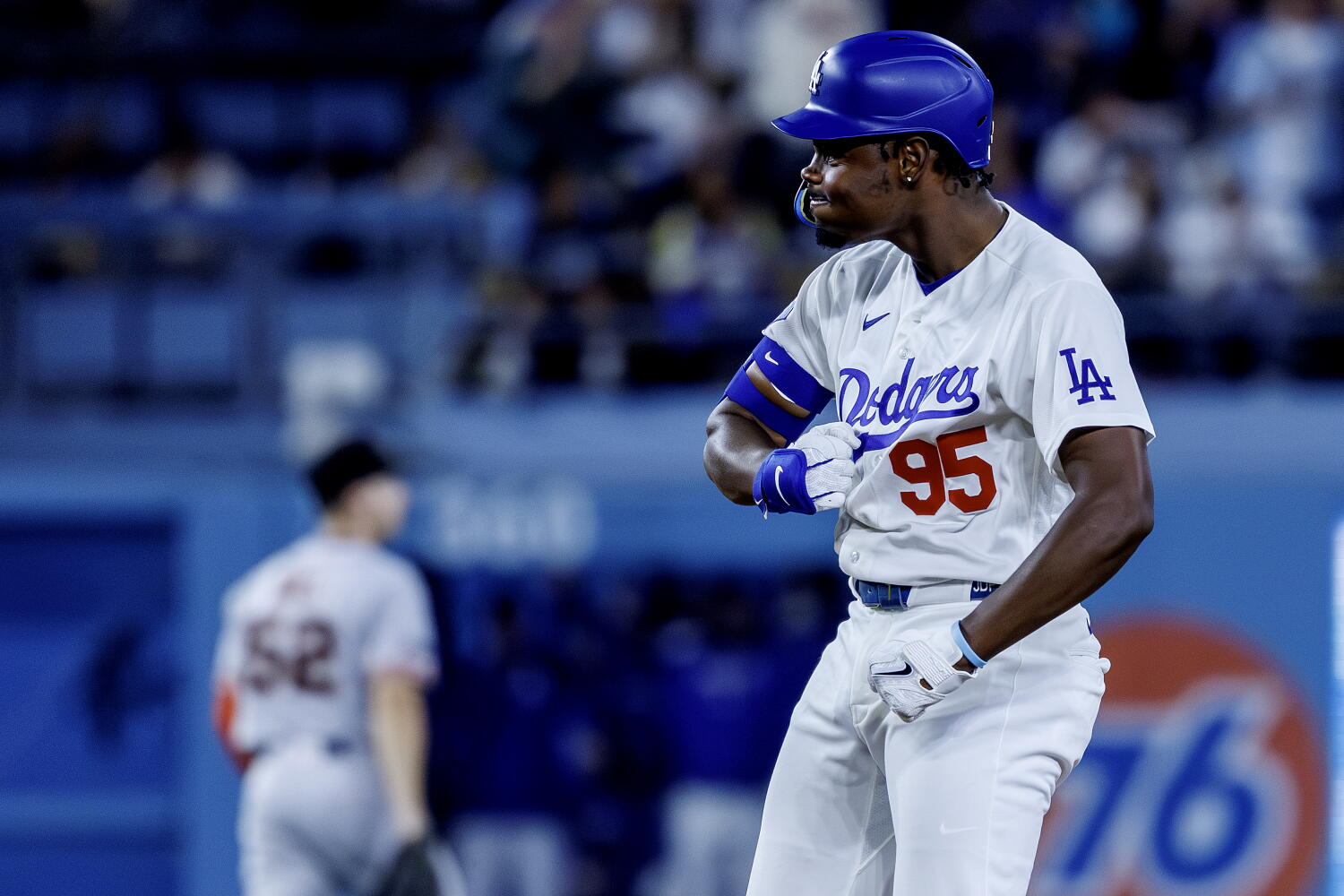
When the Giants came to town, the rivalry provided its usual sharp edges. Giants-Dodgers games do not require playoff implications to feel urgent; they carry the accumulated dust and grudges of generations, stretching back to Brooklyn and Upper Manhattan. Yet on this particular night, the rivalry played second fiddle to a more intimate drama.
The scoreboard lights flickered, innings bled away in a tense, scoreless stalemate, and the Dodgers' lineup looked like a puzzle missing three of its corner pieces. Mookie Betts adjusted his batting gloves with characteristic economy of movement, his eyes tracking every rotation of the ball. Around him, the bench buzzed with a quiet urgency. Every at-bat felt like a diagnostic test. Is the hamstring holding? Can the shoulder torque through an inside fastball without a sharp stab of doubt?
Baseball is a game of statistics, but it is lived in micro-seconds of physical truth.
Then came the late innings. The air cooled, the shadows stretched across the diamond, and the bullpen telephone began its relentless ringing. This is where depth is tested, where the guys who spent April grinding in Triple-A or fighting through minor injuries are suddenly asked to author the defining chapters of a championship chase.
When the breakthrough finally arrived—a sharp, stinging line drive into the gap that sent runners scrambling and the home crowd erupting into a familiar, cathartic roar—it wasn't just a run crossing the plate. It was a collective exhale. It was proof that the machinery, however battered, was still turning.
Yet, as the high-fives echoed in the dugout and the post-game interviews commenced, the mood remained remarkably sober. Manager Dave Roberts didn't deliver a Hollywood speech about destiny. He talked about health. He talked about recovery metrics, innings limits, and the delicate art of pacing men who have played more than one hundred and fifty games of baseball through heat waves, cross-country flights, and relentless pressure.
Getting healthy for October is not a switch you flip. It is a slow, agonizing negotiation with biology.
Think about what it means to rebuild your timing after missing a month of live pitching. You can face live batting practice all afternoon against organizational pitchers throwing seventy percent effort, but nothing replicates the furnace of a tied game in the eighth inning with ninety thousand eyes locked on your hands. The ball explodes out of a reliever's hand at ninety-eight miles per hour, slicing through the October air with wicked intent. Your brain must process the spin, calculate the trajectory, and commit your entire physical being to a violent, rotational swing in roughly four-tenths of a second. If your oblique is even two percent hesitant, you are late. You miss. You trudge back to the dugout, another question mark for the front office to chew over.
This is the hidden cost of the chase.
The Dodgers have built an empire on exceptional talent and staggering financial commitment, but autumn remains the great equalizer. Money does not heal scar tissue. Analytics cannot accelerate the knitting of torn fibers. In the end, champions are forged in the quiet spaces—in the training room at sunrise, in the cold tubs after a grueling extra-inning win, and in the quiet resilience of athletes who must learn to trust their bodies all over again when every instinct tells them to protect themselves.
As the stadium lights slowly powered down, casting long, empty shadows across the immaculate green grass of the outfield, the clubhouse fell into a deep, exhausted quiet. The win was secured in the column, another tally in a historic season. But the real game, the one played against time and biology, was already rolling forward toward tomorrow.
The stadium is silent now. The turf cools under the midnight dew. But somewhere in a quiet rehabilitation clinic across town, a digital clock ticks toward dawn, and the work begins again.