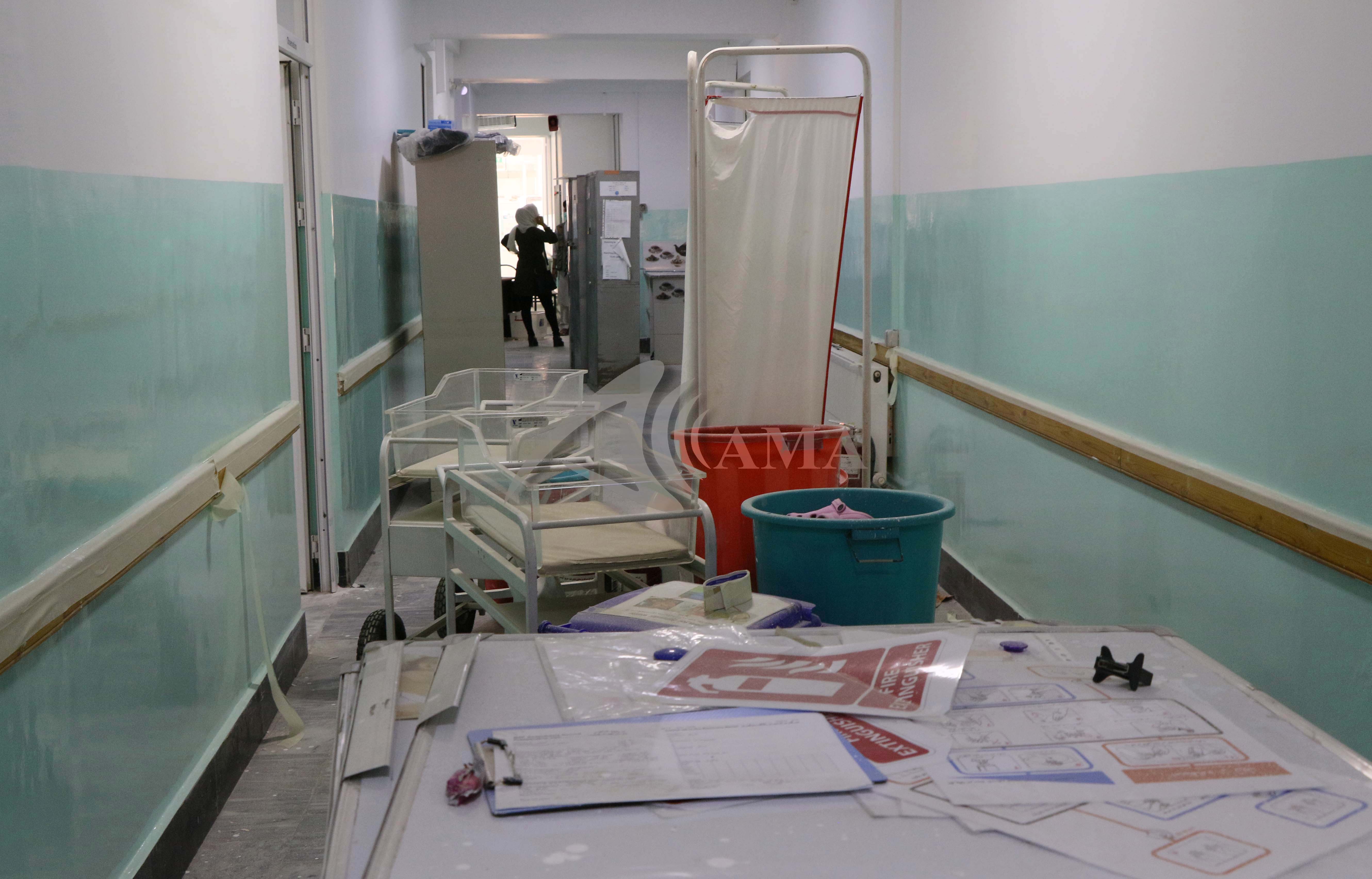
The air in a Los Angeles courtroom does not smell like damp concrete or copper. It smells of floor wax and expensive stationery. It is climate-controlled to a degree that makes the skin feel papery and thin. But for the men and women who sat on the wooden benches this week, the sterile atmosphere was a thin veil. Beneath the hum of the air conditioner, they could still hear the sound of a heavy metal door swinging shut.
They were there to look at Samir Ousman al-Sheikh.
He is an old man now. At 72, he carries the physical weight of a life lived in the upper echelons of a collapsing state. He was once the governor of Deir ez-Zor. He was a colonel. He was the man who ran Adra Prison, a sprawling complex outside Damascus that has, for decades, functioned as a black hole for human hope. In the eyes of the U.S. government, he was something else: a man who thought he could outrun his own shadow by moving to South Carolina.
A federal jury in Los Angeles disagreed.
The conviction of Samir al-Sheikh for visa fraud and making false statements is not merely a bureaucratic victory. It is a crack in the wall of impunity that has shielded the architects of the Syrian torture machine since 2011. While the charges were technically about what he wrote on a travel document, the evidence presented was about what he did in the dark.
The Paper Trail of a Ghost
Imagine standing at an immigration desk. You are handed a form. It asks a simple question: Have you ever been involved in the killing of any person? Have you ever participated in torture?
For most, these are jarring, abstract queries. For al-Sheikh, they were hurdles to be cleared with a flick of a pen. In 2020, he sought to become a United States citizen. He had been living a quiet life in suburban Greenville, South Carolina, since 2020. He was a neighbor. He was a face in the grocery store. He was a man who had successfully rebranded himself as a retiree enjoying the fruits of American liberty.
But the fingerprints of the Assad regime are not easily washed off.
The prosecution’s case rested on a fundamental truth: you cannot lead a facility defined by systemic brutality and claim you were just an administrator. Adra Prison is not a standard correctional facility. It is a cornerstone of a security apparatus designed to break the will of a population. Witnesses—real people with scars that have turned into raised, silver maps on their skin—spoke of what happened under his watch. They spoke of the "German Chair," a torture device that stretches the spine until it snaps. They spoke of the "tire," where prisoners are folded into a rubber casing and beaten until their feet are unrecognizable pulp.
Al-Sheikh claimed he was a reformer. He told the court he tried to make things better. He painted a picture of a man caught in a difficult system, doing his best to maintain order.
The jury saw a different picture. They saw a man who lied because the truth was too heavy to carry across a border.
The Weight of a Witness
There is a specific kind of courage required to look your tormentor in the eye in a brightly lit room in California. To the witnesses who testified, al-Sheikh wasn't just a defendant. He was the personification of a decade of disappeared brothers, fathers who never came home, and the smell of fear that permeates every street corner in Damascus.
One witness described the psychological toll of Adra. It isn't just the physical pain. It is the waiting. It is the sound of footsteps in the hallway at 3:00 AM. It is the knowledge that the man in the front office has the power to make you vanish from the Earth with a single signature.
When al-Sheikh signed his immigration papers, he was betting on American indifference. He was betting that the Department of Homeland Security wouldn't care about what happened in a prison ten thousand miles away. He was betting that the victims would stay silent, buried under the weight of their trauma or the literal soil of mass graves.
He lost that bet.
The investigation into al-Sheikh wasn't a sudden stroke of luck. It was the result of years of meticulous work by the Department of Justice’s Human Rights and Special Prosecutions Section. These are the people who hunt the hunters. They understand that in the modern world, "never again" is often a hollow phrase unless it is backed by a subpoena.
The Invisible Stakes of a Visa Form
Why does it matter if an old man lied on a form?
It matters because the United States is increasingly becoming a destination for those fleeing the very regimes they once served. As the Syrian conflict dragged on, a segment of the elite realized the ship was sinking. They took their money, their families, and their secrets, and they looked for a safe harbor.
If al-Sheikh had been acquitted, it would have sent a signal: the past stays in the past. It would have told every high-ranking official in every brutal regime that if they can just make it to the suburbs of the West, they are home free.
Justice, in this case, is a form of preventative medicine. It tells the world that the borders of the United States are not a laundry service for dirty reputations.
The legal technicality—visa fraud—might seem small compared to the moral gravity of torture. But in the American legal system, the "Al Capone" strategy is often the most effective. If you cannot try a man for the murders he committed in a foreign war zone because of jurisdictional hurdles, you try him for the lies he told to get into your country. A lie about a crime is, for the purposes of a jury, a window into the crime itself.
The Sound of the Gavel
As the verdict was read, the room didn't erupt in cheers. There was a heavy, profound silence.
For the Syrian diaspora, this conviction is a bittersweet milestone. It doesn't bring back the dead. It doesn't collapse the walls of the Saydnaya or Adra prisons that still stand today. It doesn't remove Bashar al-Assad from power.
But it validates the pain.
It proves that the stories told by the survivors are not just "allegations" or "political propaganda." They are facts. They are facts so cold and so hard that they can convince twelve strangers in Los Angeles to convict a man who tried to hide in plain sight.
Al-Sheikh now faces the possibility of several years in federal prison and, eventually, the loss of his permanent residency. More importantly, he faces the reality that his legacy is no longer that of a powerful colonel or a respected governor. He is, officially and legally, a fraud.
He is a man who tried to buy a new life with the currency of silence.
The trial reminds us that memory is a weapon. The Syrian regime spent years trying to erase the people it tortured. It stripped them of their names, gave them numbers, and buried them in the dark. But memory is stubborn. It travels across oceans. It waits in line at immigration offices. It sits patiently in the back of a courtroom until it is called to the stand.
The long reach of the basement on Al-Mezzeh Street finally hit a wall. It wasn't a wall of stone or steel, but a wall made of twelve citizens and a stack of paper.
The old man sat still as the guards approached. For the first time in a long time, he was the one who had to follow the footsteps down the hall.
The metal door closed. This time, he was on the other side of the lock.