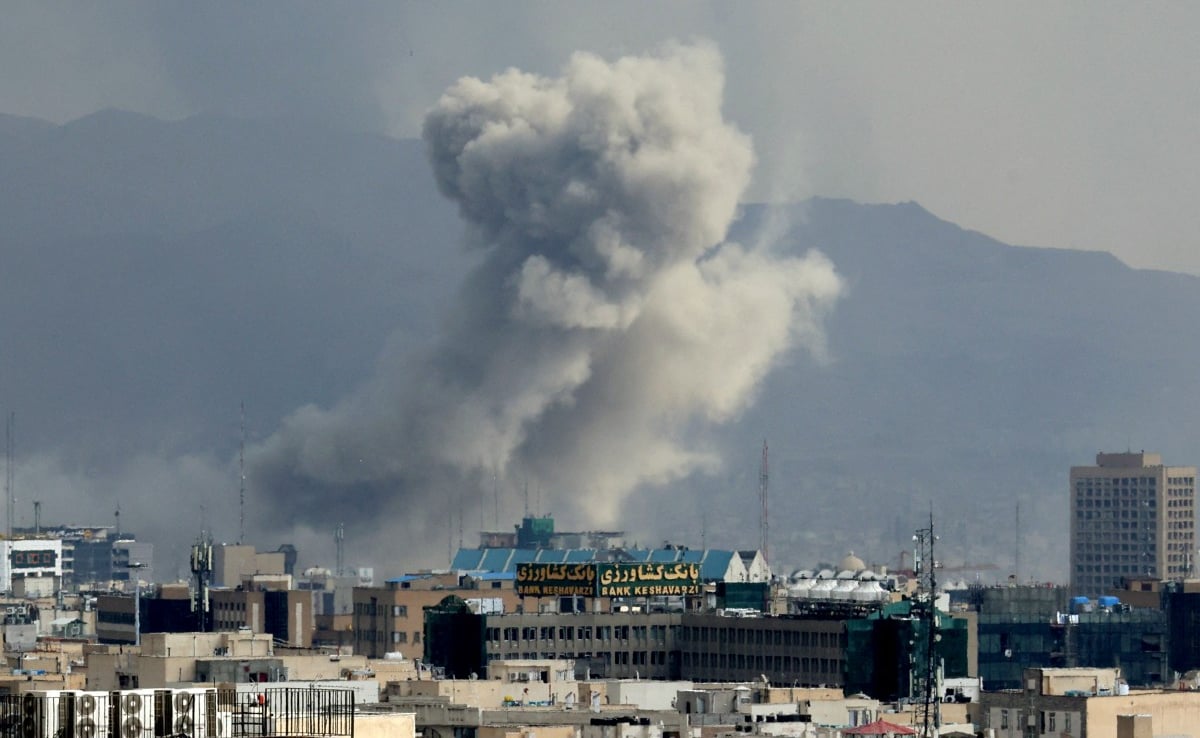
The restoration of a national aviation network following a total tactical closure is not a binary toggle but a high-stakes phased synchronization of kinetic security, diplomatic signaling, and civil infrastructure readiness. When Israel initiates the "gradual" reopening of its airspace following a period of direct regional escalation, it is navigating a complex optimization problem: how to re-establish economic and humanitarian connectivity without compromising the integrity of its Integrated Air Defense System (IADS). This process is governed by the friction between three competing pressures: the immediate necessity of "Rescue Flights" for stranded citizens, the technical recalibration of Air Traffic Control (ATC) in a contested electronic warfare environment, and the psychological signaling required to restore international carrier confidence.
The Tri-Node Framework of Airspace Reconstitution
To understand why an airspace cannot simply "snap back" to full capacity, one must analyze the three structural pillars that dictate the speed of recovery. You might also find this related article insightful: Strategic Asymmetry and the Kinetic Deconstruction of Iranian Integrated Air Defense.
1. The Kinetic Buffer and De-escalation Verification
The primary constraint on reopening is the status of the "Active Window." In a theater where ballistic missiles, cruise missiles, and unmanned aerial vehicles (UAVs) have recently transited, the airspace is categorized as a high-risk kinetic zone. Reopening signals a high-confidence assessment that the immediate threat of a saturated attack has subsided. However, the military retains "Priority of Use" over specific corridors. Civil aviation is funneled into narrow, heavily monitored lanes, creating a throughput bottleneck. The "Rescue Flights" mentioned in initial reports serve as a stress test for these corridors, allowing the IADS to differentiate between friendly transponders and potential threats in a controlled, low-volume environment.
2. The Civil-Military Coordination (CIMIC) Bottleneck
During a total closure, the Ben Gurion Airport (TLV) ground operations and the surrounding Area Control Center (ACC) shift to a war footing. Reverting to civil control requires a "Handover Protocol" where military sensors—which may be operating in "war reserve modes"—sync back with civilian secondary surveillance radars. This transition is fraught with technical risk, particularly regarding Electronic Countermeasures (ECM). If GPS jamming or spoofing remains active in the region to deter incoming precision-guided munitions, civilian aircraft lose their primary navigation reference. The gradual nature of the reopening reflects the time required to verify that Ground-Based Augmentation Systems (GBAS) are reliable for CAT II/III landings. As extensively documented in detailed articles by Associated Press, the implications are worth noting.
3. The Insurance and Risk-Premium Barrier
Physical safety is only half the equation; the economic viability of reopening depends on the "War Risk Insurance" market. International carriers do not return simply because a government declares its airspace open. They return when the risk-to-revenue ratio stabilizes. By prioritizing national carriers like El Al for the initial "rescue" phase, the state effectively underwrites the risk. These flights act as a proof-of-concept for foreign insurers, demonstrating that the "Iron Dome" and "Arrow" systems provide a sufficient umbrella for commercial operations.
The Cost Function of Stranded Human Capital
The urgency behind "Rescue Flights" is often framed in emotional terms, but for a strategic consultant, it represents a critical mitigation of a "Stranded Asset" crisis. Thousands of citizens stuck abroad represent a significant disruption to the domestic labor market and a mounting liability for the state.
The logistical challenge of these flights is defined by the Asymmetric Load Factor:
- Outbound Phase: Aircraft depart nearly empty or carrying essential cargo/personnel, resulting in a high cost-per-seat.
- Inbound Phase: Aircraft are at 100% capacity, often exceeding standard baggage weight limits as citizens return with long-term supplies.
- Turnaround Efficiency: Ground crews at TLV must operate under "Red Alert" protocols, where a single siren can halt all refueling and loading operations, potentially doubling the standard 90-minute turnaround time.
This inefficiency creates a massive operational deficit that is usually absorbed by the state through direct subsidies or emergency fuel allocations.
The Technical Reality of GPS Interference
A factor rarely discussed in surface-level reporting is the regional "Navigation Landscape." Since the onset of heightened hostilities, the Eastern Mediterranean has become a dead zone for standard GNSS (Global Navigation Satellite System) signals. Pilots frequently report "GPS Spoofing," where their onboard systems incorrectly place them over locations like Beirut or Cairo while they are actually on approach to Tel Aviv.
Modern avionics require a high degree of "Required Navigation Performance" (RNP). When GPS is unreliable, aircraft must revert to older, terrestrial-based navigation like VOR (VHF Omnidirectional Range) and DME (Distance Measuring Equipment). Many modern international pilots, trained primarily on digital suites, find the high-workload environment of a VOR approach in a war zone to be outside their airline's risk tolerance. The "gradual" reopening is, in part, a wait for the electromagnetic environment to cool down enough for standard automated systems to function.
Structural Impediments to International Carrier Return
While Israeli carriers may fly the moment the NOTAM (Notice to Air Missions) is lifted, the global aviation industry operates on a tiered risk-assessment model.
- Tier 1: National Flag Carriers (El Al, Israir, Arkia)
- Motivation: State mandate and survival.
- Equipment: Equipped with specialized C-Music (Directed Infrared Countermeasures) systems to deflect shoulder-fired missiles (MANPADS).
- Tier 2: Regional Low-Cost Carriers
- Motivation: High-margin routes.
- Limitation: Highly sensitive to insurance hikes; they will wait for a 72-hour "quiet window."
- Tier 3: Global Legacy Carriers (Lufthansa, United, Delta)
- Motivation: Network connectivity.
- Limitation: Bound by strict union contracts regarding crew overnight stays in high-risk zones. Many will opt for "Quick Turn" flights—landing, swapping passengers, and taking off without the crew leaving the aircraft—to minimize exposure.
Tactical Divergence in Airspace Management
The reopening of Israeli airspace cannot be viewed in isolation from the surrounding FIRs (Flight Information Regions). The Nicosia (Cyprus) and Amman (Jordan) FIRs act as the gateways to Israeli territory. If these neighboring sectors remain congested or under their own restrictions, a "Gate Effect" occurs. Even if Ben Gurion is ready to receive 40 flights per hour, the surrounding sectors may only be able to hand off 10.
This creates a "Holding Pattern Liability." Aircraft circling over the Mediterranean waiting for a slot are vulnerable and consume fuel at a higher rate. Strategic airspace management requires a multilateral coordination that often lags behind unilateral declarations of "Open Airspace."
The Intelligence-Operations Feedback Loop
The decision to reopen tonight is rooted in a specific intelligence "Lull Horizon." Security agencies calculate the probability of a secondary strike wave within a specific 6-to-12-hour window. If the probability falls below a defined threshold (likely $P < 0.05$), the civilian economic benefit outweighs the military risk.
However, this creates a Fragility Trap. If an airspace is reopened and then abruptly closed again due to a fresh threat, the resulting chaos—aircraft diverting to secondary airports in Cyprus or Greece—is more logistically expensive than if the airspace had stayed closed. The "gradual" approach is a hedge against this fragility. By only scheduling a handful of high-priority flights, the system retains the "Elasticity" to clear the skies rapidly if a new threat emerges.
Strategic Operational Directive
For stakeholders navigating this reopening, the following logic must be applied:
- Audit Navigation Redundancy: Ensure all flight crews operating in the Levant are proficient in non-GNSS arrival procedures. The reliance on digital positioning is a systemic vulnerability in the current theater.
- Decouple NOTAMs from Reality: A "Lifting of Restrictions" is a political signal; operational readiness is a technical one. Do not schedule high-capacity turnarounds until 48 hours post-reopening to allow the "Insurance Lag" to dissipate and the military-to-civilian handover to stabilize.
- Prioritize Liquid Logistics: Fuel reserves at the primary hub should be treated as a strategic asset. Increased holding times and diverted arrivals will put unprecedented strain on local Jet A-1 supplies.
The reopening of airspace is not a return to normalcy; it is the transition into a "Gray Zone" of operations where civil efficiency is permanently secondary to kinetic defense requirements.
Managers should immediately pivot from "Rescue Mode" to "Resilience Mode," diversifying arrival ports and securing long-term wet-lease agreements for aircraft equipped with defensive suites, as the regional risk profile suggests that intermittent closures will be the new baseline for the foreseeable fiscal year.