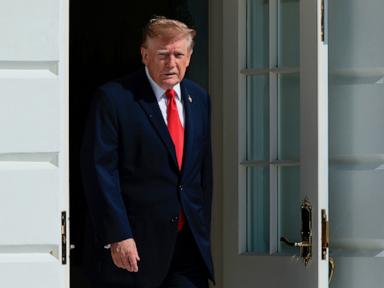
When executive officials propose broadcasting a capital sentence live to the public, the debate rarely stays confined to criminal justice; it collides directly with institutional legitimacy, deterrence theory, and media incentives. Following the October 2026 scheduling of former U.S. Army Major Nidal Hasan's firing-squad execution for the 2009 Fort Hood mass shooting—which killed 13 people and wounded 32 others—Pentagon leadership floated a livestream before President Donald Trump reversed the broadcast plan, limiting in-person viewing to immediate victim family members. Standard political coverage treats internal hesitations among advisers and lawmakers as routine friction or moral posturing. A rigorous strategic analysis unpacks the exact trade-offs at stake by mapping the Three Pillars of Execution Spectacle, evaluating the Deterrence versus Radicalization Cost Function, and tracing the Institutional Reversal Loop that forced a walk-back.
Known Facts Versus Analytical Hypotheses
Separating established institutional actions from strategic inference keeps the evaluation grounded.
- Known facts: Following a 2013 court-martial conviction and death sentence, and after appellate milestones including a March 2025 Supreme Court denial of review, President Trump approved Hasan's death sentence in early October 2026. The Army set the firing-squad execution for December 3, 2026, at Fort Hood, Texas—which would mark the first military execution since 1961 and the first by firing squad since 1945. Defense Secretary Pete Hegseth and Pentagon officials initially signaled plans to make the execution public or livestream it, drawing swift pushback from lawmakers across party lines, military religious leadership, and human rights officials, alongside skepticism from figures such as Vice President JD Vance. On October 15, 2026, Trump stated the execution would proceed by firing squad without a livestream, while allowing immediate family members of victims to attend in person.
- Educated hypotheses: Advisers and allies who urged caution likely weighed three downstream risks rather than abstract sentiment alone: reputational damage from visual comparisons to violent extremist broadcasts, legal and regulatory exposure around age restrictions and military witness rules, and attention misallocation away from the core retributive message toward the medium itself.
The Three Pillars of Execution Spectacle
Any proposal to broadcast a state execution operates across three interacting structural pillars: Institutional Signaling, Audience Exposure Mechanics, and Media Capture Dynamics.
Institutional Signaling
The state communicates norms through procedure as much as through punishment. Historically, modern democracies moved executions out of public squares to project bureaucratic restraint, procedural regularity, and sovereign authority without sadism. Broadcasting an execution—especially a military firing squad after more than six decades without a service execution—alters that signal. Instead of projecting calm finality, a livestream risks projecting theatrical escalation. Critics immediately seized on that contrast, arguing that publicizing a lethal broadcast blurs the boundary between lawful state punishment and the graphic propaganda tactics used by militant groups.
Audience Exposure Mechanics
Digital distribution changes who sees an event and how they encounter it. Unlike a physical witness chamber—where Army regulations restrict attendance and bar minors under 18—an open stream removes physical access gates. Even if a platform uses age gates or content warnings, algorithmic feeds and clipped excerpts circulate rapidly across secondary channels. For an administration, unmanaged exposure creates a compliance and optics problem: critics can argue the state is enabling minors or non-consenting viewers to witness graphic violence, turning a targeted act of justice into an uncontrolled public broadcast.
Media Capture Dynamics
A livestream hands editorial framing to the broadcast medium itself. Once an execution is streamed, news cycles and social platforms focus heavily on camera angles, viewer reactions, platform moderation, and diplomatic condemnation. The intended focal point—accountability for 13 murders and 32 injuries at Fort Hood—competes with debates over spectacle and authoritarian optics. When the medium becomes the story, the political return on the underlying policy action drops sharply.
The Deterrence Versus Radicalization Cost Function
Proponents of publicizing severe punishment often invoke general deterrence: the hypothesis that visible consequences dissuade potential offenders. In practice, deterrence is not a free variable; it sits inside a cost function alongside martyrdom/propaganda amplification and institutional legitimacy erosion.
The first mechanism is asymmetric propaganda value. Violent extremists frequently interpret state executions through a grievance or martyrdom frame rather than a deterrent one. Footage of a defendant facing a firing squad can be repurposed by adversarial networks as recruitment or mobilization material, especially when tied to longstanding ideological narratives. A single graphic clip can outlive the policy intent of the officials who authorized its release.
The second mechanism is coalition and alliance friction. Capital punishment already divides domestic constituencies and draws sharp criticism from international partners and human rights bodies. Adding a livestream compounds that friction: it gives domestic opponents a clear visual target and gives international critics a concrete hook to frame the event as an outlier in modern penology.
The third mechanism is internal institutional strain. Military institutions operate under strict rules, tradition, and chain-of-command discipline. When senior political figures float an unconventional broadcast and face pushback from lawmakers, religious leaders, and allies, internal alignment frays. That friction carries real organizational cost even before a single shot is fired.
Consider two contrasting scenarios around a high-profile military execution:
- Private execution with family access: The sentence is carried out under established military protocols, immediate victim families who choose to witness it are accommodated, and official reporting confirms completion without distributing graphic footage. Public debate stays anchored to the underlying crime and legal finality rather than visual shock.
- Public livestream: Real-time video enters global circulation, triggering immediate outrage over graphic violence, minor exposure, and comparisons to extremist media. Even supporters of the death penalty split over whether a livestream honors victims or cheapens state authority.
Cause-and-Effect Chains Missed in Surface Coverage
Surface-level reporting often treats a policy reversal as a simple win for critics or a sudden change of heart. Mapping the cause-and-effect chain reveals a tighter sequence of pressures.
- Announcement shock: Floating a livestream immediately reframes the story from "a long-delayed death sentence reaching final execution" to "a controversial shift toward public executions".
- Cross-pressure mobilization: Criticism emerges not only from predictable opponents, but also from conservative lawmakers, military chaplains or religious leaders, and cautious allies who worry about optics and precedent.
- Salience inversion: As condemnation mounts, the debate over broadcasting threatens to overshadow victim remembrance and executive authority over the sentence.
- Targeted de-escalation: Canceling the livestream while preserving the sentence and offering in-person viewing to immediate victim families isolates the high-cost variable (the broadcast) while keeping the core action (carrying out the sentence and honoring families) intact.
A common mistake among political communicators is assuming that high outrage equals high persuasion for their side. In reality, graphic spectacle often polarizes audiences in ways that undercut the messenger's core goal—turning a moment meant to project decisive order into a referendum on state restraint.
Limitations and Operational Blind Spots
No analytical framework or communication adjustment eliminates the underlying tensions of capital punishment. Three limitations constrain any strategy here:
- Uncontrolled secondary leakage: Even when an official livestream is canceled, public records, post-event descriptions, or unauthorized leaks can still spark intense media cycles and partisan disputes.
- Ongoing legal uncertainty: Scheduling an execution does not guarantee immediate completion; late-stage court filings or habeas actions can delay or alter timelines regardless of public messaging preferences.
- Irreconcilable value judgments: Supporters of severe public retribution and opponents of capital spectacle start from incompatible premises. No messaging tactic converts hardened critics into supporters.
Strategic Play for High-Consequence Enforcement
When managing a high-stakes execution or similarly polarizing enforcement action, decision-makers should decouple final punishment from mass broadcast spectacle while preserving structured access for directly affected families. Specifically, leaders should lock down witness and viewing rules before making public announcements, test for cross-coalition friction and extremist media blowback in advance, and keep official communications focused on legal finality and victim impact rather than visual drama.
Trump says Nidal Hasan's execution will not be broadcast live
This video directly covers the reversal of the livestream plan for Nidal Hasan's execution and highlights the core tension between public spectacle and official restraint.