Paperwork doesn't save lives. Bureaucratic lists don't stop gas explosions. If you need a grim reminder of this reality, look no further than the Liushenyu Coal Mine in Qinyuan county, Shanxi province. On May 22, 2026, a catastrophic gas blast tore through the underground shafts, killing 82 miners, leaving two missing, and hospitalizing 128 others.
It's the deadliest mining disaster China has seen since 147 miners died in a 2009 explosion in Heilongjiang province.
Here's the kicker. The Liushenyu mine wasn't some rogue, hidden operation. It didn't slip through the cracks. In 2024, China's National Mine Safety Administration explicitly put this exact mine on a national list of 1,128 facilities flagged for severe safety hazards, specifically citing dangerous gas levels. The operator, Shanxi Tongzhou Group, even racked up administrative penalties in 2025 for safety issues.
Yet, the mine kept running. The gas kept building. And 82 people paid the ultimate price for an accident everyone saw coming.
The Illusion of Oversight
When a disaster of this scale happens, the corporate and political fallout follows a predictable script. First come the high-profile detentions, then the sweeping national inspection orders, and finally, the anti-graft investigations targeting top officials.
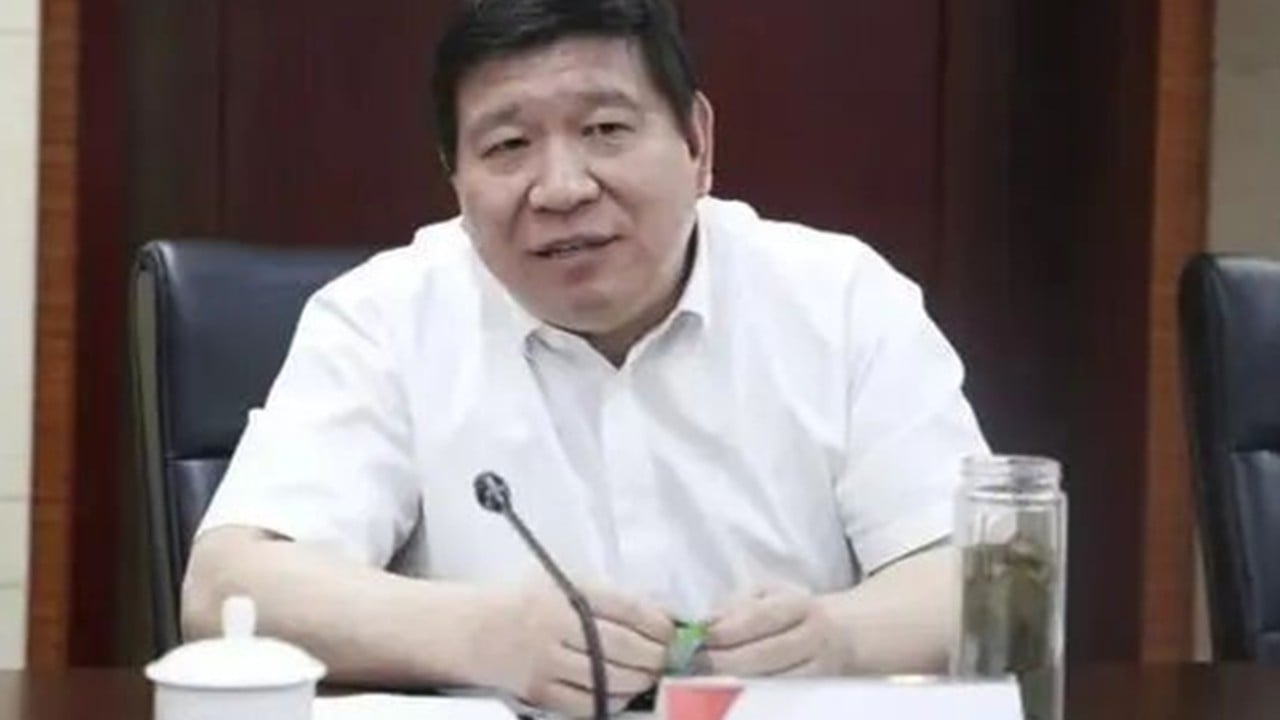
On June 10, 2026, provincial anti-graft authorities announced that Zhang Heping, deputy director of the Shanxi Provincial Department of Emergency Management, was officially under investigation for serious violations of Party discipline and law. Zhang wasn't just a low-level paper pusher. He was a veteran of the coal industry, a former vice-mayor of Changzhi, and the guy explicitly responsible for coal mine safety law enforcement, ventilation safety supervision, and overall workplace oversight in the province.
He isn't alone. Zhao Yongjin, the Party chief of Qinyuan county, and Sun Xiaoye, the director of the local emergency management bureau, have also been swept up in the probe.
Putting officials in handcuffs after the fact creates a tough optics campaign, but it exposes a deeper failure. If a mine is publicly flagged as a ticking time bomb by the national government, why does it take a body count to get local safety regulators to do their jobs?
Profits Over People in the Shafts
The details trickling out of the investigation show that safety protocols weren't just ignored—they were completely bypassed.
Consider what the rescue teams faced when they rushed to the site. The blueprints provided by the Tongzhou Group didn't match the actual underground layout. Rescuers had to improvise blindly in dark, toxic tunnels where carbon monoxide levels blew past lethal limits. They had to deploy mine inspection robots with infrared cameras just to reach areas too dangerous for humans.
Worse, state media revealed that more than half of the 247 miners underground at the time of the blast hadn't even been properly registered. Miners are supposed to pass facial recognition checks or carry location-tracking cards before descending into the earth. Tongzhou Group didn't bother. Surviving workers even told journalists they had to buy their own safety helmets with their own money.
When a company refuses to pay for basic helmets and lies about who is underground, they aren't managing a business. They are running a gambling operation with human lives.
Surviving the Invisible Killer
Gas explosions in coal mines are uniquely terrifying because you rarely see them coming. Wang Yong, one of the injured miners who survived the blast, recounted his experience from a hospital bed. He didn't hear a massive boom. Instead, he suddenly saw a heavy cloud of smoke and smelled the distinct, sharp scent of sulphur, like detonated firecrackers.
He yelled for his crew to run. As they scrambled toward safety, he watched his coworkers choke on the toxic fumes and collapse around him before he blacked out himself. He woke up an hour later, dragged another unconscious worker to his feet, and somehow stumbled out alive. Most of the 128 hospitalized survivors are now undergoing high-pressure oxygen therapy to combat severe carbon monoxide poisoning.
Why the System Keeps Breaking
To understand why this keeps happening, you have to look at the economic pressure cooker that is Shanxi province. Shanxi is China's coal kingdom. In 2025 alone, the province dug up 1.3 billion tons of coal—accounting for roughly a third of the entire nation's output.
Even as the country builds out massive renewable energy infrastructure, coal remains the bedrock of the power grid because it's cheap and readily available. When the pressure is on to meet production quotas and keep the lights on in major cities, local officials face conflicting incentives. Do they aggressively shut down non-compliant mines and risk dropping production numbers, or do they wink and nod at safety reports to keep the coal moving?
History shows us what happens when production wins. Look at the numbers over the last few years:
- 2020: 218 mining deaths
- 2021: 163 mining deaths
- 2022: 193 mining deaths
- 2023: 162 mining deaths (plus 53 killed in a massive open-pit mine collapse in Inner Mongolia)
The official death tolls have certainly dropped compared to the early 2000s, when thousands of miners died every year. But the Liushenyu disaster proves that the structural rot hasn't been fixed. The safety culture remains reactive rather than proactive.
What Needs to Change Next
The State Council has ordered a blanket, uncompromising inspection of all coal mines across the country, focusing on gas drainage, ventilation systems, and accurate underground mapping. Tongzhou Group has suspended operations at all four of its mines.
But a temporary crackdown won't fix a systemic enforcement problem. If you run a business or manage operational risk in any heavy industry, the lessons from Liushenyu are clear and actionable.
First, audit your ground-level data compliance immediately. If your digital access logs, facial recognition metrics, or headcount sheets don't match the actual human bodies on your site, your safety system is broken. Don't wait for a regulator to point it out.
Second, verify your emergency infrastructure. The biggest hurdle for the Liushenyu rescue teams was inaccurate blueprints. Ensure your facility maps, emergency exits, and ventilation schemes are updated in real-time, not just when you need to renew a permit.
Third, stop treating safety checklists as a bureaucratic hurdle. If an internal or external audit flags a high-risk liability—like high gas content or faulty equipment—fix it now. Ignoring a warning sign to chase a short-term production target eventually carries a price tag that no company can afford to pay.
To learn more about the immediate aftermath of the explosion and see the rescue operations on the ground, watch this ABC News broadcast on the Liushenyu mine disaster. This video shows the intense emergency response at the site in Shanxi province and details the initial detention of the mine's executives.