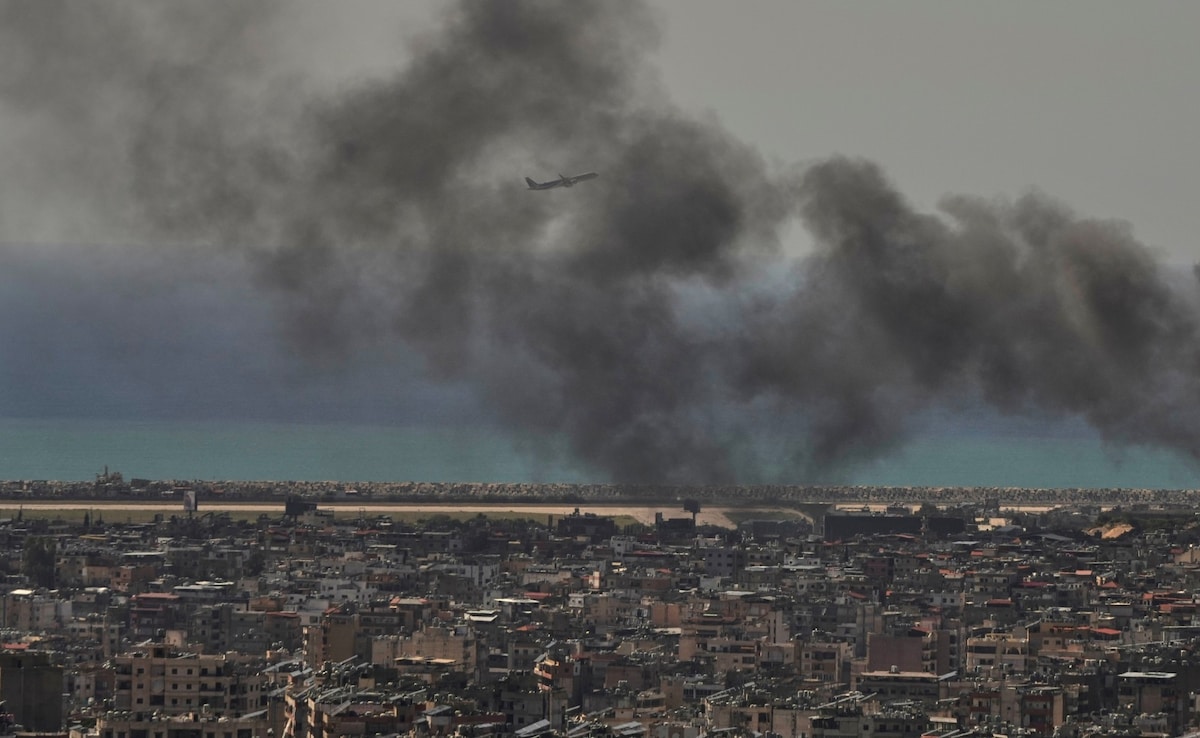
The media loves a neat narrative. Ten dead, dozens injured, a "tragic accident" at a primary lithium battery plant in Hwaseong. They blame poor exits. They blame lack of training. They blame the building code.
They are wrong.
The Hwaseong disaster isn't a failure of safety protocols; it is a brutal reminder that we are building a global economy on a chemistry that is fundamentally unmanageable once it goes rogue. The industry consensus is that "better management" prevents these fires. I have spent a decade in industrial risk assessment, and I can tell you: once a lithium-thionyl chloride or lithium-ion cell hits thermal runaway, your "management" is a polite suggestion to a physical god.
We are pretending that because we can charge our phones, we have tamed the lightning. We haven't. We’ve just miniaturized the bomb.
The Myth of the Controllable Fire
The standard reporting on the Aricell fire focuses on why the workers couldn't get out. While that matters for the lawsuits, it ignores the physical reality of the fuel source. Lithium fires are not like wood fires or even chemical spills. They are self-oxidizing.
When a lithium battery fails, it undergoes thermal runaway. This is an exothermic reaction where the internal temperature rises, which triggers further reactions, which raises the temperature further. It is a feedback loop of destruction. Most importantly, these fires produce their own oxygen.
You cannot smother them with conventional foam. You cannot starve them of air. You are essentially watching a solid-state rocket motor ignite inside a warehouse. To suggest that "better fire extinguishers" would have saved the day is a technical lie. The only thing that stops a lithium-thionyl chloride fire of that scale is the complete consumption of the reactant or an ungodly amount of water used solely for cooling—not extinguishing.
Why "Safety Training" is a Corporate Shield
Companies talk about safety training to lower their insurance premiums, not to save lives in a lithium flashover. In the Hwaseong plant, reports suggest the fire spread across the floor in seconds.
Traditional fire drills assume you have minutes. With lithium-based primary cells (non-rechargeable), the energy density is so high that the transition from "smoke" to "inferno" happens in a timeframe that human biology cannot outrun.
If you are standing five feet from a pallet of 35,000 lithium batteries that begins to chain-react, you are already dead. No amount of "standard operating procedures" changes the kinetic energy release of that many joules. The industry refuses to admit that some manufacturing processes are inherently too dangerous for high-density human staffing, yet we continue to stack workers next to these chemical landmines because it’s cheaper than full automation.
The Dirty Secret of Primary Cells
Everyone talks about EV batteries. Almost no one talks about Lithium-Thionyl Chloride ($Li-SOCl_2$). These are the batteries Aricell produced. They are prized for their incredible shelf life and energy density. They power military gear, medical devices, and smart meters.
They are also significantly more volatile than the Lithium-Iron Phosphate ($LiFePO_4$) batteries in your neighbor's Tesla.
When $Li-SOCl_2$ cells rupture, they don't just burn. They release toxic gases including sulfur dioxide and hydrogen chloride. The "smoke" the workers inhaled wasn't just carbon; it was an acid mist that liquefies lung tissue on contact.
The industry hides behind the "safe handling" label. But "safe handling" assumes the cell remains intact. In a manufacturing environment where cells are being tested, sorted, and packed, the statistical probability of a single cell failure is never zero. And in this industry, a single cell failure is a systemic death sentence.
The Cost of the "Green" Transition
We are currently in a global arms race to produce energy storage. South Korea, China, and the US are sprinting to build "Gigafactories."
The "lazy consensus" says that as we scale, we get safer. The opposite is true. As we scale, the consequence of failure grows exponentially while the probability of failure only drops linearly.
I’ve walked through facilities where safety officers bragged about their "state-of-the-art" sprinklers. I’ve had to be the one to tell them that their sprinklers would actually accelerate the reaction in certain lithium fires or, at best, create a toxic runoff that would poison the local water table for a generation.
Stop Fixing the Factory, Fix the Chemistry
The reaction to Hwaseong will be more inspections. More fines. More red tape.
This is a waste of time.
If we want to stop killing workers, we have to stop the obsession with liquid-electrolyte lithium-based chemistries in high-density manufacturing. The "unconventional advice" that the industry hates? Stop scaling until Solid-State is viable.
Solid-state batteries replace the flammable liquid electrolyte with a solid material. They are significantly harder to ignite. But they are expensive. They are hard to mass-produce. So, the industry chooses to stay with the "liquid fire" because the margins are better.
We are trading lives for a lower Bill of Materials (BOM).
The Illusion of Regulation
South Korea has some of the most rigorous industrial regulations in the world. It didn't matter.
Regulation is a rearview mirror. It tells you what went wrong last time. It cannot account for the sheer speed of a chemical chain reaction. The Aricell facility was likely "compliant" on paper.
- Fire exits? Marked.
- Extinguishers? Checked.
- Alarms? Operational.
All of it was useless against the physics of lithium. When the energy density of your product exceeds the ability of your infrastructure to contain it, your regulations are just a paper trail for the coroner.
The Brutal Reality for Investors and OEMs
If you are an OEM (Original Equipment Manufacturer) sourcing batteries, you are one factory fire away from a total supply chain collapse and a PR nightmare.
You think you have "diversified" your risk by sourcing from reputable Korean or Japanese firms over "cheap" alternatives. Hwaseong proves that the chemistry doesn't care about the brand name.
The "battle scars" of this industry show that we are currently in the "Lead-Acid" phase of 19th-century ignorance, pretending we have 21st-century control. We are handling materials that are fundamentally more dangerous than gasoline, with a fraction of the containment infrastructure.
The Problem With "People Also Ask"
When people ask, "Are lithium batteries safe?" the honest answer is: No. They are "managed." We have accepted a baseline level of risk that is actually quite high, masked by the fact that most failures happen in isolation—one phone in a pocket, one laptop in a bag.
When you move that failure into a factory with 35,000 units, the mask slips. The question shouldn't be "How do we make the factory safer?" The question must be "Why are we still using a chemistry that turns a small error into a massacre?"
The Final Reckoning
The Aricell fire will be forgotten by the next news cycle. The company will be rebranded or liquidated. The global hunger for batteries will continue unabated.
But the physics hasn't changed.
The next fire is already cooling in a warehouse somewhere, waiting for a single microscopic dendrite to bridge a gap, or a single forklift to bump a pallet, or a single technician to miss a voltage fluctuation.
If you think your "safety culture" can stop a thermal runaway, you don't understand the chemistry. You are just a gambler who hasn't lost his shirt yet.
Stop calling it a tragedy. Call it what it is: the inevitable cost of a world that demands cheap, high-density energy but refuses to pay for the stable chemistry required to make it.
The fire didn't break the system. The fire is the system.