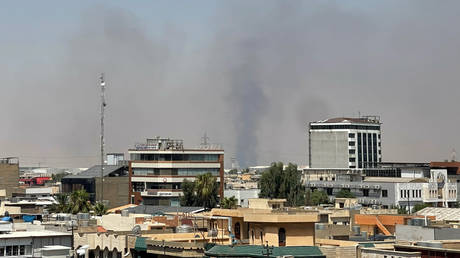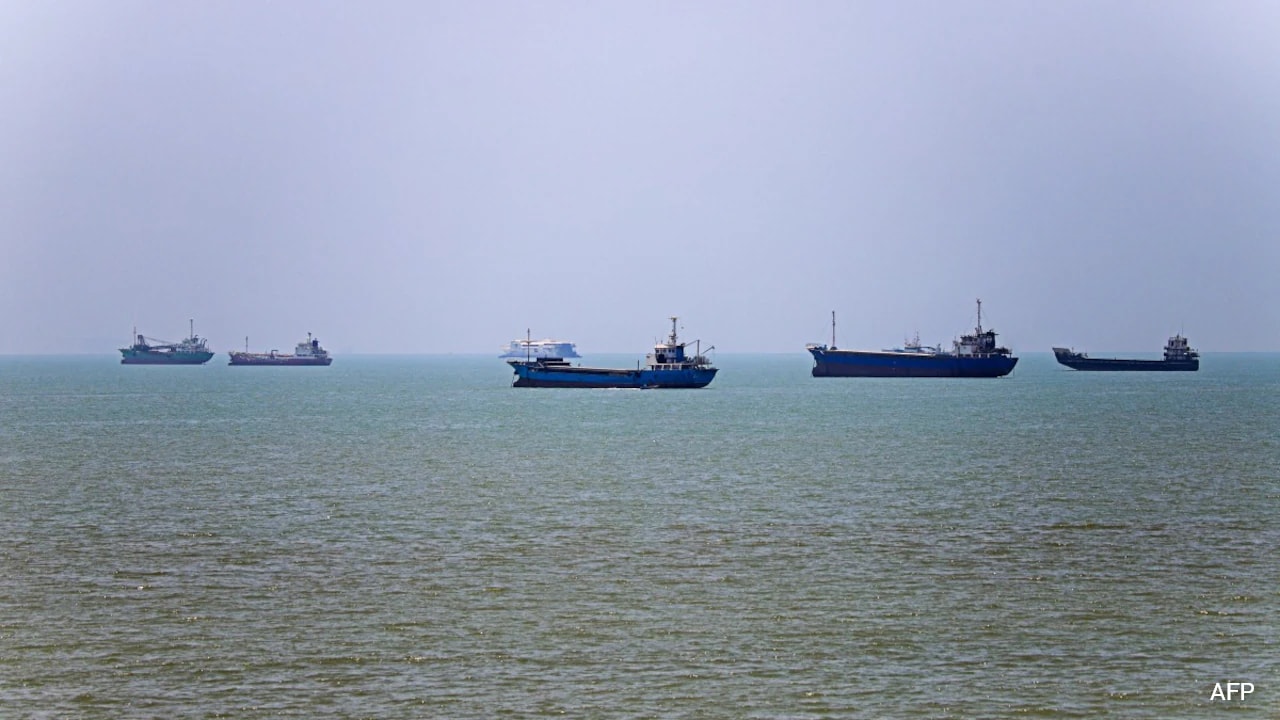
Headline spinners want you to clap because twenty-eight crew members survived a missile strike on an LPG tanker off the coast of Iran. They package it as a victory. "All Safe," the press releases sing. Corporate PR departments slap each other on the back, maritime flags flash green on monitoring dashboards, and energy traders go back to sleep.
That reaction is pure operational delusion. For a different look, consider: this related article.
Calling a commercial vessel strike a non-event because nobody ended up in a body bag is how shipping lines gaslight the public and hide a rotting maritime security architecture. I spent twenty years sitting in operational command hubs and risk syndicates, watching executives treat human seafarers like expendable operational buffer stock. When a kinetic strike hits a pressurized gas carrier and the vessel doesn't explode into a thermonuclear fireball, you didn't manage a crisis. You got lucky.
The mainstream press bought the narrative hook, line, and sinker. They reported the survival of the crew as the story. The real story is that global energy corridors are functioning on sheer probability, backed by paper-thin insurance policies and an exploited South Asian workforce taking all the physical risk for offshore shell companies. Further analysis on this matter has been published by Reuters.
The All Safe Deception
When an LPG carrier taking fire in sensitive regional waters gets reported with an "all safe" banner, ask yourself who benefits from that framing.
The ship operator benefits. They dodge immediate regulatory freeze orders and avoid catastrophic liability claims from charterers.
The insurer benefits. They keep war-risk surcharges high without having to pay out a total constructive loss claim on a vessel hull worth eighty million dollars.
The flag-of-convenience register benefits. Marshall Islands, Panama, or Liberia get to log another incident without an official flag-state investigation into crew endangerment.
Meanwhile, twenty-eight seafarers are sitting on top of thousands of metric tons of pressurized liquid petroleum gas, surrounded by breached bulkheads, smoke-charred decks, and active secondary fire hazards. Calling those men "safe" is an insult to basic naval engineering and human risk management.
Physically intact does not equal safe.
Modern liquefied gas tankers are floating bombs. Liquefied petroleum gas—typically a mix of propane and butane—is held under immense pressure or refrigerated at temperatures below minus forty degrees. A hull breach near the cargo machinery room or cargo manifolds does not just risk a fire. It risks a Boiling Liquid Expanding Vapor Explosion (BLEVE). If a BLEVE occurs, the blast radius doesn't leave survivors. It vaporizes everything within a half-mile radius in milliseconds.
If a drone or missile hits a gas tanker and the cargo tank insulation holds, it is a failure of targeting by the attacker, not a triumph of defense by the ship operator. Reporting this as a happy ending teaches global logistics networks to tolerate unacceptable operational exposure.
South Asian Seafarers as Low-Cost Risk Sponge
Look at the demographics in almost every commercial shipping disaster across sensitive naval corridors over the past decade. The officer corps and crew are overwhelmingly Indian, Filipino, Ukrainian, or Bangladeshi.
This is not an accident of global trade. It is a deliberate labor arbitrage strategy designed to absorb physical risk away from Western cargo owners.
+---------------------------+-----------------------------------+------------------------------------+
| Metrics                   | Standard Corporate Narrative      | Operational Reality                |
+---------------------------+-----------------------------------+------------------------------------+
| Crew Status               | "All 28 Indian Crew Safe"         | Traumatized in an active war zone  |
| Incident Classification   | Minor Security Event              | Catastrophic Structural Vulnerability|
| Risk Mitigation Strategy  | Rerouting & War Surcharges        | Passing Costs to Consumer & Crew   |
| Regulatory Response       | Routine Advisory Notices          | Complete Absence of Enforcement    |
+---------------------------+-----------------------------------+------------------------------------+
When an asset manager in London or Houston charters a vessel to lift gas out of the Persian Gulf, they buy insurance derivatives to hedge financial downside. But they don't sit in the bridge when radar warnings flash. They hire crewing agencies in Mumbai or Manila to supply labor at a fraction of Western wage scales.
These crewing contracts contain clauses that make refusing to sail into high-risk areas legally complicated and financially ruinous for the seafarer. If a seafarer refuses to board a ship heading into a designated high-risk area, they risk blacklisting by crewing agencies, loss of wages, and immediate termination.
Imagine a scenario where a master on a loaded LPG tanker receives intelligence that naval drones are active along his planned transit line. He knows his vessel lacks passive defensive countermeasures. He knows his point-defense protocols consist of a firehose tied to the railing and two unarmed lookouts with binoculars.
Does he turn back?
He can't. Charterparty agreements force him forward. If he delays the vessel without an explicit navy-mandated corridor closure, the charterer hits the shipowner with demurrage claims running fifty thousand dollars a day. The shipowner pressures the master. The master pushes the crew.
The twenty-eight Indian crew members on that LPG carrier didn't survive because the shipping line had a brilliant security strategy. They survived because a weapon's warhead malfunctioned or struck a non-critical ballast space. Relying on an enemy's bad marksmanship as your primary crew safety protocol is criminal negligence disguised as corporate resilience.
The War Risk Premium Racket
Follow the money. War in maritime chokepoints is the most profitable scenario possible for specific segments of the marine insurance market.
When conflict flares up in critical shipping lanes, Lloyd's Joint War Committee expands its areas of perceived risk. Instantly, every vessel entering those coordinates must purchase additional premium cover for war risks. These premiums can jump from a negligible fraction of hull value to over one percent of total ship value for a single seven-day transit.
For a hundred-million-dollar tanker, that is one million dollars in pure risk premium for one week of sailing.
Where does that money go? It flows into London and Zurich underwriting syndicates.
Where does it not go?
- It does not go into hiring armed private maritime security teams for the vessel.
- It does not go into upgrading shipboard physical defenses.
- It does not go into hazard pay for the Indian crew on board, who often receive a meager fifty to one hundred percent bonus on their basic daily rate—a pittance compared to the millions generated in war premiums.
The industry has built a financial machinery that monetizes risk without resolving it. Shipowners pass the extra insurance costs straight to energy traders, who pass them to utilities, who pass them to consumers at the fuel pump. Everyone gets paid along the chain except the crew facing the direct threat of burning to death at sea.
Armed Escorts Are a Myth
Whenever these attacks happen, maritime industry bodies issue glossy press statements calling for "international naval coalitions" to protect trade. The media repeats this plea as if it represents a realistic operational solution.
It is pure fantasy.
Naval escort operations do not scale to cover commercial maritime volume. The United States Navy, the British Royal Navy, and their allies do not possess enough surface combatants to convoy every commercial tanker through narrow maritime corridors.
Consider the physical reality of maritime transit in restricted waters:
- Over one hundred commercial vessels pass through major regional chokepoints every single day.
- A single guided-missile destroyer can effectively shield perhaps two or three merchant ships at a time against saturation drone attacks.
- Commercial tankers move at vastly different speeds, carry incompatible cargo types, and operate on disjointed schedules.
Organizing formal convoys, like those used during the Iran-Iraq Tanker War of the 1980s or World War II, would paralyze global trade. The port delays alone would drive energy markets into chaotic price swings.
So instead, navies run "presence missions." They float a few frigates decades old in deep water, miles away from where commercial ships are actually exposed to land-based anti-ship cruise missiles and low-cost uncrewed aerial vehicles.
It is security theater. It exists to calm futures markets, not to protect merchant mariners.
The Technical Vulnerability Nobody Wants to Talk About
The media treats a ship attack like a car accident: impact happens, damage is assessed, repairs are ordered.
This shows a complete lack of technical understanding of modern LPG carrier construction.
+----------------------------------------------------------------------------------------------------+
| LPG TANKER STRUCTURAL ANATOMY                                                                     |
|                                                                                                    |
| [ Outer Hull ] ---> [ Insulation Layer ] ---> [ Primary Cargo Barrier ] ---> [ Pressurized Gas ]   |
|         ^                                                                                          |
|         |-- Kinetic Impact Point (Shrapnel/Blast destabilizes structural integrity)                |
+----------------------------------------------------------------------------------------------------+
Unlike crude oil tankers, which carry stable heavy liquid that requires significant thermal energy to ignite, LPG carriers store gases under pressure or extreme cryogenic cooling.
When an anti-ship missile or explosive drone strikes an LPG ship, the immediate blast is only the first hazard. The structural shockwaves traveling through the vessel frame present an equal danger:
- Micro-fracturing of containment liners: Cryogenic tanks rely on specialized nickel-steel or aluminum alloys. A kinetic shockwave can introduce micro-cracks that aren't immediately visible to crew members equipped with basic inspection gear.
- Relief valve failure: The extreme pressure changes caused by thermal shifts post-impact can force relief valves to vent flammable gas directly onto open decks.
- Loss of inert gas pressure: Double-hull spaces rely on nitrogen inerting systems to prevent explosive atmospheres. Damage to the inert gas generator or piping turns void spaces into explosive traps.
When an LPG vessel sustains an impact and manages to reach a safe anchorage, it is an active hazard. It cannot dock at standard gas terminals because receiving ports refuse to accept damaged pressure vessels. The ship becomes a pariah, forced to hover offshore while engineers attempt dangerous ship-to-ship transfers of volatile cargo in open waters.
Yet the news cycle moves on within six hours because the initial report said "all crew safe."
Breaking the Maritime Denial Loop
If the maritime industry actually cared about fixing this security breakdown instead of managing public relations, it would abandon its current playbook entirely.
First, stop allowing vessels to enter active conflict zones under flag-of-convenience registries that lack military protection capabilities. If a vessel flies the flag of a small island nation with no navy, that nation cannot project power to protect its fleet. Owners choose these flags to dodge taxes and labor regulations, then beg Western navies to rescue them when bullets start flying.
If you register in a tax haven, you should bear your own security costs.
Second, mandate real transparency in crewing contracts. Every seafarer operating in high-risk zones should have an absolute, legally enforceable right to refuse transit at any port of call, with full repatriated transit paid by the vessel owner, without blacklisting penalties.
Third, force charterers to pay direct, standardized hazard compensation directly to crews—not as a small percentage bonus, but as a fixed share of the vessel's war-risk premium earnings. If insurers charge a million dollars to underwrite a high-risk voyage, a fixed portion of that sum should go straight to the men sitting on the powder keg.
Finally, energy markets must price in the true cost of maritime logistics. Consumers and corporations have been spoiled by decades of artificially cheap sea transport built on the backs of invisible labor and unpriced geopolitical risk.
The incident off the Iranian coast wasn't a success story. It was an alarm bell that everyone in authority chose to snooze.
Next time, the warhead won't hit a harmless void space. The containment liner won't hold. The BLEVE will happen. And the headline won't say "All Safe"—it will report twenty-eight dead seafarers and an environmental disaster that shuts down a regional corridor for months.
Stop celebrating luck as if it were a strategy.