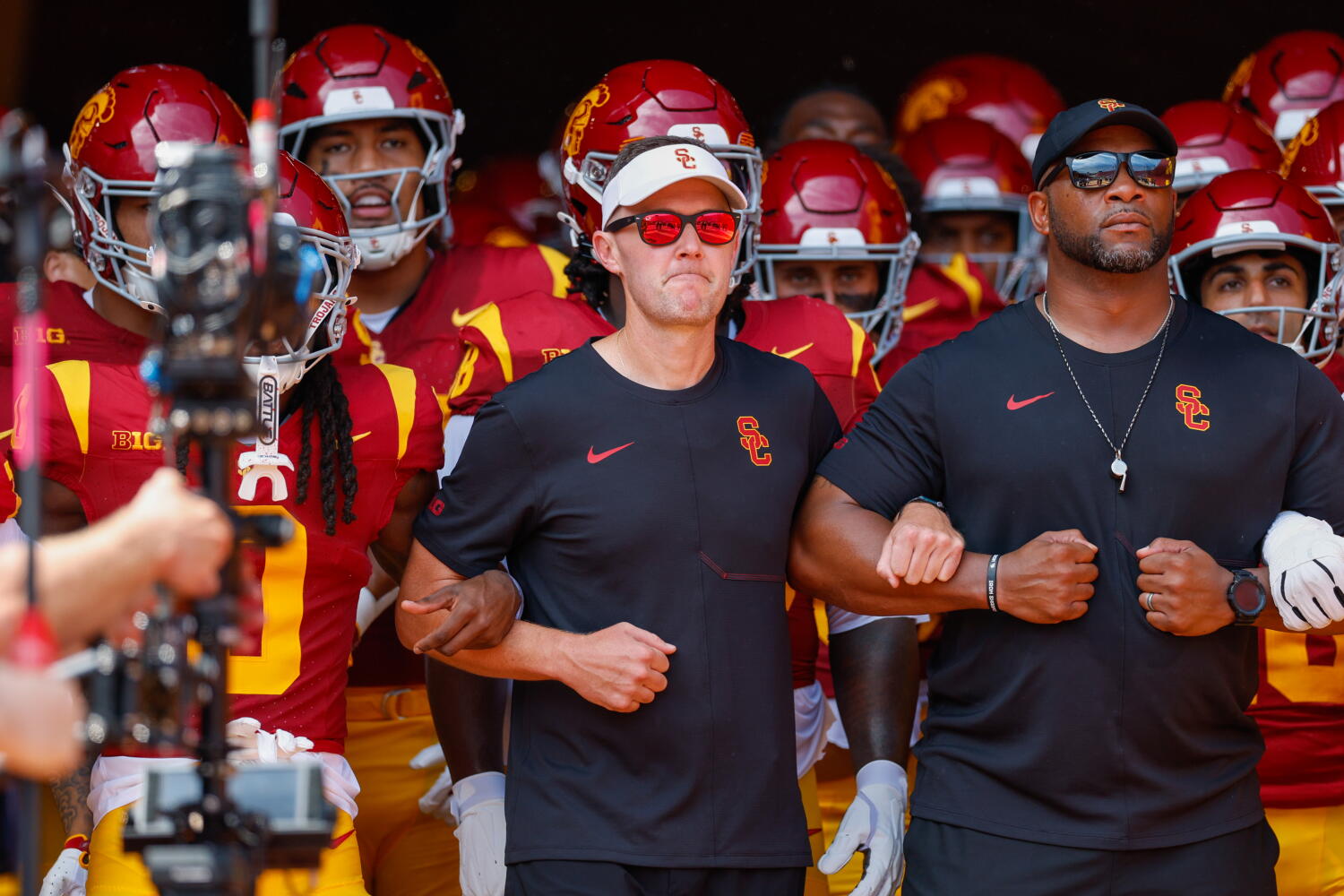
Stop repeating the cliches.
When a player looks into a microphone and parrots the tired script that "we treat every opponent the same," they are lying. Everyone in the room knows it. The coaching staff knows it. The fans know it. Yet, the media swallows the falsehood wholesale, framing it as the peak of discipline and elite focus.
It is time to dismantle the lazy consensus that emotional equalization is the key to winning high-stakes college football games. The premise that a team should approach an unranked conference bottom-feeder with the exact same internal temperature as a high-stakes, hostile road matchup against a powerhouse like Oregon is not professional. It is organizational malpractice.
Let us look at the reality of human biology and high-performance psychology. The human body does not have a single, static gear for output. Adrenaline, cortisol, focus, and physical recovery are finite resources governed by neural thresholds. Pretending a rivalry clash or a playoff eliminator carries the same weight as a routine September tune-up forces athletes to suppress their own neurological instincts. You cannot wire a competitor to ignore the magnitude of the moment without simultaneously draining their competitive edge.
The Myth of the Neutral Baseline
Coaches preach consistency because variance is terrifying. A coach wants a predictable machine that executes assignments regardless of whether the stadium holds ninety thousand screaming fans or a scattering of indifferent parents. But football is not an assembly line. It is a violent, high-variance gladiatorial contest played by eighteen-to-twenty-two-year-olds whose emotional spikes dictate execution speed.
When USC or any elite program claims they treat Oregon the same as anyone else, they are misrepresenting what elite preparation actually requires. You do not prepare for a disciplined, high-tempo offensive machine by sticking to your generic weekly script. You prepare by acknowledging that the margin for error has shrunk to zero.
Imagine a scenario where a financial trader treats a high-risk merger exactly the same as buying a Treasury bill. They would be out of a job by noon. The risk profile dictates the strategy. In football, ignoring the unique threat of an opponent like Oregon—their speed, their schematic tendencies, the deafening noise of Autzen Stadium—just to maintain a manufactured sense of calm is a recipe for a blowout loss.
What the Data Actually Tells Us
Look at the history of upsets. Teams that successfully pull off major road wins against top-tier opponents rarely do so by pretending it is just another Saturday. They embrace the target. They hyper-focus on the specific vulnerabilities of the opponent.
Oregon does not play like a mid-tier program, and preparing for them requires an acknowledgment of their specific pressure points. When a defense faces an elite spread attack, vanilla coverages get exposed. If a secondary coach tells his cornerbacks to play with the same spacing and technique they used against a run-first service academy, they will spend the afternoon chasing receivers across the turf.
The successful contrarian approach accepts that human beings respond to stakes. Instead of trying to flatten those emotions into a robotic monotone, elite leaders harness them. They channel the anxiety of a massive game into hyper-focused preparation.
The Cost of Honesty
Admitting that certain games matter more carries its own danger. If you tell players that the Oregon game is the season, you risk burning them out emotionally before November even arrives. That is the legitimate downside of the anti-neutrality stance. Over-hyping a single opponent can lead to emotional exhaustion or looking past a trap game the following week.
That is why the middle ground exists, but it is not the lie of treating everyone the same. The accurate approach is compartmentalized intensity. You treat the preparation process with absolute rigor every single week, but you acknowledge the reality of the opponent when the tactical adjustments are drawn on the whiteboard.
You do not treat everyone the same. You treat everyone according to the mathematical threat they pose to your championship aspirations.
Dismantling the Press Conference Script
The next time a player stands at the podium and recites the boilerplate line about treating the opponent on the jersey as irrelevant, recognize it for what it is: a shield against accountability. It protects them from admitting that a game got too big, or that they overlooked a challenge.
Real competitors do not need to lie to themselves about the stakes. They want the pressure. They want the bright lights. And they know that pretending a massive conference clash is just another Tuesday practice is the fastest way to get embarrassed on national television.
Throw out the script. Acknowledge the stakes, build the specific game plan, and stop pretending that every Saturday holds the same weight.


