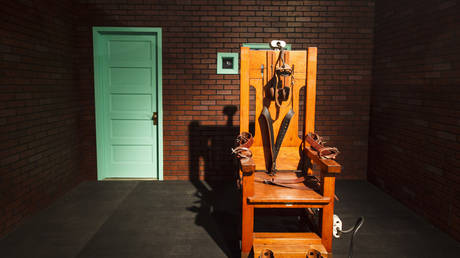
The national discourse surrounding capital punishment is currently choking on its own hypocrisy. When news breaks that states are reconsidering firing squads, the gas chamber, or the electric chair, the predictable chorus of outrage erupts. Pundits and activists decry a "return to the dark ages." They scream about human rights, dignity, and the moral erosion of the state. It is a tired, performative routine. It ignores the central, inconvenient truth that the current standard—lethal injection—is not a triumph of mercy. It is a failure of theater.
We have spent decades trying to sanitize the act of killing. We wanted it to look like surgery. We wanted it to look like falling asleep in a hospital bed. We chose lethal injection not because it was the most reliable or the most humane method, but because it made the executioners feel better. It allowed the state to drape a cloak of medical professionalism over an act of raw, irreversible state violence. By forcing the process to mimic a clinical procedure, we created a system that is inherently fragile, prone to catastrophic failure, and perpetually hostage to the supply chain of private pharmaceutical companies.
The outcry against older, mechanical methods is driven by an obsession with appearance rather than reality. We recoil at the firing squad because it is messy and overtly violent. We recoil at the electric chair because it is visually grotesque. But let us be brutally honest: which is more cruel—a method that is statistically immediate and physically decisive, or a botched lethal injection that turns into a prolonged, agonizing pharmacological experiment?
The "medical" standard of lethal injection was never subjected to the kind of rigorous clinical testing we demand for a basic flu vaccine. It was a cobbled-together protocol designed to look comfortable for the witnesses. In doing so, we sacrificed precision for aesthetics. When the drugs are unavailable because manufacturers refuse to participate in state-sanctioned death, states scramble. They use untried combinations. They rely on prison staff with little to no medical training to find veins and administer complex chemical cocktails. This is where the real horror resides. The botched executions that scar our headlines are the direct result of our insistence on maintaining the medical facade.
Consider the physics of the alternatives. A firing squad, if executed correctly, severs the spinal cord or destroys the brain stem instantly. The speed of conduction of pain signals is slower than the speed of neural destruction. Death is nearly instantaneous. There is no guesswork about drug absorption or vein integrity. There is no anxiety about whether the sedative has effectively rendered the prisoner unconscious before the paralytic stops their breathing. It is primitive, yes. But it is reliable. And in a system where the government claims the authority to end a life, reliability should rank higher than the comfort of the spectators.
The courts have spent decades muddling the interpretation of the Eighth Amendment. They have effectively ruled that the Constitution prohibits "cruel and unusual" punishment, yet they have danced around what that means in practice. The judiciary has allowed itself to be trapped by the assumption that there is a "painless" way to kill. There is not. There is only the minimization of suffering. When we prioritize the appearance of a peaceful transition over the actual physiological reality of the outcome, we are choosing comfort over competence.
Imagine a scenario where the state is required to be as transparent about its methods as it is about its intent. If we are going to maintain the death penalty—a policy supported by a significant portion of the electorate—we owe it to ourselves to stop pretending that we can make it a sterile, invisible event. The move toward older methods is not a regression. It is a forced acknowledgment that the "medical" experiment has failed.
The primary driver behind this shift is simple: practicality. Pharmaceutical companies do not want their products associated with death, and they have successfully locked the doors of the supply chain. States are running out of options. They are looking at the firing squad and the gas chamber not because they want to return to medieval practices, but because these methods do not require the cooperation of private corporations or the pretense of medical expertise. They are self-contained. They are manageable within the existing infrastructure of a corrections facility.
The opposition frames this as a moral question. They frame it as a choice between "civilized" and "barbaric." This is a shallow framing that ignores the structural failures of the current system. True barbarism is the continued reliance on a method that frequently malfunctions because we are too cowardly to admit what we are actually doing. True barbarism is the refusal to accept that when the state takes a life, it cannot be masked as a therapeutic intervention.
The critics of these "new" old methods argue that they are archaic. They point to the history of botched electrocutions or the suffocating horror of the gas chamber. They are correct that these methods were historically abused and poorly managed. But the current reliance on lethal injection is equally riddled with error. The difference is that we have blinded ourselves to the failures of the injection protocol by calling them "medical complications" rather than "execution failures."
We need to confront the fact that our discomfort with the firing squad is a reflection of our own squeamishness. We want the death penalty, but we want it kept out of sight and out of mind. We want to believe that the person is simply drifting away under the influence of a sedative. The firing squad destroys that illusion. It forces the reality of the act into the light. If society is unwilling to face the visceral nature of what it is ordering the state to do, perhaps society should not be ordering it at all.
However, as long as the death penalty remains on the books, the debate must shift from "how do we make it look nice" to "how do we ensure it is decisive." The obsession with medicalized killing has led us down a path of error. It has turned a duty of the state into a chaotic, often cruel drama played out in sterile rooms.
The legal arguments against returning to older methods often rely on the idea that society's "evolving standards of decency" preclude such measures. But what if society's standards have not evolved as much as the legal elite would like to believe? Public opinion on the death penalty remains split and hardened. The political will to execute exists. The issue is entirely technical and logistical.
We are seeing a convergence of necessity. The supply chain has evaporated. The legal challenges to injection protocols have become endless, costly, and ultimately futile for those seeking to stop the practice. The result is a system stuck in a permanent state of delay and incompetence. Returning to mechanical methods—firing squads and nitrogen hypoxia—is the only way to bypass the pharmaceutical blockade.
Nitrogen hypoxia, in particular, is being presented as a modern alternative, yet it is met with the same reflexive outrage. The claim is that it is a form of suffocation, and thus, torture. Again, the focus is on the emotional resonance of the word "suffocation" rather than the physiological reality. When nitrogen replaces oxygen, the brain loses the ability to function rapidly. There is no panic of carbon dioxide buildup, which is what creates the "air hunger" sensation. It is a rapid loss of consciousness. It is cleaner, faster, and more reliable than the standard injection protocol. Yet, the opposition treats it with the same vitriol because it violates the "medical" aesthetic.
We are watching the death of the "sanitized execution" myth. It was always a fantasy. It was always a way to make the citizenry feel better about the state-sanctioned taking of human life. The return to older methods is an inevitable consequence of our inability to maintain that fantasy. The state has an obligation to be effective. If it cannot be effective through the sterile, medicalized path it chose, it will inevitably revert to the only tools it has left.
The moral high ground claimed by those who demand lethal injection is entirely illusory. They are not advocating for a more humane death; they are advocating for a more comfortable lie. They are insisting that the state continue to play doctor, even when the medication is gone and the equipment is failing.
We must strip away the pretense. The firing squad, the electric chair, and gas-based protocols are not steps back into the darkness. They are steps into the light of reality. They remove the charade of the hospital room and force the state to own the act it is committing.
If we are going to continue with capital punishment, we should demand, above all, that it be decisive. We should demand that it be final. We should demand that it be free of the incompetence that currently plagues our system. We should stop pretending that the death penalty is anything other than what it is: the absolute, irreversible exercise of state power.
There is no elegant way to kill. There is no way to do it that will satisfy the moral anxieties of those who object to the act itself. The best we can do is acknowledge the reality of the situation and stop relying on a flawed, failing, and hypocritical framework that serves only to soothe our own consciences while delivering uncertainty to the condemned.
The choice before the states is not between the modern and the archaic. It is between a failed, performative system and a functional, honest one. It is time to drop the medical theater. It is time to stop the charade. It is time for brutal honesty.

/forbidden-city-beijing-8775c18670bd412d9b54daecba137c5c.jpg)