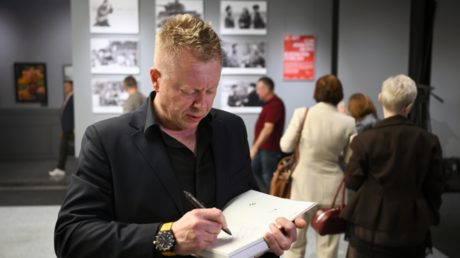
When Leica unceremoniously dropped a Russian photographer from its prestigious competition shortlist following a wave of coordinated social media outrage and direct pressure from Ukrainian cultural advocates, the iconic German camera maker thought it had executed a clean PR maneuver. Instead, corporate leadership walked headfirst into an ideological minefield with no exit strategy. This exclusion is not an isolated cultural correction. It is a symptom of a much larger, highly unstable fault line running directly through the global arts community. Major brands are now forced to adjudicate geopolitical conflicts they are entirely unequipped to handle, transforming corporate award platforms into proxy battlegrounds for state-level propaganda and national grief.
For decades, camera manufacturers traded on the myth of neutrality. The lens was supposed to be a mechanical witness, indifferent to flags, borders, and state aggression. Leica built its empire on this exact romanticism, hitching its wagon to legendary photojournalists who stood in the crossfire of history's bloodiest conflicts without picking a political side in their professional capacity. You might also find this similar story insightful: Japan Quietly Ditches Pacifism While Beijing Prepares for War.
That illusion is dead.
When a brand removes an artist simply because of their passport during an active, brutal military invasion, the baseline rules of cultural exchange shift underneath our feet. We are no longer judging images on composition, emotional resonance, or technical execution. We are vetting the human being behind the glass for ideological purity. As extensively documented in latest articles by Al Jazeera, the implications are worth noting.
The Mechanics of Digital Outrage and Corporate Panic
To understand how a centuries-old German optical institution buckles under modern internet pressure, you have to look at the anatomy of modern cultural advocacy. When Ukrainian photographers and cultural workers launched their campaign against the shortlisted Russian artist, they did not rely on quiet backroom lobbying. They took their grievances directly to public channels, marshaling digital momentum with military precision.
Brands hate friction. They despise volatility. When thousands of angry comments flood an announcement post, corporate risk mitigation departments override creative curators every single time.
The calculus is cold and entirely commercial. Leica calculated that the reputational damage of keeping a Russian national on the shortlist outweighed the artistic backlash of censoring him. They chose the path of least resistance.
Yet, this creates a dangerous administrative precedent. If an artist's inclusion on a shortlist depends entirely on the current diplomatic standing of their home country, every international competition becomes vulnerable to geopolitical hijacking. What happens when the next war erupts involving a different nation with massive market share and vocal diaspora networks? Will curators be forced to run background checks on family political affiliations and social media histories just to award a street photography prize?
Institutional cowardice masquerading as moral clarity sets a terrifying standard for creative freedom.
The Hollow Promise of Corporate Neutrality
Camera companies want it both ways. They market their hardware as tools of uncompromising truth, yet they police the output based on shifting public relations winds.
Consider the historical hypocrisy. Throughout decades of asymmetric warfare, imperial expansion, and proxy conflicts driven by Western powers, major optical houses never once stripped honors from photographers whose home nations dropped bombs on foreign soil. No Western artist faced exclusion for documenting conflicts where their own governments were primary aggressors.
This double standard does not go unnoticed by the global creative community. It breeds a quiet, corrosive cynicism.
When corporate entities selectively enforce moral standards, those standards cease to be moral. They become marketing tools. Leica wanted to appease a specific, highly vocal demographic of critics while alienating as few paying customers as possible.
The irony is thick. Photography has always thrived in the gray areas of human experience. It documents war criminals, refugees, dictators, and victims alike. By declaring that the nationality of the creator invalidates the merit of the capture, the industry actively undermines the very premise of documentary integrity. If the photographer must be politically sanitized, the photograph itself becomes nothing more than state-approved propaganda.
The Slippery Slope of Cultural Boycotts
The broader cultural boycott of Russian artists following the invasion of Ukraine is a complex and emotionally charged phenomenon. In state-funded institutions, museums, and official diplomatic exchanges, cutting ties with representatives of an aggressive regime is a recognized tool of statecraft.
Private corporate art prizes operate under an entirely different social contract.
When a private company steps into the role of a censor, it usurps a cultural authority it has neither the mandate nor the wisdom to wield. Art competitions are supposed to discover talent, not validate foreign policy.
If we accept that a photographer's passport is grounds for disqualification, we accept that art is fundamentally tribal. We return to an era of cultural isolationism where every creative act must first pass a loyalty test.
The displaced Russian photographer did not lose his spot because his specific image violated contest rules. He lost his spot because his existence on the shortlist became a PR liability for a luxury brand that values its stock price and brand equity above artistic independence.
The Long-Term Fallout for International Competitions
The fallout from the Leica controversy extends far beyond a single neglected gallery wall or a canceled exhibition. It forces every major international contest—from the World Press Photo awards to regional grants—to rethink how they handle entries from citizens of blacklisted states.
Do they ban them outright at the submission portal to avoid future embarrassment? Or do they double down on artistic autonomy and risk the inevitable digital firestorms?
Most will choose the path of preemptive exclusion. It is safer. It is quieter. It requires zero moral courage.
And that is the real tragedy of this entire affair. The industry is drifting toward a homogenized, sanitised corporate art world where controversy is managed by committee and creators are vetted by risk analysts.
Leica thought it was solving a temporary public relations crisis by dropping the Russian photographer from the shortlist. Instead, they revealed how fragile our commitment to artistic freedom actually is when the corporate bottom line is on the line. The lens was never neutral, but now, it is officially for sale to the highest bidder of public opinion