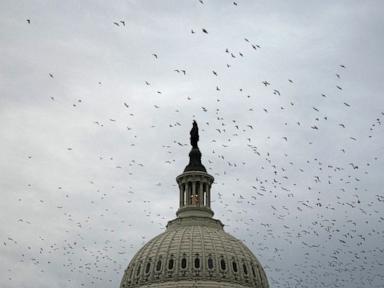
When Capitol Hill stumbles back into session for a fleeting legislative window before fleeing for another extended recess, the resulting output is never a masterclass in governance. It is a fire drill. Lawmakers return to Washington with a mountain of unfinished business, chief among them multi-billion-dollar military funding packages and the regulatory vacuum surrounding artificial intelligence. Instead of addressing structural defects, leadership relies on compressed timelines to force through bloated stopgap measures. This recurring cycle ensures that defense appropriations and national security tech policy remain captured by partisan theater and short-term survival instincts rather than long-term strategic clarity.
The Mechanics Of Manufactured Urgency
Every compressed legislative session follows a predictable script. Months evaporate in partisan stalemates, campaign fundraising sprints, and procedural posturing. Then, facing an imminent government shutdown or an arbitrary holiday deadline, leadership manufactures an emergency.
Panic replaces deliberation. Staffers draft thousand-page omnibus bills in secret chambers while members are explicitly instructed to vote without reading the text. This is not an accident of poor time management. It is a deliberate strategy used by political leadership to shield corporate provisions and questionable defense earmarks from public scrutiny.
When a bill must pass within forty-eight hours to keep the lights on, dissent becomes branded as treason against party unity. Nuance dies in the rush. Members who spent months claiming they would stand firm against bloated spending suddenly fold under the weight of manufactured crisis management. The public is left with a fait accompli, told that compromise required surrendering accountability.
Defense Spending As A Perpetual Shell Game
At the heart of every hurried congressional sprint lies the perennial battle over the defense budget. The ritual is old and tired. Proponents of increased military spending warn of rising global threats, pointing to geopolitical flashpoints across Eastern Europe, the Indo-Pacific, and the Middle East. Critics argue against unchecked waste within the Pentagon, citing repeated audit failures at the Department of Defense.
Yet, when the clock runs down, neither side wins a principled victory. Instead, both parties agree to inflate the topline budget numbers even further.
We see the same defense contractors securing massive multi-year procurement contracts with minimal oversight. Weapons systems routinely run billions of dollars over budget and years behind schedule. Yet Congress responds to these failures by throwing more money at the problem during these last-minute voting marathons.
Consider the procurement of next-generation defense hardware. When lawmakers rush through an appropriations bill in the dead of night, they routinely strip out transparency provisions designed to track cost overruns. The defense industrial complex understands this rhythm. They wait out the gridlock, knowing that the ultimate resolution will involve a rushed spending bill that prioritizes speed over fiscal discipline.
The Artificial Intelligence Policy Vacuum
While military budgets reliably inflate behind closed doors, policy concerning artificial intelligence suffers the opposite fate. It gets lost in the noise.
Lawmakers love holding hearings on artificial intelligence. They invite tech executives to testify, stage elaborate warnings about existential risks, and draft dozens of competing bills that sound impressive on television. But when the legislative calendar shrinks and actual voting begins, comprehensive artificial intelligence legislation routinely vanishes from the agenda.
The reasons are twofold. First, traditional lawmakers struggle to grasp the technical realities of algorithmic systems, machine learning models, and automated weapons deployment. Second, Silicon Valley lobbyists exert immense pressure to keep regulatory compliance weak or nonexistent.
In a normal legislative environment, establishing a regulatory framework for artificial intelligence requires months of committee work, expert testimony, and careful balancing between innovation and safety. But when Congress operates on adrenaline-fueled dashes between recesses, complex regulatory frameworks get jettisoned.
Instead, what emerges from these rushed sessions is usually toothless voluntary guidelines or narrow provisions tucked quietly inside massive defense authorization bills. This transforms artificial intelligence governance from a matter of public safety into an afterthought of military procurement. The Pentagon gets funding for algorithmic warfare capabilities, while civilian protections against automated bias, surveillance overreach, and deepfake proliferation are left hanging in bureaucratic limbo.
The True Cost Of Partisan Theater
The real casualty of this legislative dysfunction is public trust. Voters watch Washington lurch from one manufactured crisis to the next, accomplishing little of substance while padding the accounts of well-connected special interests.
The institutional incentives on Capitol Hill reward performance over production. A lawmaker gains more campaign donations and media attention by staging a viral committee confrontation than by spending three months negotiating a boring, effective piece of administrative reform.
When the legislative calendar is treated as an inconvenience to be avoided rather than a responsibility to be fulfilled, governance degrades into theater. Senators and representatives treat their time in Washington as a remote duty station before returning to the campaign trail to fundraise off the very dysfunction they created.
Why The System Refuses To Fix Itself
Reformers have proposed numerous structural changes to cure this chronic condition. Ban stock trading for members of Congress. Eliminate closed-door rule-writing. Lengthen the work week in Washington and shorten district work periods. Implement automatic government shutdowns if appropriations bills are not passed on time.
None of these proposals gain traction among leadership. The current system serves the ruling class of both political parties too well. It concentrates power in the hands of a few leaders who control the text of late-night omnibus bills. It allows members to campaign against the swamp while simultaneously trading favors within it.
Until voters demand accountability beyond partisan slogans, Congress will continue to treat its primary constitutional duties as optional chores. The cycle will repeat. The capital will empty out, leaving behind a trail of unfinished policy and inflated budgets, waiting for the next manufactured emergency to drag them back to work for a few days before they bolt again.