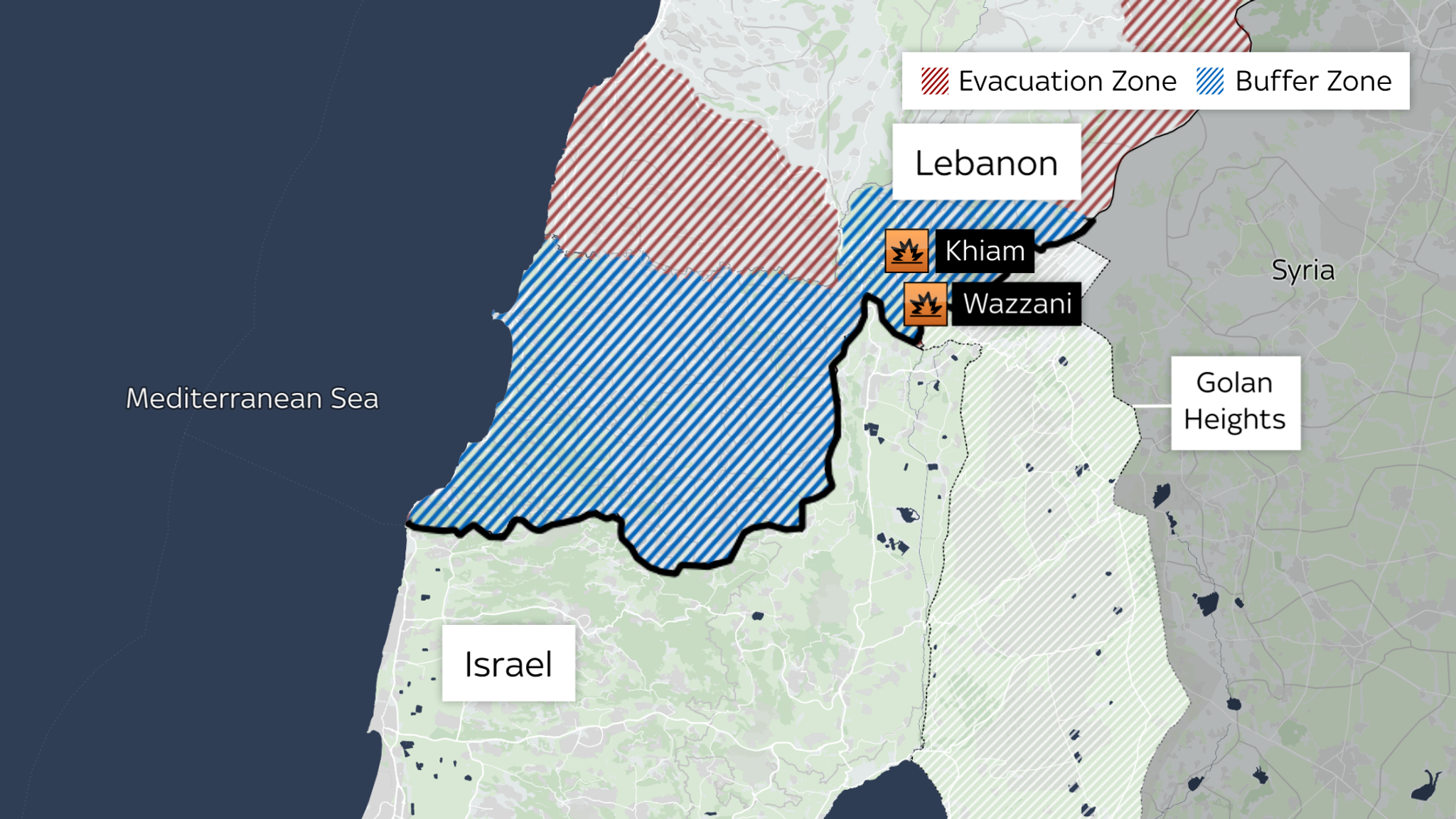
The border between Lebanon and Israel has long been defined by shadows. For decades, the area south of the Litani River functioned as a contested space where state authority was little more than a ghost. Now, a new mechanism has emerged: the pilot zone. These designated territories, starting with the villages of Froun, Srifa, and Zawtar Al-Gharbiya, represent an attempt to swap chaos for controlled stability. By isolating small sectors, the Military Coordination Group for Lebanon (MCG4L) seeks to prove that the Lebanese Armed Forces can replace non-state armed groups as the sole security provider.
At its heart, the pilot zone initiative functions as a high-stakes, phased experiment. The logic is cold and technical: establish a security pocket, clear it of unauthorized military infrastructure, and hold the line. It is not an attempt to force an immediate, nationwide peace. Instead, it is an engineering project of sovereignty. If the Lebanese military can maintain exclusive control in these three initial villages, the model provides a blueprint for expansion toward the Blue Line. If they fail, the entire framework risks collapse, likely cementing the status quo of regional insecurity for the foreseeable future.
The mechanics of this transition reveal a rigid sequence. Lebanese army units move into a pre-determined zone, third-party entities verify the absence of armed factions, and Israeli forces subsequently redeploy. This is not a simple handover. It is a synchronized dance of distrust where every movement is monitored by American, Lebanese, and Israeli counterparts. The selection of these specific villages was not random. Froun, Srifa, and Zawtar Al-Gharbiya create a geographic crescent, testing the military’s ability to secure diverse terrains ranging from dense valley networks to high-ground lookouts.
History tells us that security vacuums in this region rarely remain empty for long. The presence of the Lebanese army in these pilot zones is meant to act as a barrier against the return of Hezbollah, yet the military’s capacity to enforce this disarmament remains the single greatest variable. Some observers argue that the state’s weakness is a structural reality, not a temporary lack of resources. They suggest that asking the Lebanese Armed Forces to dismantle a deeply entrenched network within its own borders is akin to asking a house to prune its own foundation without collapsing.
Despite these warnings, proponents point to the economic and social necessity of the plan. Southern Lebanon has been ravaged by conflict, leaving thousands displaced and infrastructure in ruins. Restoration cannot begin while active conflict simmers in every valley. The pilot zones are intended to provide the security bedrock necessary for humanitarian aid and reconstruction to actually take hold. Without this, the return of residents is a pipe dream, and the southern districts will remain a wasteland of cratered roads and broken livelihoods.
The diplomatic track behind this initiative, often referred to as the Rome process, shows signs of severe strain. There have been moments where the entire project nearly unraveled due to accusations of foot-dragging and broken promises regarding troop withdrawals. The fragility of the trust involved is profound. Every checkpoint established by the Lebanese military is a test of political will, and every Israeli redeployment is a test of compliance. The Military Coordination Group for Lebanon sits in the middle, attempting to manage a process where the smallest incident could trigger a return to open hostilities.
Ultimately, the pilot zone concept forces a question that has haunted the region since the civil war: can the Lebanese state exist as a legitimate sovereign entity, or is it destined to be an auxiliary to non-state powers? The current experiment is not just about border security; it is about the legitimacy of the flag. If these zones succeed, the state gains a rare opportunity to prove its relevance to a cynical, battle-hardened populace. If they become mere symbols, failing to change the day-to-day reality of life under the shadow of the border, they will be remembered only as another failed diplomatic footnote. The next few weeks will decide which fate awaits them.
Understanding the Lebanon Pilot Zones
This video provides an overview of the specific villages selected for the pilot zones and the operational challenges involved in the ongoing security framework between Lebanon and Israel.