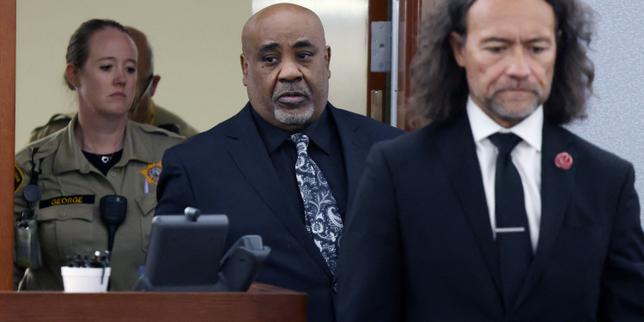
Twenty-seven years of silence shattered in a Nevada courtroom. Duane Keith Davis, known on the streets as Keffe D, stood trial not as an anonymous bystander, but as the orchestrator of the drive-by shooting that killed Tupac Shakur on September 7, 1996. For decades, the murder of Tupac Shakur remained a haunting open wound in American culture, a tragedy fueled by gang rivalries in Compton and Las Vegas, official apathy, and an underworld code of silence. Davis was found guilty of murder with the use of a deadly weapon with a gang enhancement, closing the legal chapter on one of the most infamous homicides in modern history. Yet, the conviction raises a darker question. Why did it take nearly three decades of public boasting, book tours, and police interviews for the justice system to finally move?
The answer lies in a web of street loyalty, botched initial investigations, and a suspect who thought his own loose lips would grant him immunity rather than a prison cell.
The Anatomy of a Drive By
To understand how Duane Davis landed in a prison cell, you have to rewind to the glittering strip of Las Vegas in September 1996. Mike Tyson had just fought Bruce Seldon at the MGM Grand. Tupac Shakur and Marion Suge Knight, head of Death Row Records, attended the fight. Hours later, a confrontation erupted in the casino lobby between Shakur and Orlando Anderson, a member of the Southside Crips and the nephew of Duane Davis.
Street justice demanded retaliation. Davis did not pull the trigger himself, but he secured the weapon. He procured a .40-caliber Glock pistol, handed it to the occupants of a white Cadillac, and orchestrated the pursuit that ended at the intersection of Flamingo Road and Koval Lane.
For years, law enforcement knew this. Metro Police had the pieces of the puzzle within days. What they lacked was admissible evidence that could survive a cross-examination. Witnesses clammed up. Gang members vanished. The street code protected the perpetrators far better than any legal defense team ever could.
The Fatal Flaw of Public Confessions
Criminal masterminds rarely survive their own egos. Davis spent years operating under the dangerous assumption that talking to documentarians, writing a memoir, and cutting deals with federal investigators would shield him from state prosecution. He spoke openly about his involvement in the murder of Tupac Shakur in his 2019 book, Compton Street Legend, and in numerous police interviews where he believed he was speaking off the record or under immunity agreements that would never materialize.
Investigators watched quietly as Davis handed them the rope. Modern investigative journalism often thrives on what people try to hide, but this case broke open because the central figure refused to stay quiet. He treated his role in a historic homicide like a badge of honor, a credential to be marketed in true-crime podcasts and publishing deals.
When Las Vegas police executed a search warrant on his Henderson, Nevada home in July 2023, they were not fishing for new clues. They were gathering physical corroboration for the admissions Davis had already broadcast to the world.
Institutional Blind Spots
The delay in prosecuting the murder of Tupac Shakur exposes systemic failures within law enforcement agencies during the mid-nineties. Federal task forces and local police departments often prioritized internal turf wars and high-profile crackdowns over methodical homicide investigations involving hip-hop royalty. Investigators treated the violence plaguing the rap industry as an isolated subculture phenomenon rather than organized criminal activity crossing state lines.
By the time federal agencies realized Davis could offer intelligence on other cases, local authorities were hamawed by shifting witness testimonies and dying informants. Orlando Anderson, the alleged gunman, died in an unrelated gang shooting in 1998, closing off the most direct path to a conviction for years.
Davis became the last man standing. His conviction is historic, but it feels less like a triumph of modern detective work and more like a delayed reaction to a confession that took twenty-seven years to process.
The courtroom lights have dimmed. The gavel has fallen. Duane Davis faces life behind bars, a stark reminder that the ghosts of 1996 refuse to rest quietly in the Nevada desert.


